What to Inspect in a Sofa Before Buying in Singapore
A sofa shown in a catalogue can look perfectly comfortable and still be wrong for a Singapore home. A low showroom model may suit a 3-bedroom HDB flat in Tampines, yet block the only convenient route from the lift. A deep American-style set may look impressive online, then prove too heavy for 2 residents to move without damaging the solid wood frame or scratching the floor.
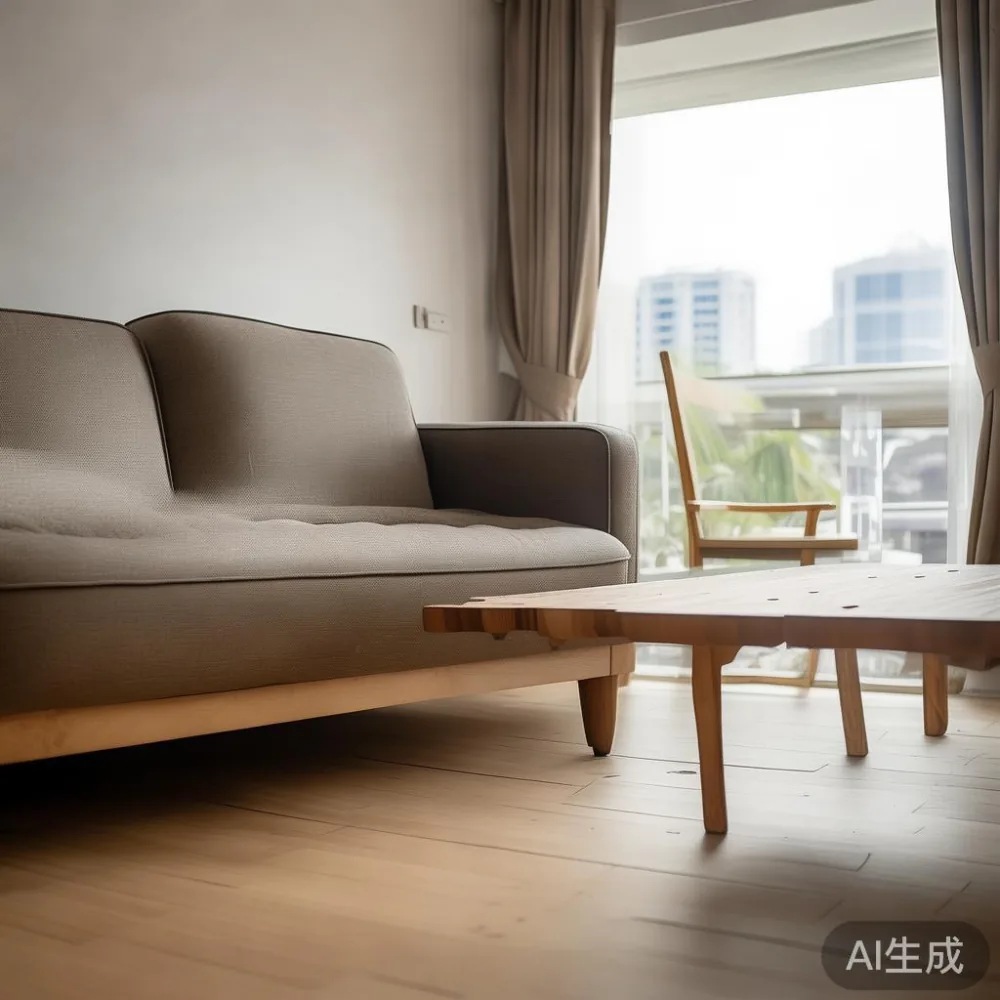
For a first time buyer, the issue is not simply whether a sofa looks comfortable in a photograph. You need evidence about its dimensions, seat construction, access route, weight, materials, warranty, and return terms. If the seller will not provide those details, treat that uncertainty as part of the product—not as a detail to resolve after delivery.
This guide explains how to assess a sofa before placing an order, using common Singapore HDB and condo constraints such as corridor widths, lift doors, 9% GST, and multi-level access. It also explains why a French sofa vs Nordic sofa comparison matters, how to judge a solid wood sofa, and which questions to ask about light-luxury design.

How Do You Know a Sofa Is Comfortable Without Sitting On It?
Start with measurements, not styling. A showroom gives you useful evidence that a concept is comfortable, but a digital order needs equally clear specifications. Ask for a side-view diagram, a seat-height measurement, the internal frame drawing, cushion density, and the number of people the sofa was tested with. A seat height around 40–43 cm is often practical for many adults, although personal preference and mobility matter more than a universal number.
Check the usable seat depth rather than the sofa’s depth. A total depth of 95–105 cm may provide a usable sitting depth of about 55–65 cm after back cushions and arms are accounted for. A 60 cm-deep seat may suit upright sitting; an 85–100 cm-deep lounge design may feel generous but can make it difficult to rise from. A first time buyer should compare the dimensions with their own usual chair at home, not rely on a lifestyle image.
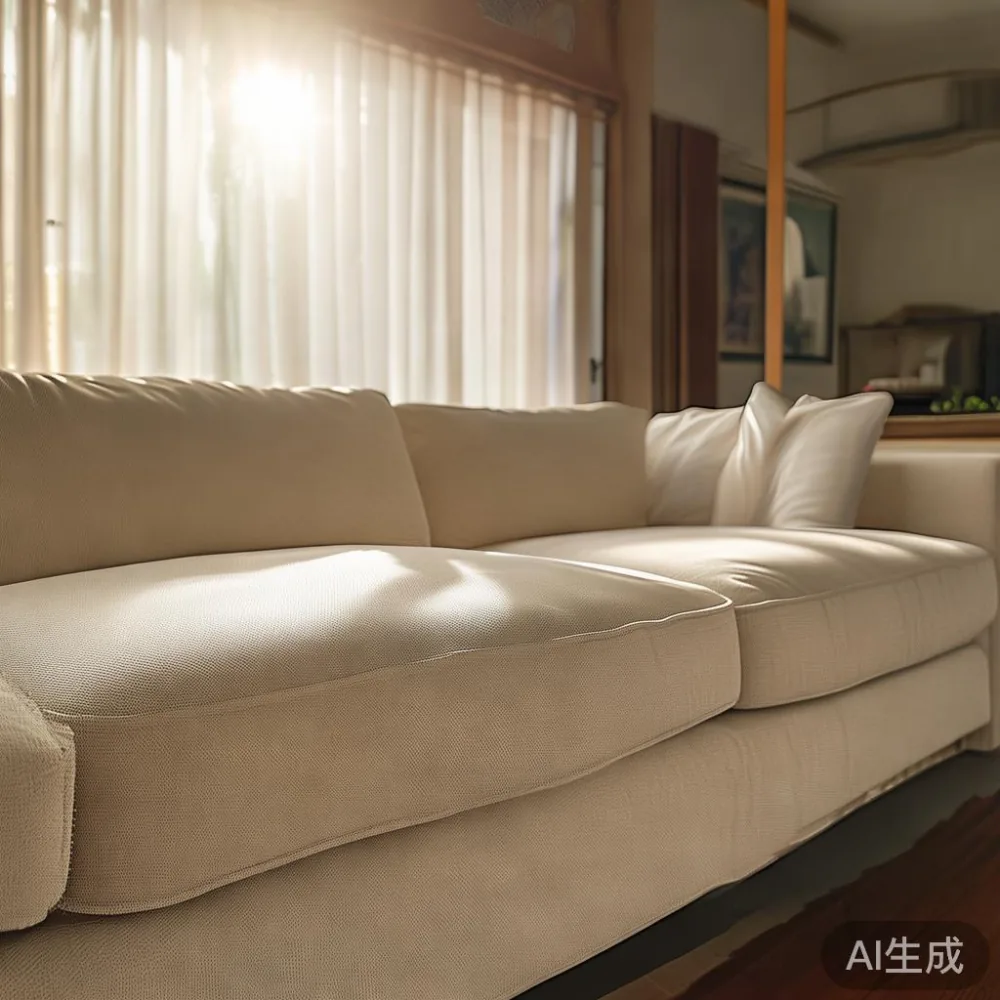
Ask how the cushions perform after use. High-resilience foam may initially feel firm, while softer foam can create pressure around the hips. A seller should be able to explain the foam density or resilience, cover construction, and any recommended cushion rotation schedule. Ask whether the sofa has been tested for 8-hour or 24-hour seating. Marketing terms such as “luxury comfort” are less informative than a clear construction specification.
One last thing concerns the backrest. It should support the lower back without forcing a slouched position. A loose lumbar cushion can be adjusted, but a fixed back with no support may become tiring after 2 hours. If the seller cannot provide a photograph showing the seat profile, cushion labels, or frame details, postpone the purchase.
Can the Sofa Actually Reach Your Singapore Living Room?
Measure the route before choosing the sofa. For an HDB flat, check the lift door width, lift cabin depth, corridor turns, landing, and the distance from the lift to the front door. For a Punggol or Bedok unit, a straight corridor does not guarantee access if the lift opens into a recessed landing. For a condo, obtain the loading bay rules, maximum trolley dimensions, and any reserved-lift periods.
Record clear numbers rather than estimating. A common residential lift door may be around 80–90 cm wide, but internal cabin dimensions vary. A sofa body wider than about 75–80 cm may not fit through a narrower opening, even if it fits through the flat’s front door. Ask the retailer for the packaged width, height, depth, and weight, including protective corners and cartons. For example, a sofa that measures 220 × 95 × 82 cm cannot be assessed fairly if its delivery carton expands to 225 × 102 × 90 cm.
The route also has to be physically manageable. A 95 kg solid wood sofa with a detachable base may arrive safely, yet be difficult for 2 people to turn around a 90-degree landing. A 68 kg upholstered set may be easier to handle but can still have an awkward centre of gravity. Ask whether the legs detach, whether the back and seat are removable, and whether the retailer’s delivery team carries it into the room rather than leaving it at the door.
In one recent visit, my colleague tested a 205 cm three-seat sofa in a mock-up corridor and lift. The showroom sample passed the doorway, but the real route had a 78 cm lift opening and a 94 cm landing turn. The seller had to remove the sofa legs and separate the seat from the frame. That experience changed the conversation from “Will it fit?” to “Can it be delivered intact, and who is responsible if it does not fit?”
For removals, measure the existing sofa’s route as well. A replacement with legs removed may pass a narrow doorway, but a high back can still catch on a ceiling fan or corridor sign. Singapore’s humid conditions also make it sensible to ask whether the upholstery can tolerate moisture during delivery and whether any packaging must be removed immediately after arrival.
What Should You Ask About a Solid Wood Frame?
A solid wood sofa can be a sensible long-term purchase, but the phrase does not describe the whole product. Ask which timber is used, whether the frame is kiln-dried, how the joints are made, and whether solid wood appears in the rails, legs, back frame, or only in a visible side panel. Photographs should show the underside and connection points, not merely a decorative timber veneer.
Some upholstered sofas use a mixture of engineered wood, metal supports, and solid timber components. That can be appropriate if the construction is clearly disclosed and the load paths are reinforced. The concern is not the presence of engineered material by itself; it is the absence of information about what is supporting the seat and back. A 10-year structural warranty can provide useful evidence, but you should confirm whether it covers frame joints, spring failures, and abnormal load, and whether it applies only to the original buyer.
Check the expected load. A 3-seat sofa may be marketed for 3 adults, but the seller should explain the tested load, seat-span arrangement, and weight distribution. A 120 kg test concentrated in the middle of one cushion is different from a gradual load across the full seat. Ask for cleaning instructions too: a fabric with a removable, washable cover may be more practical in a humid home than a delicate pale weave.
MIDHILL describes its business history, export reach, 10-year structural warranty, and lifetime refinishing service separately from product construction. Those policies are useful to compare when you are a first time buyer, but they should not substitute for a sofa-specific frame drawing, packed dimensions, and care guide. Confirm the exact finish and upholstery before paying.
Does French Light Luxury Suit Your Home?
Light-luxury design is a style direction, not a quality grade. French light luxury often draws attention to softer curves, refined upholstery, balanced proportions, and decorative detailing. American light luxury may lean towards generous cushions, deeper seating, and a more substantial silhouette. Post-modern light luxury can combine clean lines with carefully selected curves or contrasting materials. Each direction can work in Singapore, but the room and access route decide whether the proportions feel relaxed or crowded.
A French sofa vs Nordic sofa comparison is useful because the two approaches may share restrained colours while behaving differently at human scale. A Nordic-inspired sofa may keep arms and edges visually light; a French-inspired design may use a broader frame or more decorative profile. The name alone does not tell you the seat height or packed width. Ask for those measurements and compare them with your floor plan.
For a compact HDB living room, a 180–210 cm sofa may be easier to place than a 230–250 cm model, especially beside a dining area. A condo living room with a longer wall may support a larger sofa, but you still need to account for circulation clearance. Leave at least 75–90 cm where people must walk past the front edge, and avoid pushing a deep sofa directly against a main circulation path.
Do not treat a catalogue scene as proof that a sofa suits your home. Check the rug, coffee table, lamp, and room proportions in the image. A light-luxury sofa can fit a room visually while failing physically at the lift. The correct question is: does the model look comfortable at real scale, and can the complete product be carried through the measured route?
What Delivery, Warranty, and Return Terms Should You Keep?
Ask for the total price in SGD before checkout. Singapore’s 9% GST applies to most taxable goods, but delivery, installation, and certain services may be treated differently. A sofa listed at SGD 2,480 may require SGD 223.20 GST before any delivery or access-related charge. Request an itemised quotation so that a later “delivery surcharge” can be checked against the agreed terms.
Clarify delivery timing. A typical Singapore order may be dispatched in 7–14 days, while custom upholstery or solid wood pieces may take 4–8 weeks. Ask whether the quoted period is production time or the expected arrival window, and whether public holidays, peak seasons, or condo booking restrictions affect it. For a first time buyer, a written estimated delivery date is more useful than “fast delivery” without a number.
Returns are another important measure. A 14-day return policy is helpful only if the sofa has not been used, damaged, or removed from protective packaging. Check the return transport fee, restocking charge, inspection conditions, and whether custom dimensions or special fabrics are excluded. A sofa is large enough that a return can require another lift reservation and a second delivery journey.
A 10-year structural warranty should state what is covered and how a claim is processed. Ask whether the warranty transfers if the home is sold, whether replacement labour is included, and whether an accidental tear or liquid damage is excluded. Lifetime refinishing, if offered, should be distinguished from free repair of upholstery or structural components.
For anyone searching for midhillco, treat the product page as a starting point and request a written specification sheet. That sheet should show the exact sofa dimensions, packed dimensions, frame material, cushion details, care instructions, delivery estimate, warranty, and return conditions. Written details make comparison easier than a showroom impression.
How Do You Compare Two Sofas Without Getting Carried Away?
Use a 10-point comparison sheet. Record the listed price, GST, delivery charge, delivery days, packed width, packed depth, seat height, usable seat depth, frame material, cushion type, removable parts, warranty, return period, and indoor placement service. Give each unknown a date for follow-up rather than filling the gap with an assumption.
Look at more than the finish. A dining table may have a beautiful marble table top, but its packed weight and support structure still need checking. A bed frame may be sold with a 10-year warranty, while the mattress size and access route remain separate decisions. A wardrobe may fit the bedroom floor plan but not the lift. A nightstand may look proportioned beside the sofa but need 45–50 cm of usable surface and a clear outlet position. These related furniture decisions follow the same rule: measure the item, the route, and the service conditions.
If you are considering a Post-modern for dining room scheme, keep the sofa’s visual weight from competing with the dining table. The phrase Post-modern for dining room is useful when describing a design language, but it does not remove the need for 90 cm of circulation space or a stable table base. Similarly, a Mid-century modern dining table can pair well with a low-profile sofa, but the sofa should not block the dining chairs or the balcony door.
Ask to see the model in person whenever possible. Bring a tape measure and sit for at least 10 minutes, then stand up and walk around it. If you cannot sit on the sofa before buying, request a video demonstration that shows the seat profile, cushion compression, back support, and removable sections. A seller who answers these questions is giving you information; a seller who only repeats the style name is not.
What Final Questions Should a First Time Buyer Ask?
Before payment, ask: What are the exact product and packed dimensions? What is the sofa’s listed weight? Can the legs and cushions be separated for entry? Does delivery include carrying the sofa into the room? What happens if it cannot pass the lift or corridor? How many days should delivery take after payment? Is GST included? Are returns accepted within 14 days, and what fees apply? Which parts are covered by the 10-year structural warranty? Can the care and frame documents be sent before dispatch?
Then check the room again. Measure the doorway, lift, corridor, landing, and final sofa position. Confirm that the front door can open fully and that the sofa does not obstruct the switchboard, air-conditioner vents, or balcony access. For a compact flat, a 170–190 cm sofa may provide enough seating while leaving a usable route; for a larger condo, a 210–240 cm model may be reasonable if the measurements and delivery plan are clear.
The phrase “first time buyer” describes a stage of experience, not a lower standard. Spend 15 minutes checking specifications, request written evidence, and compare the sofa with your actual home rather than a styled photograph. If comfort, dimensions, access, and service terms are not clear, wait for answers. A sofa that looks inviting but leaves you guessing is not a confident purchase.
A practical order for a first time buyer is simple: measure, request the documents, compare, and confirm delivery in writing. The right sofa should be comfortable at body scale, appropriate for Singapore circulation, and supported by terms you can read after the showroom visit ends.