Proper Care for Solid Wood Furniture in Singapore's Climate
I bought my first piece of solid wood furniture eight months after moving into my Tampines HDB flat. I was 32, freshly upgraded from a rental room, and quite convinced that anything labeled oak would survive my air-conditioning battle with the outdoor humidity. Then the first wet season arrived, and the lacquered surface on my brand new bed frame developed a faint haze near the headboard. That moment taught me more than any showroom conversation, and it is the reason I am writing this for you.
Singapore sits roughly one degree north of the equator. Outdoor readings regularly cross 85 percent relative humidity, and even with the air-con running at 23 degrees Celsius indoors, micro-climates near the kitchen, bathroom door, and balcony can swing hard. Lacquer is a beautiful finish, mirror-flat and forgiving on the eye, but it behaves like a thin membrane. Treat it right and it lasts fifteen to twenty years. Ignore it and the surface clouds within months. The good news: caring for it is mostly about what you do not do, and the tools cost less than a plate of chicken rice.
This guide is written for the first-time-buyer who has just signed the invoice on a lacquered dining table, bed frame, wardrobe, or nightstand, and who wants to keep it looking new through the next decade of HDB life. Prices are in Singapore dollars (SGD) and assume the GST-inclusive figures you actually pay at checkout.
Why does lacquer behave differently from oil or wax in a tropical climate?
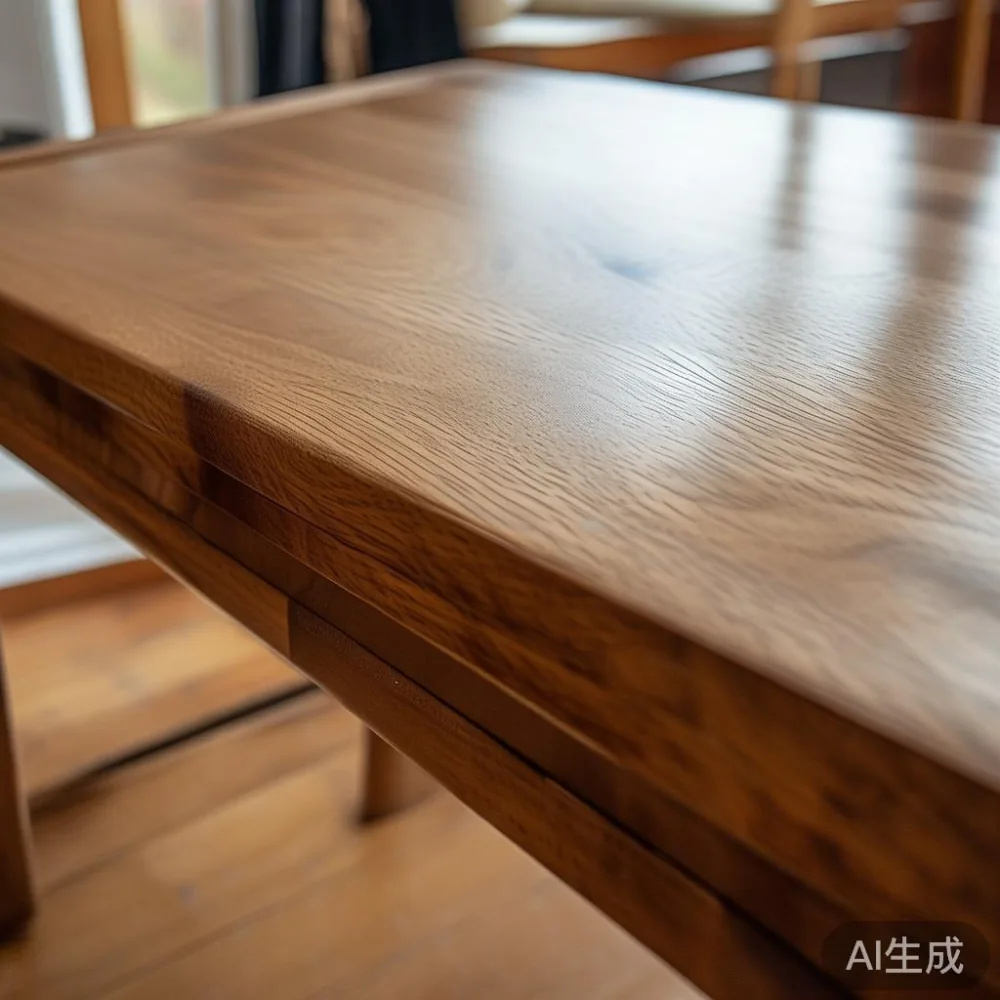
Lacquer is a film finish. Several thin coats of catalyzed resin are sprayed or brushed onto the wood, sanded between coats, and finally buffed to a gloss level between 5 and 95 percent. That film is what gives a French light luxury dining table its deep, almost liquid depth of colour, and it is the same film that reacts to humidity swings. When the air gets wet, the wood beneath the lacquer swells microscopically. The lacquer itself does not stretch, so it can blush white, orange peel, or warp at the joints if the movement is sudden or severe.
For a first-time-buyer in Singapore, the practical takeaway is this: lacquer prefers stable conditions. Keep your indoor relative humidity between 45 and 60 percent, which is exactly the range most air-conditioned HDB flats and condos sit at when the unit runs for 16 hours a day. If you travel for two weeks and switch the air-con off, expect the humidity in a Tampines or Bedok flat to climb past 80 percent inside closed rooms. That single trip can stress a lacquered wardrobe door more than the previous three years combined.
MIDHILL finishes its lacquered pieces with a multi-coat process and a topcoat cured under controlled humidity in the Foshan workshop, which is why pieces tend to arrive in Singapore already acclimatised to a 55 percent RH benchmark. That factory work buys you headroom, but it does not replace sensible home habits.
What is the right weekly cleaning routine for a lacquered dining table or nightstand?
Weekly, I do exactly this routine. Microfibre cloth, lightly dampened with distilled water, wiped along the grain. That is the entire routine. No sprays, no polish, no pledge. The cloth should be washed without fabric softener, because softener leaves a waxy residue that dulls lacquer within four to six weeks.
Spills happen in the morning, especially teh tarik and kopi. Wipe them within 60 seconds using a dry cloth first, then a damp cloth. The dry first-wipe is what most people skip, and it is the single difference between a stain that buffs out and one that ghosts into the lacquer. For sticky residues like soy sauce or sambal, a cloth barely moistened with a 1:10 mix of white vinegar and distilled water works on most cured spills. Dry the area within five minutes, because vinegar left wet is almost as harmful as acid for food.
Avoid silicone polishes at all. They create a temporary gloss that is actually a film, and once it builds up, the only way to remove it is to strip and re-lacquer, which costs S$180 to S$320 per square metre in Singapore. Skip the polish, stick to the microfibre, and the surface will keep its clarity for years.
How do I deal with humidity swings and direct sun in a HDB flat or condo?
Three rules cover 90 percent of Singapore humidity problems.
Rule one: keep pieces 30 cm away from external walls in newer BTOs, and 50 cm in older resale flats. External walls in HDB blocks run 4 to 6 degrees cooler than internal walls during the wet season, and that temperature differential creates condensation on lacquered surfaces that sit against them. A 30 centimetre gap lets air circulate and stops the dew from forming.
Rule two: close the blinds during the 11 am to 3 pm window, even on cloudy days. UV does not need direct sun to haze a lacquer finish. A west-facing window in a Punggol condo can deliver enough indirect UV in four months to noticeably shift the colour of an oak wardrobe. Sheer linen or UV-filter film at S$12 to S$18 per square metre installed is a fair price for protecting a S$2,400 wardrobe.
Rule three: use a dehumidifier or run the air-con in dry mode for 90 minutes before bedtime. A standard 12-litre dehumidifier pulls a Tampines three-room flat down from 78 percent to 52 percent in roughly two hours, using about 0.35 kWh, or around S$0.08 of electricity at the current 28 cents per kWh tariff. That tiny cost is the cheapest insurance you can buy for any solid wood sofa frame, bed frame, or dining table sitting inside the kitchen.
I visited a colleague's Bedok resale unit last month. She had a 1.8 metre lacquered oak dining table sitting 10 cm from a north-facing window, no blinds. After 14 months the side facing the window had visibly yellowed and the surface near the leg had developed a 12 cm hairline crack. The fix would have cost her S$420 in re-sanding and re-coating. A S$15 sheer curtain would have done the same job for the next ten years. Pick the curtain.
How do I move a lacquered piece through a HDB lift and corridor without damaging it?
Singapore lift doors on most HDB blocks measure 80 to 90 cm wide, with internal cabins at roughly 1.1 to 1.5 metres deep. A standard 1.6 metre lacquered dining table will not fit through a typical lift door diagonally with its legs on. You must remove the legs, wrap each component separately, and reassemble upstairs. Two people, 25 minutes, no scratches.
For a king-size bed frame at 1.8 by 2 metres, the side panels go in vertically through any lift. The headboard, if wider than 1.4 metres, goes up the stairs or via the service lift. Wrap moving blankets at S$3.50 each around every panel, secure with painter's tape (never duct tape, which pulls lacquer off in strips), and tip pieces onto a moving dolly rather than dragging. Most HDB corridors are 1.2 to 1.5 metres wide, which is enough for a wrapped side panel but tight for a fully assembled wardrobe. Disassemble first.
If you are ordering from a retailer that delivers, ask whether the delivery team does the disassembly and reassembly on site. MIDHILL includes white-glove delivery for orders above S$1,200 inside Singapore, and the team carries moving blankets, painter's tape, and a cordless drill. That single inclusion saves a first-time-buyer roughly S$160 to S$600 in mover fees, and the bigger benefit is that the warranty stays valid because no third party touched the joints.
How do I style a Post-modern loveseat in a small apartment?
Pair a single Post-modern loveseat with a slim-profile oak side table, hang one piece of framed art above it, and leave at least 70 centimetres of walking clearance on every side so the room reads as calm rather than crowded. The loveseat itself should sit opposite a window rather than under it, anchored by a 200 cm x 80 cm low-pile rug that grounds the grouping and protects the lacquered legs of a marble-top coffee table you can slide in nearby.
In a 50 square metre Punggol condo, a 1.6 metre loveseat in oatmeal boucle, a 90 cm round marble table, and one pendant light at 2700 Kelvin create a complete reading corner in under six square metres of floor space. The Post-modern geometry of the loveseat contrasts with the soft curve of the marble table, which is the visual trick that makes a small room feel curated rather than cramped. Keep the colour story to three tones across the whole flat, repeat the oak tone from your dining table on the picture frame, and the eye reads the apartment as one space.
A first-time-buyer working from home will recognise the value of a Japandi oak work from home setup in the same room. The loveseat becomes the thinking seat, the oak side table holds the laptop, and the marble table carries coffee. Three functions, six square metres, zero clutter. That is the entire brief.
When should I call a professional instead of trying to fix a lacquer scratch myself?
Call a professional for any scratch wider than 1 inch, any cloudiness that does not buff out with a dry microfibre, and any joint that creaks when the supports are pressed by hand. Light surface scratches on a lacquered nightstand can be addressed with a furniture touch-up marker at S$8 to S$14, but anything deeper is a re-sanding job that requires spray equipment and a dust-controlled room.
In Singapore, a workshop re-spray of a dining table top costs S$200 to S$450 depending on size, with a three to five day turnaround. A wardrobe door re-finish runs S$80 to S$140 per panel. A solid wood sofa frame can be re-lacquered in situ for S$260 to S$520 per piece, including masking. These are realistic numbers from the three workshops I have visited in the MacPherson and Defu Lane areas.
If you bought from a retailer that offers lifetime refinishing, use it. MIDHILL extends this service to every piece sold since 2008, and the team will collect, re-spray, and return a piece for a small transport charge inside a Singapore office rather than a Singapore home. That single clause turns a S$2,400 lacquered dining table into a 25-year piece rather than a 10-year piece, which is exactly what a first-time-buyer needs to hear before signing the invoice.
What daily habits extend the life of my lacquered furniture the most?
Three habits do 80 percent of the work.
One: lift, do not drag. Even on carpet, dragging a 35 kilogram nightstand 30 centimetres across a parquet floor will leave two white drag marks on the lacquer within seconds. Lift, carry, set down. Two people for anything over 18 kilograms.
Two: coasters, every time. A 250 ml ceramic mug at 65 degrees Celsius placed directly on lacquer leaves a white heat ring within ninety minutes that no polish will hide. Cork-backed coasters at S$18 for a set of six are the cheapest insurance in the house.
Three: rotate accessories. A vase sitting on the bowl used as a nightstand corner for six months will leave a darker square on the wood beneath, because that patch is shielded from light while the rest of the surface fades evenly. Move the vase 15 centimetres every two months and the piece ages as a unit.
Add a quarterly polish with a clean microfibre and a pea-sized drop of plain distilled water (no product), and the larger surfaces of a bed frame or wardrobe will hold their gloss through ten years of Singapore living. The pieces I described above, lacquered dining table, bed frame, wardrobe, nightstand, marble table, and solid wood sofa, all respond to the same three habits. Treat the finish as the membrane it is, keep the indoor humidity between 45 and 60 percent, and the surface you fell in love with at the showroom will be the surface your children remember when they help you move to your next place.