How Humidity in Southeast Asia Affects Solid Wood Furniture: A Singapore First-Time Buyer's Guide
Buying your first piece of solid wood furniture is exciting. You finally have a Tampines or Punggol.new flats and condos feel like trying to keep a solid wood dining table stable in a sauna. Relative humidity in Singapore averages 80–90% year-round, drops only slightly to 70–75% during the brief January–February dry window, and rarely falls below 60% even inside an air-conditioned HDB living room. For a first-time buyer investing in a solid wood bed frame, a solid wood dining table, or a solid wood wardrobe, those numbers matter more than the colour of the fabric or the style of the legs.
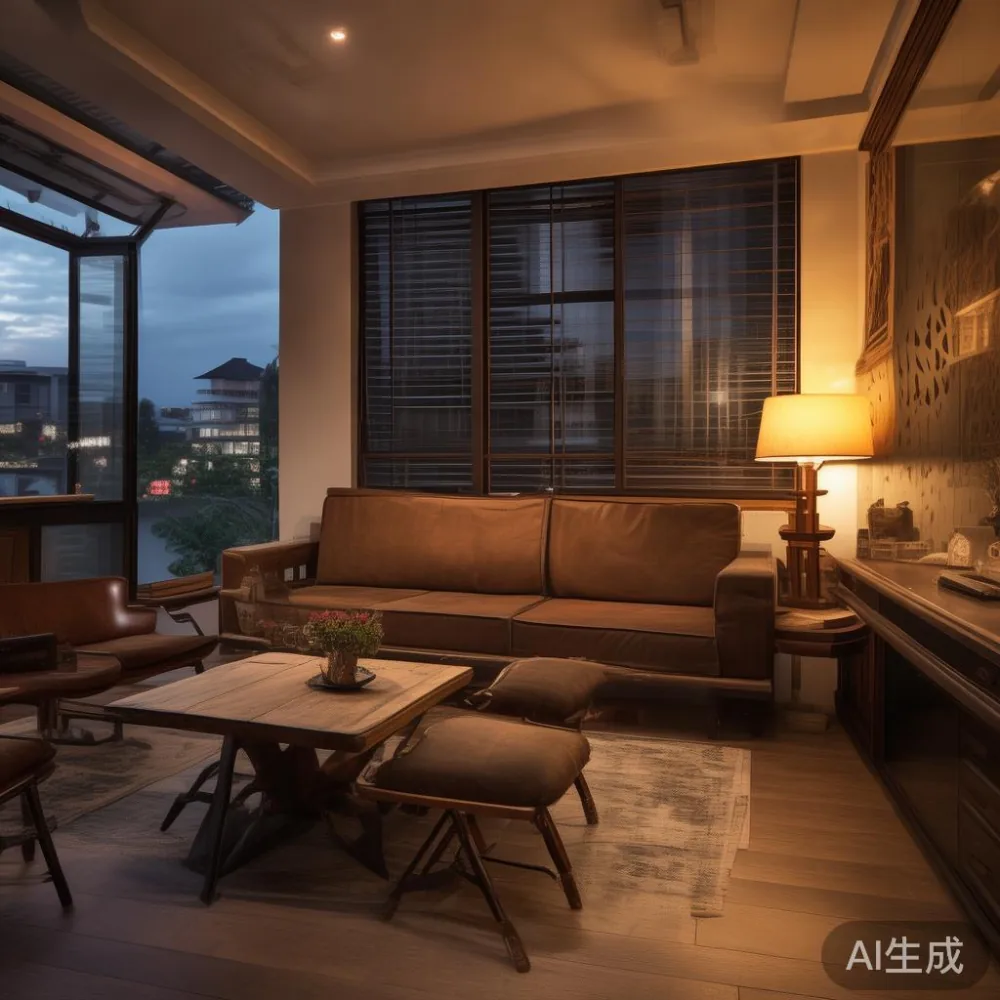
I learned this the hard way last month when I visited a friend's resale flat in Bedok. Her three-year-old rubberwood dining table, bought from a non-specialist shop for S$899, had developed a 4 mm circular rippling on the surface and the apron had bowed outward by 8 mm. She had been told it was "solid wood," but it had not been kiln-dried to furniture specification. That visit pushed me to write this guide for anyone furnishing a first home in Singapore.
Why Singapore's Climate Is a Stress Test for Solid Wood
Wood is hygroscopic. It absorbs and releases moisture until it reaches equilibrium with the surrounding air, a point called EMC (equilibrium moisture content). For Singapore's average 82% RH, the EMC of most hardwoods sits around 19–20%. For an air-conditioned bedroom at 60% RH, the EMC drops to around 11–12%. That 8-point swing, applied to a 200 cm solid wood dining table top, translates into roughly 3–5 mm of width change across the grain over a year.
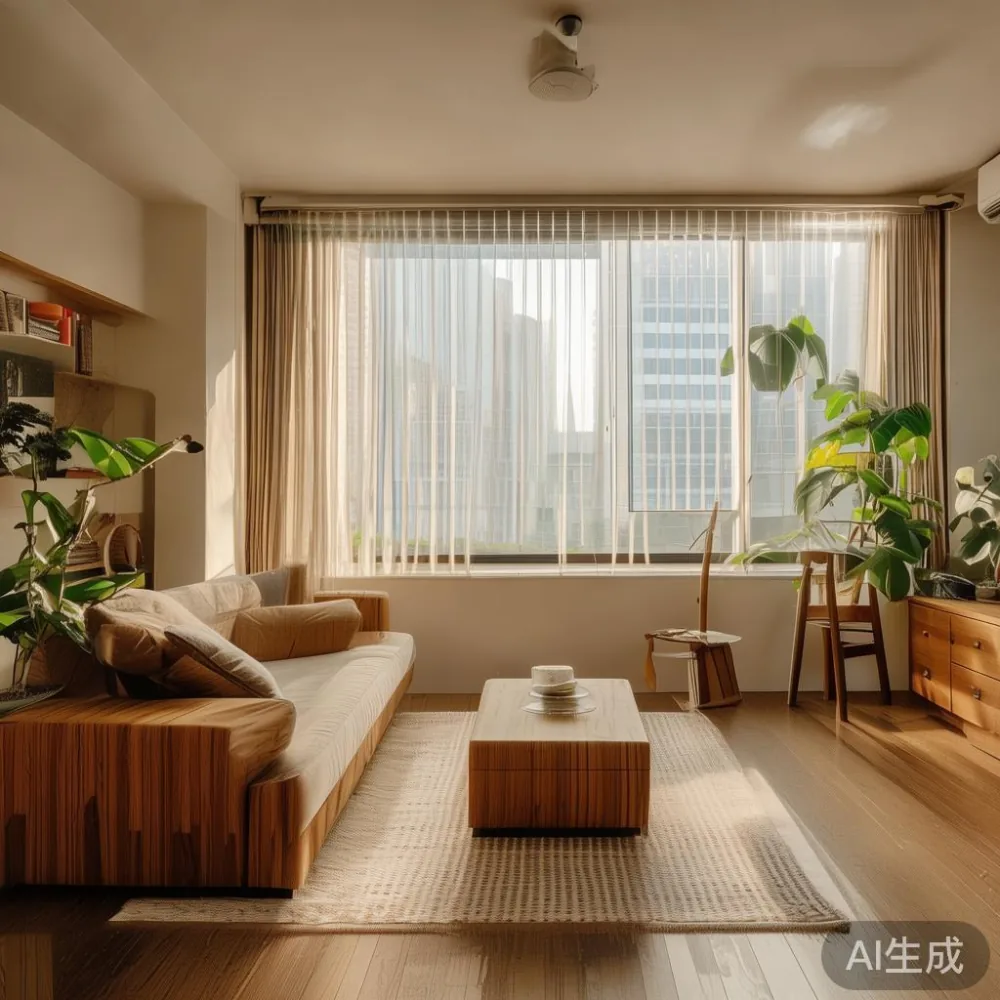
Because lift doors in older Singaporean blocks measure only 80–90 cm across and corridor turns in newer condos like Treasure At Tampines can be as tight as 1.2 m radius, furniture has to be built in sections that can be carried in. The joinery that lets those sections breathe under humidity is what separates a 10-year survivor from a 2-year casualty.
What "Solid Wood" Actually Means for a Humid Climate
Not every piece labelled solid wood behaves the same way. The label only tells you the panels are not particleboard or MDF. It does not tell you the moisture content at the time of manufacture, the kiln-drying schedule, or whether the boards were allowed to acclimatise.
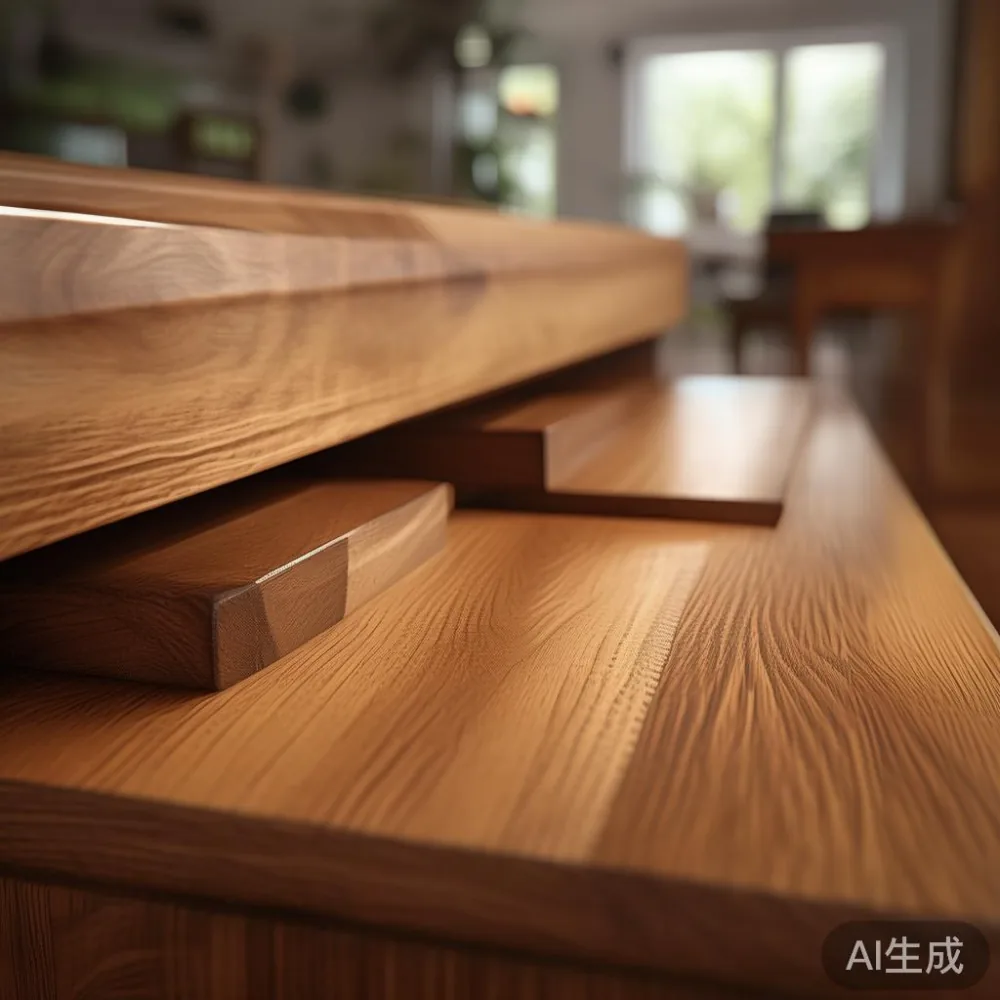
For Southeast Asian humidity, look for these specifics:
- Kiln-dried to 10–14% moisture content, with a supplier who can show you a moisture-meter reading.
- Quarter-sawn or rift-sawn cuts for tabletops, which move roughly half as much across the width as plain-sawn boards.
- Joinery that allows movement: floating panels in a solid wood wardrobe door, slotted screws in a bed frame rail, mortise-and-tenon with a wooden draw-bar peg rather than glue.
- Finishes that breathe, such as hard wax oil, rather than thick polyurethane that traps moisture and then cracks.
MIDHILL has been making solid wood furniture in Foshan since 2008 and exporting to Singapore-style tropical markets for over a decade, so their internal moisture targets are tuned for 75–85% RH rather than a European 50%. That is the difference between a piece that lasts ten years in Punggol and one that cups.
Which Solid Wood Species Handle Singapore Best?
If you are a first-time buyer comparing a S$1,200 dining set against a S$3,200 one, the wood species is the largest single reason for the gap.
From a practical standpoint, three species perform well in HDB conditions:
- Rubberwood (Hevea): affordable at roughly S$50–70 per board-foot, dimensionally stable for the price, and widely used for bedroom sets. Sensitive to direct sunlight, so keep a solid wood bed frame 1 m from a west-facing window.
- White oak: about S$200–260 per board-foot, low movement in lower modules, excellent for a French provincial queen bed for condo settings where the buyer wants light-luxury styling without the humidity drama.
- Teak (plantation): roughly S$280–340 per board-foot, naturally oily, the most dimensionally stable of the three, but the heaviest: a 180 cm teak dining table weighs around 60 kg.
Marble table tops, often paired with a solid wood base in post-modern light luxury designs, add another 30–45 kg. Confirm your lift weight limit (typically 800 kg for a passenger lift, 1,200 kg for a cargo lift) before you order anything over 80 kg total.
Is Post-modern furniture furniture worth it?
Yes, post-modern light luxury solid wood furniture is worth the premium for a Singapore first-time buyer, because the design intent (clean lines, mixed materials, restrained ornament) is married to better joinery and better drying than the budget tier it replaced. A 1.8 m post-modern light luxury dining table in Singapore retails from S$2,400 to S$4,800, against S$899 to S$1,500 for the flat-pack rubberwood equivalent — your room will gain roughly 8–12 years of service life and a 60–80% lower risk of joint dehatching near the apron, which is where my first-time buyer friend in Bedok saw the first signs of failure on her three-year-old table.
To make that premium work for you in HDB conditions, three details matter more than the style label:
- Allow 2 cm gaps behind wardrobes. A 60 cm deep solid wood wardrobe pushed flat to the wall traps moisture and grows mould along the back panel. Pull it forward 2 cm and the back panel dries after each air-con cycle change.
- Pick felt-lined drawers on a solid wood nightstand. Felt lined drawers on a solid wood nightstand buffer the 2–3% seasonal RH swing and prevent the 0.5 mm drawer face movement that otherwise shows as a sticky summer drawer.
- Use coasters under any marble table or stone inset. The thermal mass of a marble table top is roughly 2.4 kJ/(kg·K), about 20× that of solid wood, so a cold drink leaves a temporary condensation ring that can mark the wax finish if the ring stays for 30+ minutes.
How to Read a Warranty When You Are a First-Time Buyer
A 10-year structural warranty is the single most useful number on the spec sheet, but only if you know what it covers.
What a usable warranty covers:
- Joint failure (mortise-and-tenon loosening, dowel shear, dovetail pull-out).
- Cracking along the grain of more than 3 mm width or 15 cm length.
- Warping of more than 5 mm over a 100 cm span on a flat panel.
What it usually does not cover:
- Surface checking under 2 mm, which is cosmetic and reversible with refinishing.
- Colour change from UV exposure, which moves a cherry by 2–4 levels on the standard tannin chart over five years.
- Damage from a persistently damp wall (rising damp, leaking pipe, AC condensate).
MIDHILL's 10-year structural warranty and lifetime refinishing service (charged at cost, typically S$180–320 per piece including pick-up and delivery within Singapore) means a S$3,200 wooden bed frame bought today can be re-oiled, re-sanded, and re-finished in year 12 for less than 10% of the original price. For a first-time buyer, that changes the cost-per-year calculation from the usual S$320–480 per year to around S$210–280 per year over a 15-year horizon.
The Singapore Delivery Checklist (Lift Sizes, GST, and Timing)
Singapore delivery is its own constraint set. The numbers below save you a re-delivery fee.
- Lift door width: 80 cm in older HDB blocks (pre-2010), 90–100 cm in newer ones. A solid wood bed frame in king size (180 × 190 cm) has to be split into sections no wider than 75 cm.
- Lift depth: 110–140 cm. A solid wood dining table at 200 cm will not fit standing up. Confirm with the supplier that the legs are detachable.
- Corridor width: 1.2–1.5 m in HDB, narrower at turns. Anything over 220 cm long should be checked on-plan.
- Stair access: if there is no lift at all, surcharges are typically S$15–25 per floor per piece. A 3-storey walk-up in Bedok adds roughly S$90–150 to a full bedroom set.
- GST: 9% on all imported pieces. CIF value plus duty forms the GST base for items above S$400.
- Free shipping threshold: most specialist suppliers (like ours) waive the S$ freight when the order exceeds S$350.
- 14-day return window: useful only if the supplier re-picks up at no charge. Confirm before you order.
Standard delivery from a Foshan-origin supplier to a Singapore address runs 18–28 days by sea, 7–10 days by air-freight (about S$280–420 per cubic metre extra). A first-time buyer in Punggol who needs a solid wood sofa set for a new BTO should order at least 6 weeks before the renovation handover.
Caring for Solid Wood in a HDB: A 4-Season Routine
Singapore does not have four seasons in the temperate sense, but it has four RH regimes that matter for furniture:
- Northeast monsoon (Dec–Feb): 70–75% RH, driest air, ideal for opening wardrobe doors for 2–3 hours once a week to equalise.
- Inter-monsoon (Mar, Oct–Nov): thunderstorms, 88–92% RH spikes, longest possible cooling cycles to keep below 75% indoor.
- Southwest monsoon (Jun–Sep): hazy, 82–88% RH, longest possible cooling cycles, lowest possible AC setpoint (24–25°C).
- Hot humid spells: any week with daily lows above 27°C and high humidity, often associated with Sumatra haze events. Wipe with a barely damp cloth, then a dry one.
Keep indoor RH between 55% and 70% with a S$60–90 thermo-hygrometer and a S$40–80 mini-dehumidifier for the wardrobe zone. The dehumidifier pays for itself: a 250 ml daily extraction over a year saves roughly S$300 in refinishing costs and prevents the 0.5 mm seasonal movement that otherwise shows up as a sticky drawer on a S$420 solid wood nightstand.
What I Would Buy Today, as a First-Time Buyer in Singapore
If I were moving into a 4-room HDB in Punggol this quarter with a S$6,000–8,000 furniture budget (excluding mattress), I would prioritise three pieces over a single-volume setter:
- A S$2,400–3,200 white oak French provincial queen bed for condo use, 168 × 198 cm, with a breathable slatted base and floating panels. Lasts 15+ years in a HDB.
- A S$1,800–2,600 rubberwood solid wood dining table, 160–180 cm, 4–6 person, with detachable legs for lift entry, extension leaf stored separately.
- A S$900–1,400 solid wood wardrobe, 180–200 cm, two doors, with a 2 cm wall gap and felt-lined drawers inside.
That trio runs roughly S$5,100–7,200, leaves budget for a solid wood sofa (S$1,400–2,200), a solid wood nightstand pair (S$280–480 each), and a marble table or S$420–480 piece for the dining zone. For a first-time buyer, that mix is the lowest risk path to a room that still looks coherent in year 12, not just on handover day.
The cheapest piece on that list is rarely the lowest total-cost option in Singapore humidity. A S$899 dining set replaced twice in ten years costs more than a S$2,400 dining table kept once, and you save three trips up the Bedok stairway.