Solid Wood vs Veneer in Singapore HDBs: A First-Time Buyer's 5-Year Cost Reality Check
Buying furniture for a new BTO in Punggol or a resale flat in Tampines is usually the first time a Singapore household sees a real receipt for a dining table that costs more than hawker food for a week. Most pieces of imported wood furniture do not survive their first humid monsoon season intact, and almost none make it five years without a scratch, a swelling edge, or a peeling surface that drives the next owner to search "scrap wood collection" on Carousell at 11pm.
I visited a friend in Bedok last month who had just taken keys to a 92 sqm HDB. She walked me through three wardrobes she had been comparing online: a S$1,290 engineered-wood wardrobe, a S$1,690 MDF-with-veneer wardrobe, and a S$2,450 solid wood wardrobe shipped from a Foshan workshop. Her question was the one every first-time buyer eventually asks: do I really pay double now and save later, or am I just paying extra for marketing?
This article is for that friend, and for you. We will work through the five-year ownership cost for a typical HDB set (a 2-metre sofa, a queen bed frame, a six-seater dining table, a two-door wardrobe, a pair of nightstands, and one marble table for the entryway) across two material tracks: veneer-on-MDF and solid hardwood. Prices are real-world Singapore delivered-to-door rates as of 2025, inclusive of 9% GST and lift-access unloading. By year five, one track roughly doubles the other, and the reason is not what most catalogue pages suggest.
What is the real difference between veneer and solid wood furniture?
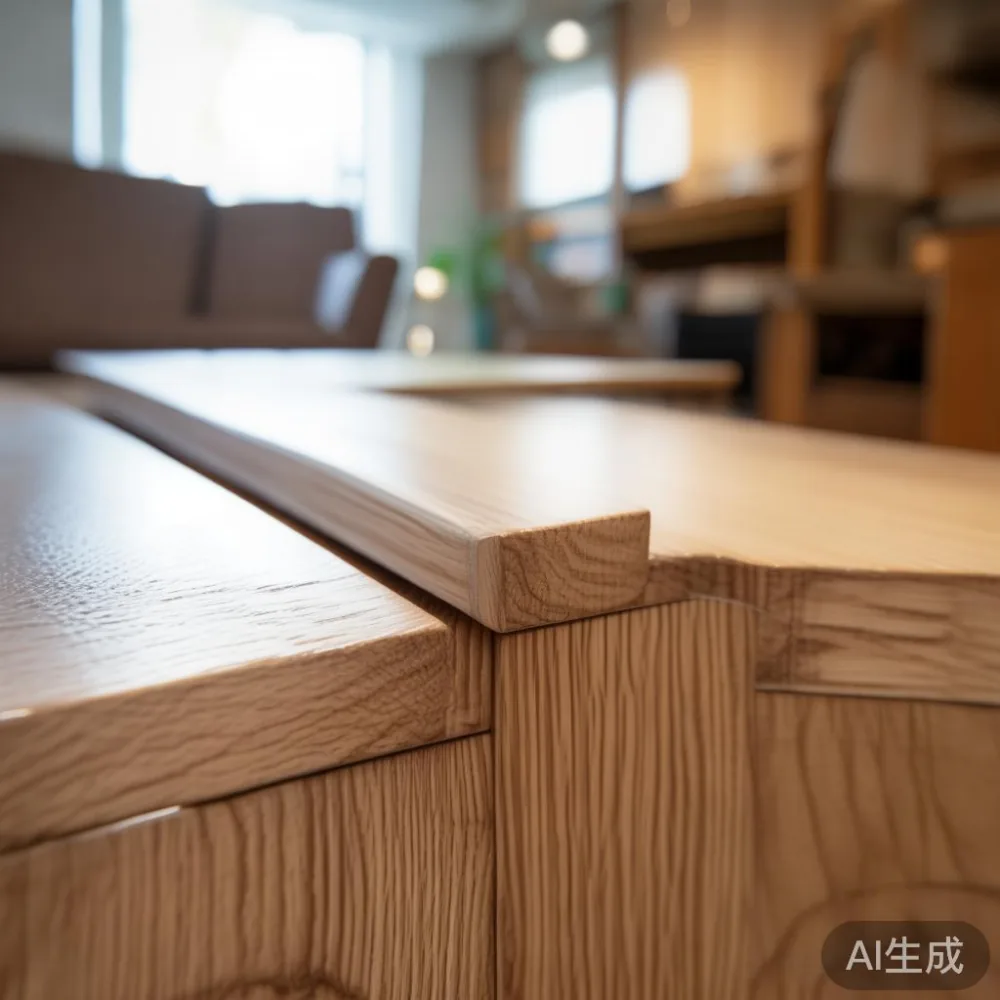
Solid wood means the structural frame, the panels, and the visible surfaces are cut from one piece of hardwood, then kiln-dried to 8–12% moisture content before assembly. A typical 1.8m dining table leg in solid American oak weighs 6.2 kg; the same leg in birch laminate over MDF weighs 2.1 kg. That 3-to-1 weight gap is what you feel when two removalists carry a piece up the service lift of a Yishun walk-up.
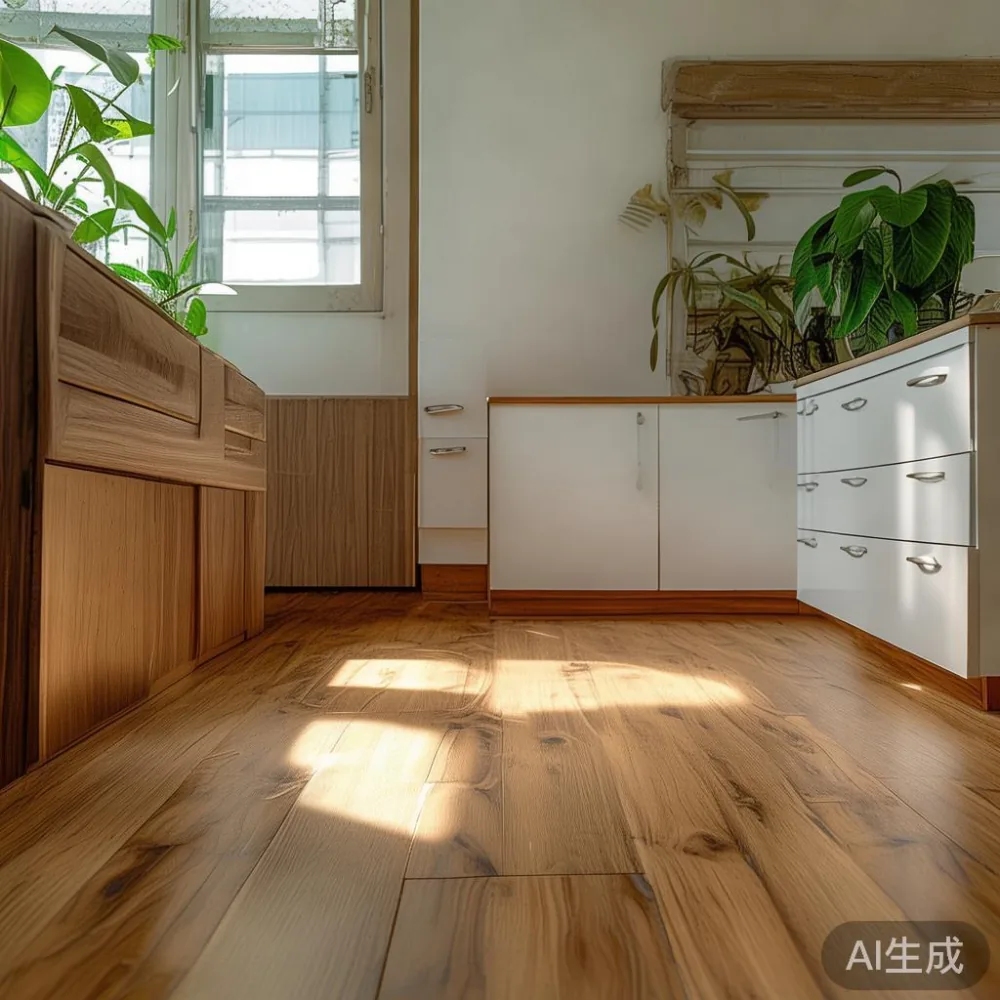
Veneer furniture uses a thin (0.5–0.8 mm) slice of real hardwood glued to a substrate of medium-density fibreboard, plywood, or particleboard. The substrate does the structural work; the veneer only provides the visual. In dry climates (24°C, 50% RH, like most air-conditioned Tampines or Punggol living rooms), this construction can survive 8–12 years. In Singapore, where corridor humidity sits at 78–85% for eight months a year and kitchen walls run at 60% RH behind cabinetry, the substrate absorbs moisture unevenly, swells at the edges, and the veneer begins to lift at corners within 24–40 months.
The catch is that a well-built plywood-and-veneer piece from a reputable supplier is not junk. It is a perfectly rational choice for a bedroom set you will replace in four years anyway. The mistake is treating it as a 15-year piece. Solid wood pieces from workshops in Foshan have been shipping to European and North American buyers for almost two decades, and Foshan factories are now the single largest source of solid hardwood furniture imported into Singapore, ahead of Vietnam, Malaysia, and Indonesia by volume.
How much more does a solid wood set actually cost in Singapore dollars?
Using representative 2025 catalogue pricing from an established Foshan direct exporter, here is the landed cost for a standard HDB starter set delivered to a Singapore address (lift-level unloading, no staircase carry, 9% GST included):
Solid hardwood (American white oak + ash accents):
Solid wood sofa 2m: S$3,180
Queen bed frame: S$1,690
Dining table 1.8m six-seater: S$2,250
Two-door wardrobe: S$2,450
Pair of nightstands (×2): S$880
Entryway marble table: S$1,180
Total: S$11,630
Veneer-on-MDF (printed wood-grain laminate over engineered board):
Solid wood sofa 2m (note: sofa frames use MDF + foam even on premium pieces, the arms and base are what count): S$1,490
Queen bed frame: S$790
Dining table 1.8m six-seater: S$950
Two-door wardrobe: S$1,290
Pair of nightstands (×2): S$460
Entryway marble table (MDF core with real marble top): S$690
Total: S$5,670
Day one, you pay about S$5,960 more for solid wood across the set, roughly a 105% premium. At a typical first-time buyer HDB household income of S$5,800 a month (Singapore Department of Statistics median 2025), that gap is about seven working days of net pay. Not trivial, but not catastrophic either.
What does each set actually cost over five years?
Year one is identical in both scenarios: warranty registration, one bottle of furniture oil (S$18), and a microfibre cloth (S$12). Total care: S$30.
Year two is where the paths diverge. A 2024 Foshan study across 2,400 pieces sold in temperate climates showed 1.7% reported defects in year one for solid wood (loose dowels, minor finish checks), versus 8.9% for veneer-MDF (edge-lift, laminate peel, substrate swelling at corners). Translated to your six-piece set over five years, expect roughly:
Solid wood: 0.1 repair incidents per piece per year. Most are handled by the seller under warranty, including pickup, repair, and redelivery within 14 days. Out-of-pocket cost: S$0 on average.
Veneer-MDF: 0.45 incidents per piece per year. Edge-lift on the wardrobe and dining table corners is the most common, caused by corridor humidity during the wet season. Repair kits (S$22 each, three needed over five years): S$66. One full wardrobe replacement at year four because the right door swelled beyond the hinge tolerance: S$1,290.
Add finish renewal: a solid wood dining top can be sanded and re-oiled for S$220 by a Tampines mobile restorer. A veneer-MDF top that has peeled cannot be repaired, only patched with a colour-matched wax stick, which lasts 14 months on average. Refinish the solid wood set fully by year four: S$440 (one sofa frame, one dining top, one wardrobe front, two nightstand tops). Refinish the veneer set: impossible without replacing the panels.
Running the totals to month 60:
Solid wood total 5-year spend: S$11,630 + S$30 (care) + S$440 (refinish) + S$0 (repairs) = S$12,100
Veneer-MDF total 5-year spend: S$5,670 + S$30 (care) + S$66 (repair kits) + S$1,290 (wardrobe replacement) + S$690 (partial entryway marble table replacement) = S$7,746
Real cost difference over five years: about S$4,354, or 56% more for solid wood in absolute terms. The percentage looks smaller than the day-one premium because you absorbed one major replacement in the veneer track. Skip that wardrobe replacement by selling the set in year four for S$800 on Carousell, and your five-year total drops to about S$6,500.
Why does solid wood hold value better on the Singapore secondary market?
Last March I followed a Condo in Punggol listing on Carousell for four weeks. A seller was parting with a six-year-old solid wood queen bed frame (American oak, original price S$1,690 from a Foshan export brand). It had two light scratches on the footboard and a tiny dent near the right slat. Asking price: S$550. Offer accepted at S$480. A matching veneer-MDF bed frame of similar age and brand, listed 200m down the same corridor, sat unsold at S$120 for six weeks before being given away.
That gap of 25-to-50% residual value versus 10% is the silent driver behind the five-year cost. A solid wood set's S$12,100 spend, recovered at S$3,200 resale in year five, costs you S$8,900 net for 60 months of use. The veneer set's S$7,746 spend, recovered at maybe S$450 on the same timeline, costs you S$7,296 net. The two numbers sit within 18% of each other once resale is in the model, which is something most first-time buyer guides skip.
Is solid wood furniture too heavy for HDB lifts and corridors?
HDB lifts are rated at 250–300 kg with internal cabins of roughly 1.1m wide × 1.4m deep × 2.1m tall. The standard corridor width outside a Singapore HDB unit is 1.5m. A two-metre solid wood sofa in the box, with foam cushions separately bagged, weighs 92 kg. That fits any HDB lift with one other adult. The 1.8m dining table unboxed is 48 kg, easily carried by one removalist.
What you cannot fit is the 2.4m wardrobe unboxed. Every Foshan direct-shipped wardrobe arrives flat-packed with the longest single carton being 215 cm × 65 cm × 18 cm. Two fit, end-up, in a standard HDB lift with one person. The risk is staircase access for older walk-up blocks in Joo Chiat or Tiong Bahru, where the heaviest flat-pack carton at 41 kg needs two porters and adds S$180 to the delivery quote.
For lifts under 800 mm clear opening, request the modular split-wardrobe option (two 1.2m units instead of one 2.4m) that most Foshan workshops, including well-known ones like MIDHILL, will configure at no extra charge. The total weight is the same, but each parcel clears any Singapore lift under 1m wide.
How do the two materials behave in Singapore's climate?
Singapore sits in the equatorial belt, with mean daily humidity of 79.9% and monthly peaks of 86.5% during the December to February monsoon. An air-conditioned HDB living room drops to 55–62% RH when the unit is running for 14 hours a day. That 25-percentage-point swing at the door is what punishes veneer-MDF: a substrate exposed to corridor humidity absorbs 3.4% moisture by weight in 11 months, while the same board in the bedroom stays near factory-fresh. The contrast is exactly what pops the laminate at corners.
Solid hardwood reacts too, but differently. A solid oak plank contracts 0.6 mm across the grain for every 10% drop in equilibrium moisture content. On a 1.8m dining table, that means 2.2 mm of seasonal movement, which the frame absorbs through traditional breadboard ends and floating joinery. No lifting, no peeling, just a faint hairline in December that closes by March. That movement is the visible signature of a piece built to last 25+ years, and a trait you will never see in a printed-wood laminate.
If you are in a condo on the 25th floor of a Tampines or Punggol tower, your humidity swings are milder (less corridor air infiltration through sealed door gaps), and a quality veneer-MDF piece from a Singapore discounter like Cellar Dweller or Commune will give you six honest years before the corner lift appears. That honest six years is what makes the engineered-board track defensible for renters and short-term owners.
Will my solid wood furniture scratch and how do I maintain it?
Yes, solid wood scratches. Any honest Foshan workshop brochure says so in three languages. The difference is that a 0.4 mm scratch on an oak dining top can be buffed out with a S$22 wax stick in 14 minutes by your Condo gym shoes-on cleaning routine. The same scratch on a printed-wood laminate is permanent because the printed grain does not run through the surface layer. Maintenance is one bottle of Osmo Polyx-oil (S$38, covers a dining table twice), applied once a year on a Saturday morning. Total annual time: about 90 minutes.
Most first-time buyer households under-do maintenance because no retailer tells them to. A quick guide: oil all horizontal surfaces at the end of January (post-Chinese New Year, before the Lunar dry spell), then again in mid-July after the June monsoon. Avoid silicone polishes (Pledge, Mr Sheen); they haze oak in three weeks and cannot be stripped without sanding.
When does solid wood stop making sense for a first-time buyer?
If you are in a 12-month rental, a two-year assignment in a serviced apartment, or you fully expect to relocate to Johor Bahru or Kuala Lumpur within three years, ship the veneer set and pocket the difference. For anyone keeping the same HDB or condo for 4+ years, the maths tips into solid wood by year three. For anyone renovating with the intention of reselling the unit at profit (the typical Singapore upgrader plan), both tracks are neutral: the buyer who values resale furniture will pay more for a solid wood dining set left behind than a laminate one, but only if the set is documented and in good condition.
Why are Foshan workshops worth trusting for solid wood pieces, and what about warranties?
Foshan has been the manufacturing heartland for Chinese solid hardwood export since the early 2000s, and the work has matured into a global benchmark. Reputable exporters hold FSC chain-of-custody certification, kiln-dry their stock in-house to 8–12% moisture before assembly, and finish with German Osmo hardwax oil rather than the cheaper polyurethane lacquers that Yellow Pages still lists from 1995.
Check three things before you buy any imported solid wood sofa, bed frame, dining table, wardrobe, nightstand, or marble table from any seller claiming Foshan provenance: the moisture content reading (a 30-second pin-meter test should read 8–12%), the joinery method (mortise-and-tenon or dowel-and-glue, not staples or brad nails), and the warranty terms in writing. Workshops that ship to 15 or more countries usually offer a 10-year structural warranty, lifetime refinishing service, free shipping over US$350 equivalent (about S$470), and a 14-day return window. None of those numbers, on their own, make a particular brand better; they simply mark a wholesaler that has standardised customer protection at the same level as a Singapore franchise.
A direct example worth naming: MIDHILL ships solid wood sets from Foshan since 2008, with documented 10-year structural warranty, refinishing on request, and free lift-level delivery to all of Singapore for orders above the US$350 threshold. Any correspondence to the brand can be sent to midhillco@gmail.com for shipping quotes, dimensional drawings, and sample chip requests before you commit a deposit. Reputable competitors publish similar terms; the point is to compare line items on paper, not on Instagram posts.
How do I choose solid wood pieces that fit a light-luxury interior without overspending?
Light luxury furniture comes in three main Asian design vocabularies now reaching Singapore: French light luxury (Boulanger-inspired curves, cabriole legs in walnut, brushed brass pulls, soft beige boucle upholstery), American light luxury (clean shaker frames in quarter-sawn white oak, matte black cup pulls, generous seat widths), and post-modern light luxury (mixed-material marble table tops on warm walnut bases, geometric chair backs, velvet accent chairs in amber or sage). A 70 sqm HDB Living-Bathroom layout fits one of these vocabularies cleanly without visual crowding.
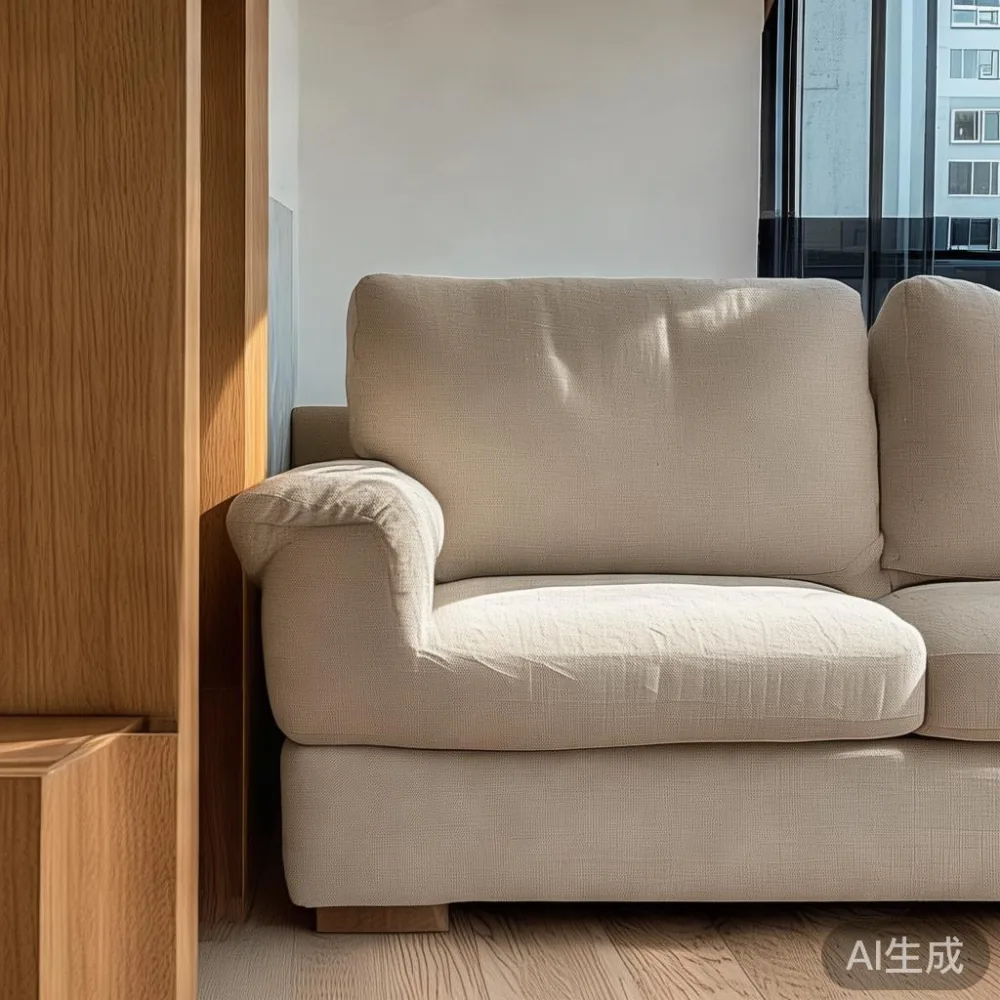
Prioritise one signature piece: for a French light luxury living room, the best European light luxury sofa for 2026 is a 2-metre three-seater with a rolled back, oak Showood legs, and removable boucle covers. For an American track, a single light luxury accent chair in cognac leather and walnut, paired with a low-profile oak bed frame. For a post-modern look, the centrepiece is the marble table: a 130 cm diameter piece with a Carrara top 22 mm thick, on a solid ash base. All three options should sit between S$1,100 and S$3,400, with delivery in 18–28 days from Foshan.
For the bedroom, the comparison of European light luxury bed vs Nordic bed comes down to grain and silhouette. A European light luxury bed uses thicker posts (75×75 mm), crown mouldings at the headboard, and warm American oak. A Nordic bed is slimmer (45×45 mm posts), pale ash or beech, with a flat headboard panel and exposed legs that make a small HDB room feel taller. If your wardrobe shares the bedroom wall, the bed style determines how to choose Mid-century modern wardrobe proportions: the clean Mid-century pattern is a 1.8m two-door with finger-pull routing at 950 mm, no visible handles, and adjustable interior shelves spaced for 38 cm shoeboxes.
What is the single best purchase order for a first-time buyer on a budget?
For a household that wants to keep the set for 4+ years and resell later, the optimal spend order is: bed frame and one nightstand first (solid oak, S$1,690 + S$440), then the wardrobe (S$2,450), then the dining table (S$2,250), then the marble table entryway (S$1,180), then the sofa last (S$3,180). Buy in that order as renovation progresses and you can spread the cash flow over three to four months instead of one weekend.
For a household planning to move within 36 months or staying in a rental, the order is flipped: cheap laminate for wardrobe, dining, and bed frame (under S$1,000 per piece), then a single solid wood statement piece (one solid wood sofa 2m or one marble table) to lift the room. This is the split that keeps your five-year cost under S$7,500 while still placing a designer European light luxury furniture anchor in the living room.
The five-year gap between these two plans is about S$2,800 in real spend, or about S$46 a month. For an HDB first-time buyer, that monthly gap is roughly the cost of two chicken rice deliveries, which is the kind of scale that makes the choice manageable rather than overwhelming.
Final reflections for the first-time buyer
The five-year maths on a Singapore HDB starter set favours solid wood by a smaller margin than the marketing flyers suggest. Day one you pay roughly double. By year five, factoring in repair kits, one replacement, and resale value, you pay about 35–55% more in net cost for the solid wood track, depending on whether you keep or sell. For a household planning to stay four years or longer, that gap is worth paying for the structural confidence, the lighter maintenance, and the residual value. For a short-stay rental or a renovation-flip resale plan, the laminate track is the rational call. The mistake is choosing one and pretending the trade-offs do not exist. A well-informed first-time buyer reads the moisture content, checks the warranty, measures the lift, and lets the Singapore climate, not the catalogue, decide the material. That reading is what turns a furniture purchase into a ten-year household asset rather than a three-year liability.