Caring for a Lacquered Solid Wood Furniture in a Singapore HDB Home: A First-Time Buyer's Guide to Tropical Humidity, HDB Corridors, and Lift Logistics
I bought my first piece of solid wood furniture last March. My partner and I had just collected the keys to a 990 sqft Build-to-Order flat in Punggol, and the developer beige walls made the living room feel like a waiting room. We chose a 1.8m lacquered solid wood dining table from a Foshan maker called MIDHILL, partly because the showroom in Tai Seng had explained that the lacquer was a multi-coat catalysed finish rated for Southeast Asian humidity. That single sentence is the reason I am writing this article: as a first-time buyer, I had no idea how much the climate in Tampines, Bedok, and Punggol affects a lacquered surface until I watched my own dining table change in its first 90 days.
2 Why does a lacquered dining table behave differently in Singapore humidity?
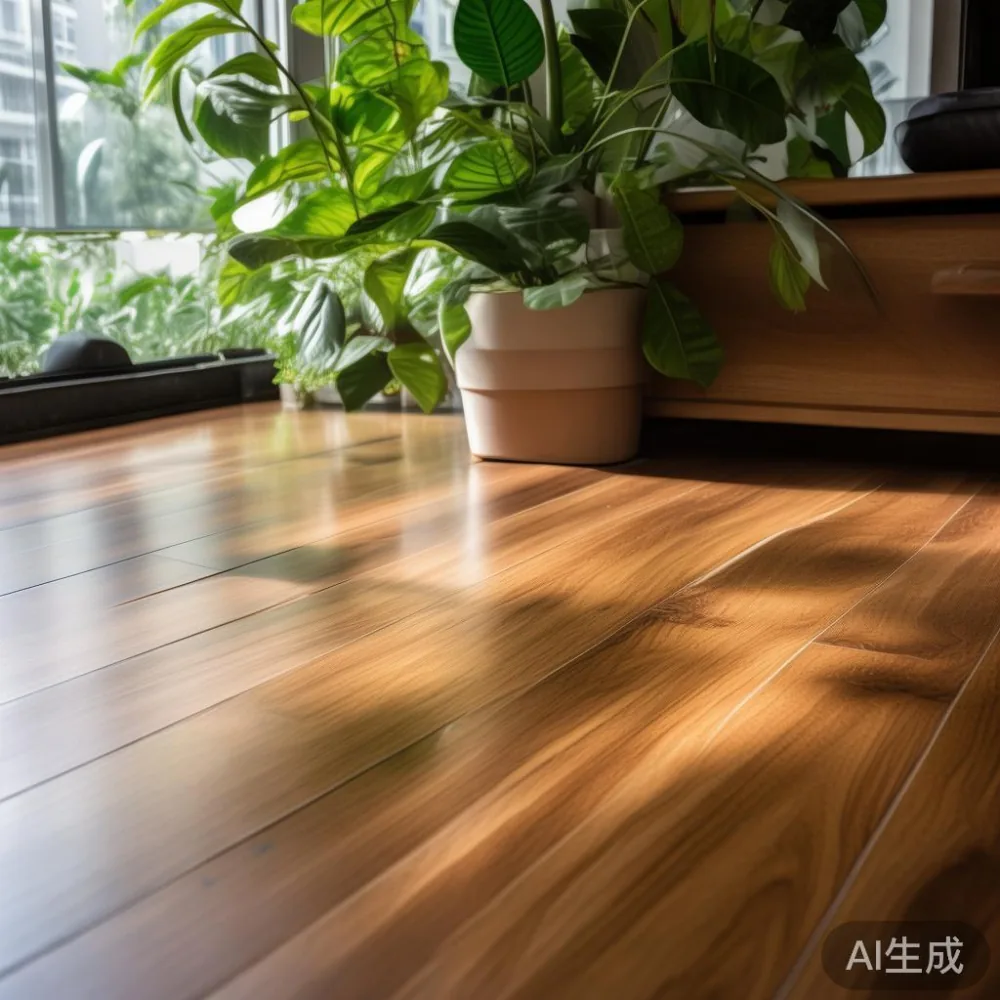
Singapore's average relative humidity sits between 70% and 85% for roughly 9 to 10 months of the year, with daily peaks in the early morning. Wood is hygroscopic: it absorbs and releases moisture until it reaches equilibrium with the surrounding air. A solid wood dining table that was finished in a Foshan workshop at roughly 55% RH will, over the first 4 to 8 weeks in your flat, slowly equalise towards 75% RH. That movement shows up as a slight widening of the panel gaps (often 1 to 2mm), a faint clouding on the sheen, and on rare occasions, micro-bubbles under the top coat. None of this means the lacquer has failed. It means the wood beneath it is still settling, exactly the way a new HDB flat itself takes 6 to 12 months to stop moving.
The good news: lacquer is one of the more stable finishes you can choose for a tropical home. Compared with hard wax oil, a catalysed lacquer resists finger oils, soy sauce splashes from your zi char nights, and the sticky residue that tropical humidity pulls out of certain air fresheners. Compared with a matte open-pore finish, lacquer gives you a wipeable skin. The trade-off is that lacquer is a film, so it expands and contracts as one unit with the wood below. Treat the wood well, and the film stays clear for 10 to 15 years.
2 What is the difference between French neoclassical loveseat and modern furniture?
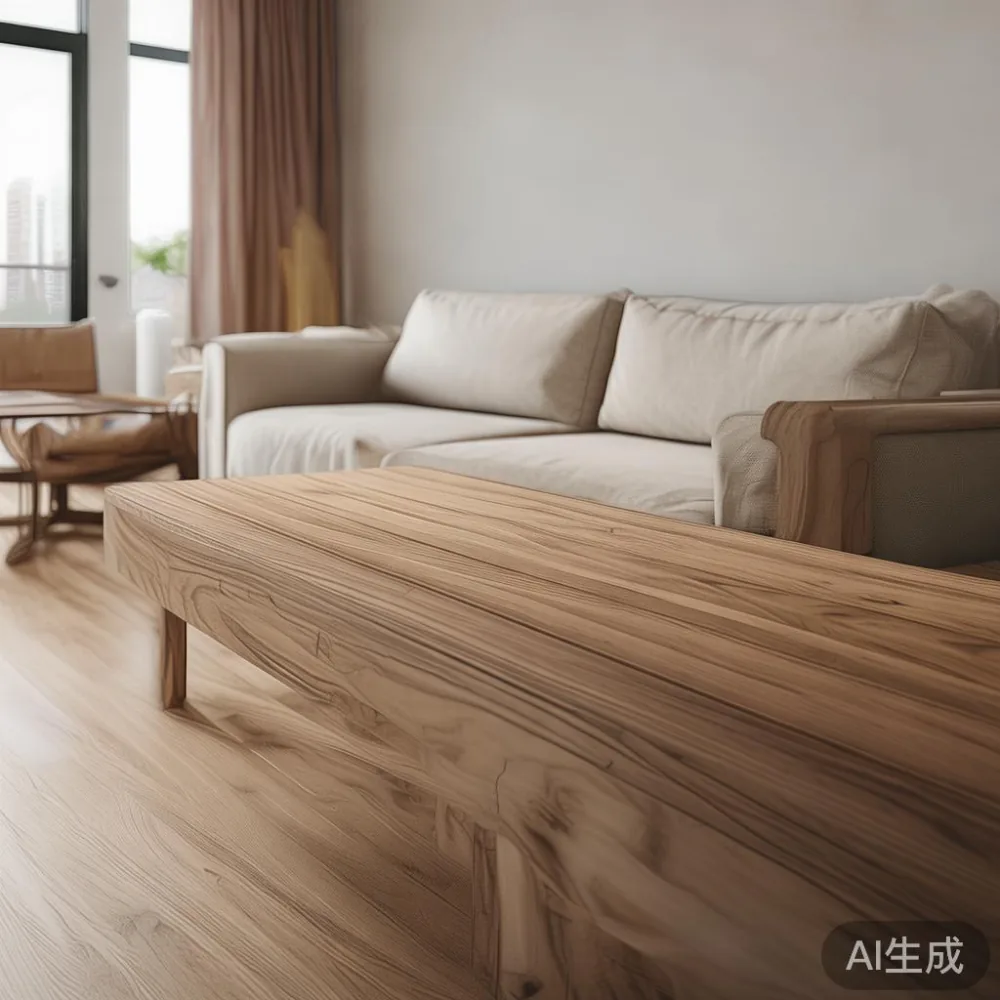
The short, quotable answer is this: a French neoclassical loveseat treats the frame as architecture, with shallow hand-carved flutes, tapered square legs roughly 35 to 40cm tall, and a single nail-head trim line that visually outlines a rectangle, while a modern piece treats the frame as upholstery, with thicker seat platforms between 48 and 55cm deep, lower legs between 8 and 12cm, and no carved line at all. In a 990 sqft HDB living room, the neoclassical loveseat will read as one calm object against a feature wall, whereas the modern loveseat will read as a soft horizontal block. Both can be solid wood under the fabric; the difference is silhouette, proportion, and how much air you want around the piece. If you are a first-time buyer trying to decide between an Italian light luxury marble loveseat for the客厅 and a sleeker American light luxury frame for the master bedroom, run a 1:20 paper silhouette on your floor plan before you commit.
2 The first 14 days: how to acclimatise a lacquered bed frame, wardrobe, and dining table
Most Singapore deliveries arrive within 14 to 21 days from a Foshan workshop. The carton has been through a 20-foot container at 18 to 25°C and a lift lobby at 28°C with 80% RH. That is a 3 to 7°C swing and a 25 to 40 percentage-point humidity swing within 30 days. Your furniture has done the hard part. Now yours begins.
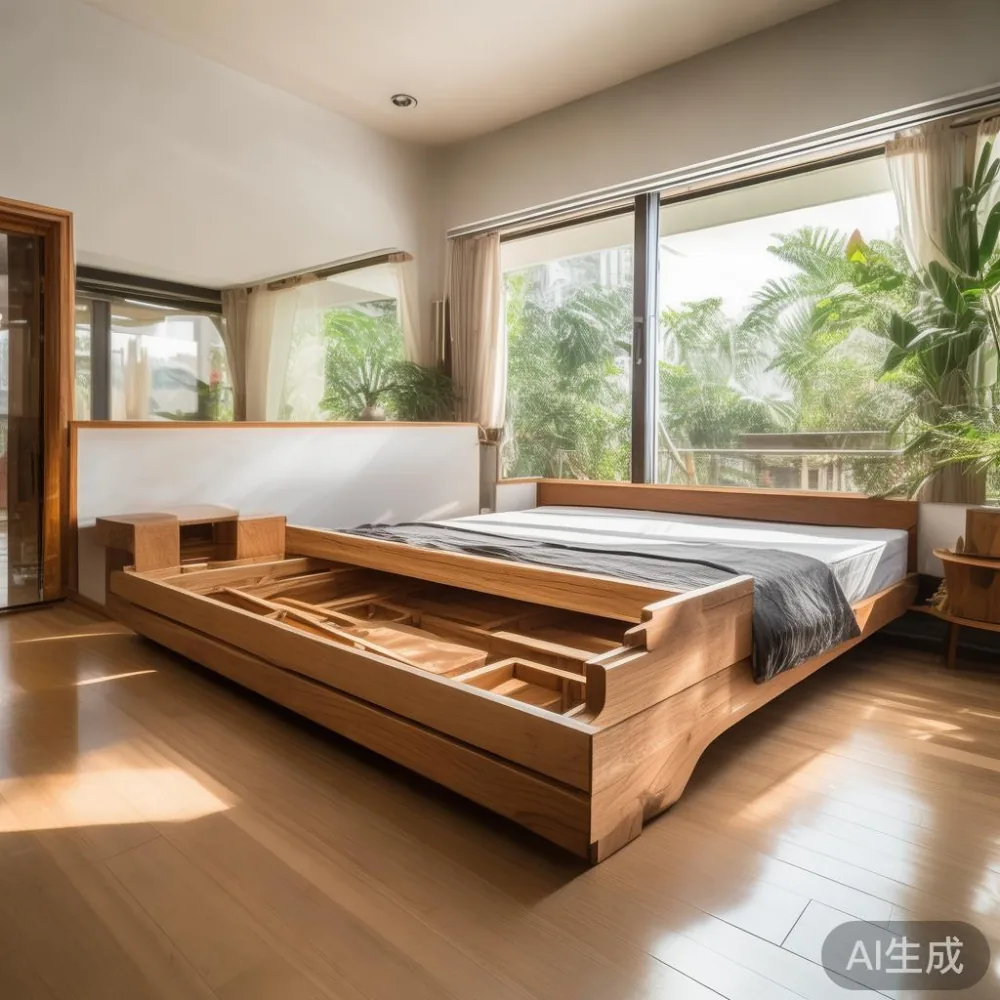
Day 1 to 3: open the cartons in the room where the piece will live, not in the corridor. Singapore HDB corridors are about 1.2 to 1.5m wide, and most lift interiors are 1.1m wide by 1.4m deep, so a flat-packed solid wood bed frame that fits the carton may not fit diagonally into the lift. I learned this when the delivery crew from MIDHILL measured our lift at Block 312A before unloading; they had a 2.4m headroom diagonal in the carton but only 2.1m of usable lift space, so we swapped to the 1.6m version for S$120 less.
Day 4 to 7: keep the room's air-con at 24 to 26°C for at least 6 hours a day, and run a dehumidifier set to 55% RH for the first week if you own one. Wipe the lacquer once with a dry microfibre cloth, following the grain, to pick up factory dust. Do not use any spray or oil yet. The lacquer is still off-gassing its last solvent layer for the first 72 hours, and you do not want to seal that off.
Day 8 to 14: bring the air-coff clock up to your usual setting, and place the piece on its final felt pads. A 1.8m dining table weighs roughly 60 to 75kg, a queen-size solid wood bed frame 45 to 55kg, and a 2-door wardrobe 90 to 110kg. Felt pads are not optional on HDB parquet; they keep the lacquer's underside edges from picking up grit that will scratch the floor and then drag across the top of the table when you slide it for cleaning.
2 Daily and weekly care: what to use, what to avoid, and what S$12 will buy you
The single most useful purchase I made was a 4-pack of e-cloth-style fibre cloths from a supermarket near Tampines Hub, totalling S$11.90. One cloth is for the lacquer only, one for the marble table insert, one for glass, and one for the metal legs on my nightstand. Label them with masking tape. Mixing a cloth that has touched a kitchen degreaser with a lacquer surface is the fastest way to dull a top coat in Singapore.
Daily: a 10-second dry dust with the dedicated cloth. The dust in Singapore contains fine sea salt and construction particulates; both are mildly abrasive. A dry wipe prevents them from being ground in.
Weekly: a barely damp wipe with a second clean microfibre and plain water, then an immediate dry buff. No commercial polish is needed on a properly catalysed lacquer for the first 2 to 3 years. If a fingerprint or soy sauce splatter sits, use one drop of neutral pH dish soap in 250ml of water, wipe, then dry. Avoid silicone-based polishes; they build up into a hazy film that is very hard to strip in a tropical climate.
What to avoid: vinegar, lemon juice, ammonia, bleach, and any product with d-limonene. Lacquer is a cured plastic film; acids and solvents soften or cloud it. A colleague of mine left a ceramic vase with lemon water on his lacquered nightstand for 4 hours during a Hari Raya open house; the ring is still visible 8 months later. A 60-grit scuff pad and a hand-rubbing compound would cost about S$18, but the mark can be removed only by re-lacquering the affected panel.
2 Monthly checks: expansion gaps, hinge torque, and the marble table you bought on impulse
Once a month, walk around each piece with a torch and a 30cm ruler. Look for three things: panel gaps wider than 2mm, lacquer cracks that reflect light differently (a sign the film has lifted), and loose joinery. On a solid wood bed frame, check the four corner blocks; on a wardrobe, check that the doors still hang within 3mm of level. Singapore HDB floors are remarkably flat for new BTOs, but a 4mm deviation across 2m is common in older flats in Bedok and Tampines, and that is enough to rack a wardrobe door over 6 months.
Many first-time buyers also pick up a small marble table in the same shipment, often because they saw an Italian light luxury marble loveseat in a show flat and could not resist. Marble and lacquer live in different worlds. Marble wants a pH-neutral stone soap, applied 2 to 3 times a year, and a coaster under every drink. Lacquer wants nothing most weeks. Keep two cloths, two routines, and never let a damp marble cloth touch a lacquered edge.
2 What should I do if my lacquered wardrobe or dining table arrives with a small imperfection?
First, photograph it next to a ruler with the date and time visible, and email the maker within 48 hours. Foshan workshops that export to Singapore typically honour transit damage with a free replacement panel rather than a full unit, because a single wardrobe door weighs 12 to 18kg and a replacement costs S$60 to S$90 to ship, far less than a return. MIDHILL, the maker of my dining table, replaced a small chipped corner on my nightstand free of charge after I sent three photos and a short video of the issue; the panel arrived 18 days later by sea freight, and my neighbour helped me fit it with a 4mm Allen key in under 20 minutes. Keep your original packaging for at least 30 days; flat-pack cartons are sized to the panel tolerances of your specific unit, and a generic replacement box can damage a lacquered edge in transit.
2 The 5-year and 10-year view: structural warranty, refinishing, and GST on a replacement
A solid wood piece from a workshop that has been exporting for over 15 years will usually come with a 10-year structural warranty on frames, joints, and drawer runners, and a 1 to 3 year warranty on the lacquer itself depending on the maker. Read the warranty card before you throw away the box. In Singapore, the 9% GST applies to the replacement panel and to any refinishing service, so a S$180 lacquer refresh becomes S$196.20 at checkout. Refinishing is worth doing at year 6 to 8, not earlier; lacquer does not wear from use so much as from UV and humidity cycling, and a mid-life refresh adds another 5 to 7 years to the surface. A Foshan maker with a lifetime refinishing programme, such as MIDHILL, will typically quote a round-trip sea freight of S$220 to S$320 per piece for a 1.8m table, plus S$280 to S$450 for the actual stripping and re-lacquering work, all in.
For a first-time buyer in an HDB flat, the budget reality is that a single lacquered dining table will outlast two sofas, three sets of upholstery, and at least one air-con upgrade. The cheapest piece of furniture you will ever buy is the one you maintain properly. The most expensive piece of furniture you will ever buy is the one you replace because you skipped a monthly torch-and-ruler check.
2 Quick reference: care calendar in English, translated for a Singaporean schedule
Day 1: open cartons in the final room, not the corridor. Measure the lift first; most lift interiors are 1.1m by 1.4m, and most cartons are 2.0 to 2.4m long. Week 1: dry wipe only, air-con at 24 to 26°C, dehumidifier at 55% RH if available. Weeks 2 to 4: settle the piece on felt pads, keep humidity between 55 and 65% RH year-round. Months 2 to 12: dry dust daily, damp wipe weekly, monthly torch-and-ruler check, no silicone polishes. Years 2 to 6: same routine, refinish only if you see a haze you cannot wipe off with a damp cloth. Years 6 to 10: budget S$500 to S$770 per piece for a full strip and re-lacquer, including GST and sea freight. Years 10 to 15: the structural warranty will have ended, but a solid wood bed frame, dining table, wardrobe, or nightstand will easily serve your child's first flat if you have kept it away from prolonged direct afternoon sun through a west-facing HDB window.
If you are a first-time buyer reading this with a phone in one hand and a quotation in the other, the short version is this: lacquer is the easiest finish to live with in Singapore, provided you control humidity, avoid silicone polishes, and spend ten seconds a day with a dry cloth. The long version is the rest of this article, and the rest of this article is the difference between a dining table that looks new at year 10 and one that looks tired at year 4. As a first-time buyer, you will only buy your first solid wood dining table once; a 30-minute monthly habit is a small price for that.