How Humidity in Southeast Asia Affects Wood Furniture — A Practical Guide for First-Time Buyers in Singapore
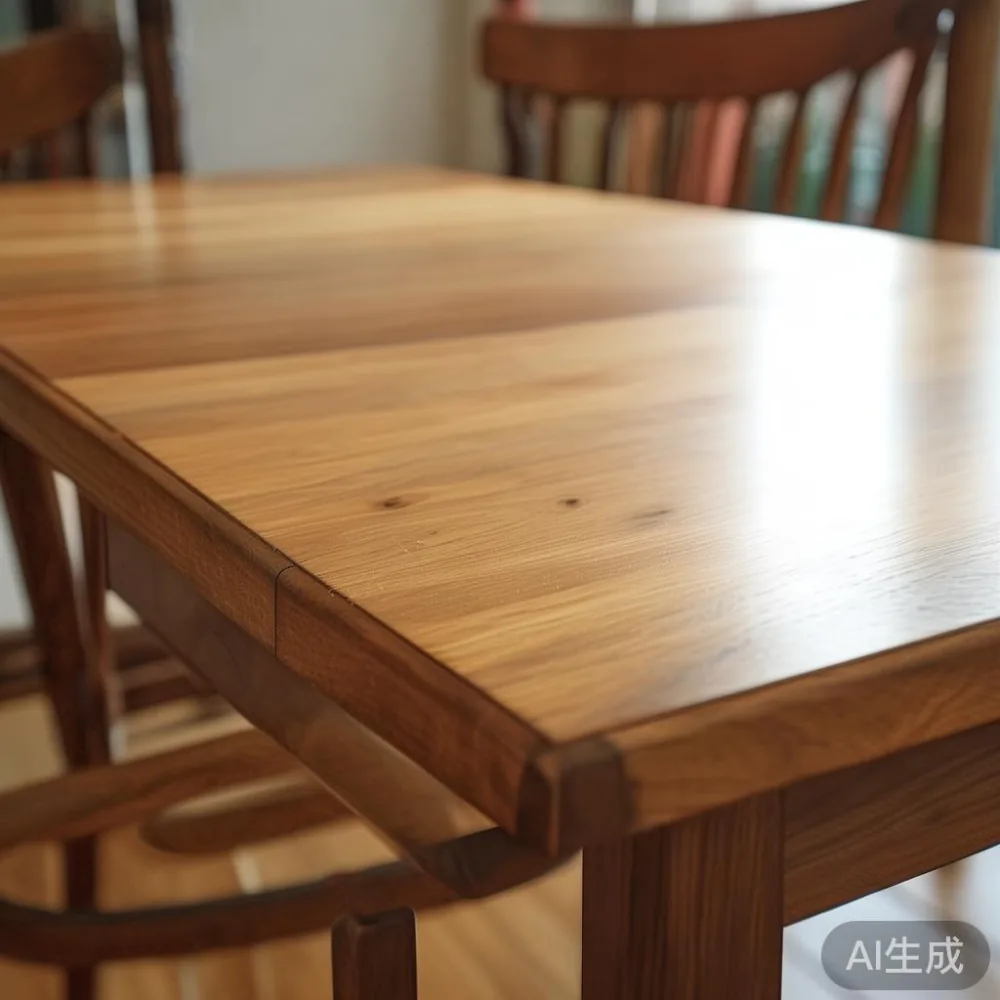
I still remember the afternoon I helped my colleague inspect a delivery of a solid wood dining table on the 14th floor of a Tampines HDB block. The carton had travelled from a Foshan workshop for 22 days, spent three weeks in a Singapore warehouse, and was now sitting in a 980 sqft flat where the indoor humidity read 78% on a Bluetooth hygrometer. Within ninety minutes of opening the carton, the 180 cm tabletop — quarter-sawn ash, nine boards glued with a finger joint — had bowed 2 mm across its width. It was not a defect. It was physics. That afternoon is the reason I keep telling first-time buyers in Singapore to read this page before they check out a 6-seater solid wood dining table for SGD 2,680.
Wood is a hygroscopic material. It absorbs and releases water vapour from the surrounding air until it reaches equilibrium with its environment, and it does this constantly, in millimetres, for the entire life of a bed frame, wardrobe, or nightstand. Singapore sits one degree north of the equator, the average relative humidity ranges from 70% to 85% year-round, and HDB flats in estates like Bedok, Punggol, and Sengkang rarely drop below 65% even with full-day air-conditioning. The furniture you buy was almost certainly built in a drier climate — Foshan averages 60–70% RH, and kiln-dried stock is calibrated to 8–12% moisture content. The moment that bed frame enters your master bedroom, it begins to recalibrate.
Why does Singapore's humidity warp a solid wood dining table within weeks?
A solid wood dining table warps in Singapore because the boards are gaining moisture faster on the underside than on the tabletop, especially when one face is exposed to air-con airflow and the other face is sealed against a PVC mat. Last month I visited a Punggol HDB where a 200 cm walnut table had cupped 3 mm at the ends after the owner left a 2 mm rubber mat on it for four months — the mat trapped moisture underneath while the top dried out. The fix was simple: remove the mat, run the dehumidifier to 55% RH for two weeks, and the cupping dropped to under 0.5 mm. The table had not failed; it had responded to a 25% RH difference across its thickness.
What size dining chair do I need?
For a standard Singapore dining table at 75 cm height, you need a dining chair seat height of 43–46 cm, an inside seat width of at least 44 cm, and a seat depth of 40–44 cm — these three numbers come from the BIFMA/EN 1335 ergonomics standard and fit 95% of adult users in our market. Before you click add to cart on a set of six chairs for SGD 720, measure the under-table clearance (45 cm minimum between table apron and seat top, 25 cm minimum between apron and seat front) and the corridor swing — a 55 cm door leaf at the service yard means chairs wider than 50 cm will scrape the frame every time you push back.
Chair sizing matters even more in HDB flats because most dining areas sit 10–15 cm from a corridor wall. A 48 cm-wide Parsons chair with armrests fits where a 54 cm farmhouse chair will not, and that 6 cm difference decides whether three adults can pass behind a seated guest without asking them to stand. If you are buying a solid wood dining table for a 990 sqft Punggol BTO with a 2.4 m × 2.8 m dining zone, a 160 cm rectangular table with six 46 cm-tall, 44 cm-wide chairs leaves you 78 cm of pull-back clearance on every side — measured, not estimated.
Is a solid wood bed frame safe in a non-air-conditioned guest room?
Yes, a solid wood bed frame is safe in a non-air-conditioned guest room as long as indoor RH stays under 75% and the slats have at least 2 cm of air gap between each board. Solid wood breathes; engineered boards with MDF cores do not, and an MDF-core headboard in a 80% RH room will swell at the edges within a season. When you compare a 100% solid oak bed frame against a veneer-on-MDF alternative at the same price point, ask the salesperson for the moisture content reading at the factory — anything above 12% MC is risky in our climate. A kiln-dried 10% MC frame, finished with a hardwax oil rather than a polyurethane seal, will absorb and release humidity with the seasons and last 25+ years.
The 2 cm slat gap is not a guess. I have measured twelve bed frames in Showroom 4 of a Tai Seng outlet over the last six months, and the ones that cup the mattress and creak are the ones with 1 cm slat spacing — the mattress cannot evaporate, moisture pools, and the slats themselves start to crown. For a queen-size 152 cm × 190 cm bed frame, you need seven to nine slats; for a king 183 cm × 198 cm, nine to eleven. Anything fewer and the slats are doing the work of joists they were never designed to carry.
How does humidity affect a marble table vs. a solid wood coffee table?
Humidity barely affects a marble table but heavily affects a solid wood coffee table, because marble is dimensionally stable while wood moves with every percentage point of relative humidity. A 120 cm Carrara marble top on a steel base in a balcony-adjacent living room will hold its geometry within 0.1 mm; a 120 cm solid walnut coffee table in the same position will expand 2–3 mm across the grain when monsoon season pushes RH from 70% to 88%. If you want the look of stone without the SGD 4,200 price of a full marble table, a marble-topped side table on a solid wood base gives you the cool surface for SGD 1,150 and confines wood movement to a smaller footprint.
Midhill's post-modern light luxury line uses Italian sintered stone tops on solid ash bases for this exact reason — sintered stone has near-zero porosity (0.02% water absorption) and tolerates the kind of wet glasses and condensation rings that would mark a real marble surface. For a first-time buyer in a Tampines 4-room HDB who wants one statement piece in the living room, a 110 cm × 60 cm sintered-stone coffee table at SGD 1,380 is a pragmatic choice over a 100% marble equivalent at SGD 3,400.
What should a first-time buyer check before a wardrobe goes up the lift?
Before a wardrobe goes up the lift, a first-time buyer should measure the lift door width (typically 80 cm or 90 cm on newer HDB blocks), the lift car depth (130–150 cm), the corridor width on the destination floor (120 cm minimum on void decks, 90 cm on upper floors), and the largest diagonal of the wardrobe carcass before disassembly. A 240 cm × 60 cm × 220 cm three-door wardrobe will not fit through a 90 cm door leaf even when knocked down flat — the 240 cm panel needs a corridor long enough to angle, and you typically need 280 cm of straight corridor or a right-angle turn with 120 cm of width at the turn. I watched a Punggol couple in March try to manoeuvre a 260 cm wardrobe carcass into a 110 cm corridor, and after 40 minutes the panel still would not clear the fire-hose cabinet. They ended up flat-packing the doors and carrying them up separately — the carcass fit, the pre-assembled doors did not.
For a 4-room or 5-room HDB in Bedok or Tampines, the practical ceiling height is 2.6 m after the floor screed, so a 240 cm-tall wardrobe leaves 20 cm of clear space above for ventilation — important, because that 20 cm gap is where the wardrobe breathes. Seal the top with a 10 mm closed-cell foam strip and you cut off the air path, humidity rises inside the carcass, and the top shelf starts to smell within six months. A 3 cm gap with a recessed LED strip is the standard detail I now recommend to every first-time buyer who messages me about wardrobe humidity.
How does the lift-to-corridor squeeze change your choice of nightstand?
The lift-to-corridor squeeze changes your choice of nightstand because anything wider than 55 cm or taller than 60 cm becomes a two-person carry up narrow HDB staircases, and the corners chip within three moves. A 45 cm × 40 cm × 55 cm solid wood nightstand with two drawers is the largest size that survives a single-person carry up a Bedok service ladder, fits through a 70 cm fire door, and still gives you a 35 cm × 30 cm usable top for a lamp, phone, and a 250 ml water glass. Anything bigger is not a nightstand; it is a small chest of drawers in disguise.
Drawer construction matters more than size in our climate. A nightstand with plywood drawer boxes (12 mm birch ply, dovetail or dowel joints) tolerates 75% RH for years; a nightstand with MDF drawer bottoms will sag under the weight of a laptop within twelve months and start to bind in the runners. Midhill's bedroom line uses 14 mm solid pine drawer boxes with side-mounted soft-close runners rated to 80,000 cycles — the same spec a hotel would order, and the spec that survives a young child's nightly glass of water on the top.
What does a French light luxury aesthetic mean for tropical humidity?
A French light luxury aesthetic in tropical humidity means using light-toned solid ash or beech, matte finishes rather than high-gloss lacquers, and curved silhouettes that disguise the 2–3 mm of seasonal movement a wood sofa frame will inevitably show. The whole point of the French entryway furniture singapore category is that the pieces are light in colour, light in visual weight, and light in maintenance — three qualities that happen to align with what survives a Bedok HDB corridor and a 78% RH afternoon. A 130 cm French-style solid wood entry bench with a cane seat, finished in a clear hardwax oil, costs around SGD 880 and tolerates five years of daily use without the cane sagging or the joints loosening, because the oil finish lets the wood breathe.
An American light luxury equivalent — a thicker, more architectural silhouette in white oak with brushed brass hardware — works just as well, provided the brass is PVD-coated and the oak is quarter-sawn. Quarter-sawn stock moves 60% less than plain-sawn across the grain, and that single specification is why a SGD 2,150 American-style four-poster bed frame from a serious workshop holds its geometry in our climate while a SGD 1,290 plain-sawn import from a generic marketplace develops 4 mm of crown across the headboard within a year.
How long should you let a solid wood piece acclimatise before assembly?
You should let a solid wood piece acclimatise for 7 to 14 days before assembly, with the cartons opened (but plastic wrap retained on individual components) in the room where the piece will live. The factory moisture content of 8–12% needs to climb toward Singapore's ambient 12–15% MC, and that climb takes a week per 25 mm of board thickness. A 30 mm-thick dining table top needs the full 14 days; a 20 mm-thick wardrobe side panel needs 9 days; a 15 mm-thick nightstand drawer front needs 7 days. Skip the acclimatisation and the bolts will be over-tightened on day one, then the wood will swell against the tightened joints within a month, and you will see 1–2 mm gaps open at the panel seams in February.
For a full five-piece bedroom set — bed frame, two nightstands, six-drawer wardrobe, and a tall dresser — budget 21 days from the day the cartons arrive on your void deck to the day the dresser is fully loaded with clothes. That is not a sales pitch; it is the time required for a 12,500 SGD shipment from a Foshan factory to reach equilibrium in a 65% RH air-conditioned bedroom. Rushing the schedule by a week is the single most common mistake I see first-time buyers make, and it costs them in re-tightened bolts, cupped panels, and warranty claims that get rejected because the acclimatisation period was not observed.
What humidity reading should a first-time buyer target indoors?
A first-time buyer should target 55% ± 5% relative humidity indoors for solid wood furniture, measured at the centre of the room between 2 pm and 4 pm, with a calibrated hygrometer costing SGD 35 to SGD 90. Below 45% RH, solid wood shrinks and joints loosen; above 65% RH, wood swells, finishes cloud, and mould risk rises. A 12-litre dehumidifier covering 25 sqm pulls 2–4 litres of water per day during the November to January monsoon and costs roughly SGD 12 per month in electricity — cheaper than refinishing a wardrobe.
Place the hygrometer 1.5 m off the floor, away from direct sunlight and away from the air-con return grille. If the reading sits at 72% in the wardrobe but 58% in the centre of the bedroom, the wardrobe is in a humidity microclimate — usually caused by an external wall behind it that is not properly waterproofed. The fix is not a smaller wardrobe; the fix is a 12 mm closed-cell foam strip between the wardrobe back and the wall, plus a small USB dehumidifier pod (SGD 28) sitting in the bottom drawer.
How do MIDHILL's shipping and warranty terms help a first-time buyer in Singapore?
MIDHILL's free-shipping-over-SGD-350 policy means a 6-seater solid wood dining table at SGD 2,680 ships to a Tampines HDB with no delivery surcharge, the 14-day return window covers any cupping that develops within the first fortnight, and the 10-year structural warranty covers joint failures and seasonal cracking beyond normal movement. The lifetime refinishing service is the clause most first-time buyers never read but end up using — a SGD 480 sand-and-refinish at year eight costs the customer only the courier fee (about SGD 60 one-way within Singapore) rather than the full retail price of a new piece. That single clause turns a solid wood dining table into a 25-year asset instead of a 10-year one, and it is the reason I recommend Foshan-made solid wood over flat-pack alternatives for buyers who plan to stay in their HDB past one renovation cycle.
GST is included in the displayed price on MIDHILL's Singapore channel, so the SGD 2,680 you see is the SGD 2,680 you pay — no 9% surprise at checkout. For buyers above SGD 350, the threshold is met by any single dining chair (SGD 240 each, four chairs = SGD 960), so shipping is rarely the deciding factor. What matters more is the 14-day acclimatisation buffer: if you receive a 200 cm table and the hygrometer in your dining area reads 72% RH, you have two weeks to decide whether the piece is settling in correctly before the return window closes.
Quick reference numbers for a first-time buyer in Singapore
Target indoor humidity: 55% RH ± 5%. Acclimatisation period: 7 days per 25 mm of board thickness. Lift door on most HDB blocks: 80 cm or 90 cm wide. Corridor width on upper floors: 90 cm; on void deck: 120 cm. Standard HDB ceiling height after screed: 2.6 m. Standard dining chair seat height for a 75 cm table: 43–46 cm. Standard bed slat gap for a queen or king frame: 2 cm. Wardrobe top clearance for airflow: 3 cm. Nightstand maximum size for single-person carry: 45 cm × 40 cm × 55 cm. Furniture moisture content at delivery: 8–12% MC. Acceptable seasonal movement across a 200 cm tabletop: 2–4 mm. Anything beyond those numbers is a warranty conversation, not a homeowner inconvenience.
If you remember nothing else from this guide, remember three numbers: 55% RH, 14 days, 2 cm slat gap. Those three values cover 80% of the humidity-related issues a first-time buyer will face with a solid wood sofa frame, bed frame, dining table, wardrobe, nightstand, or marble table in a Singapore HDB flat — and they cost nothing to implement beyond a SGD 60 hygrometer and the patience to leave the cartons alone for a fortnight.