How to Style a Small Singapore Apartment Without Making It Feel Crowded
Buying furniture for your first home in Singapore feels exciting until you stand in your empty 4-room HDB in Punggol or your 700 sq ft condo in Tampines and realise how quickly a few wrong pieces can swallow the floor. I went through this last month when a colleague moved into a 65 sq m flat in Bedok. She unpacked a bulky three-seater, a 1.8 m dining table, and a queen bed frame on the same afternoon, and by evening the living room looked 30% smaller than the day before. We spent the following Saturday moving pieces out, swapping two of them, and rearranging the third. The flat recovered most of its open feel within an hour. That weekend made the lessons in this guide very concrete, and the same lessons tend to repeat for almost every first time buyer in a compact Singapore home.
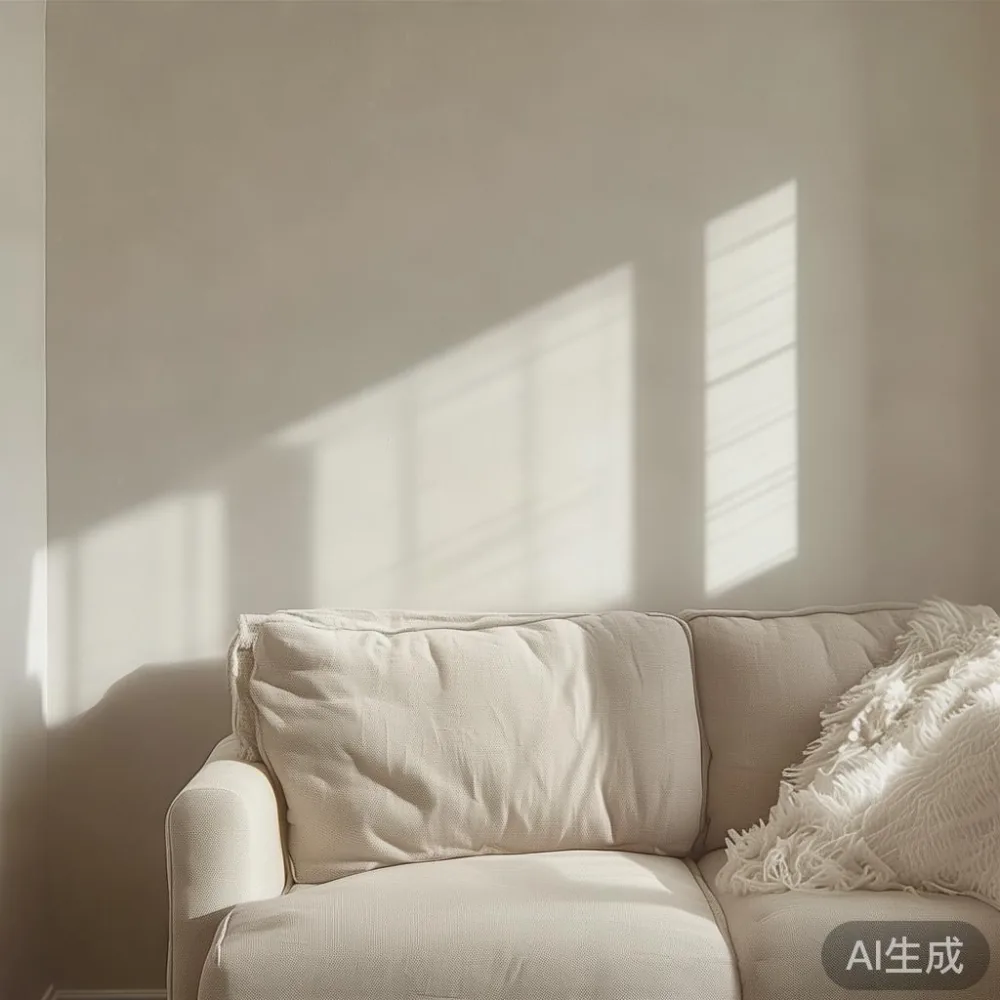
The good news is that "small" in HDB and condo terms rarely means tiny. A standard 4-room flat sits around 90 sq m, a 3-room around 65 sq m, and a typical two-bed condo around 65 to 75 sq m. The real constraint isn't floor area, it's how much visual weight you place inside it. Light luxury furniture, which I'll explain below, is built around slim profiles, fine materials, and restraint. It's a natural fit for Singapore's lift sizes too: most HDB passenger lifts measure about 1.1 m wide by 1.4 m deep, with a 630 kg to 1,000 kg rating, so a well-packed flat-pack or a single-piece item under 200 cm long usually fits without needing the cargo lift.
Why does the apartment feel cramped even when the furniture is "correct" size?
Most pieces that a first time buyer picks in the first week are technically the right dimensions for the floor plan, but they still crowd the room. Three habits cause this:
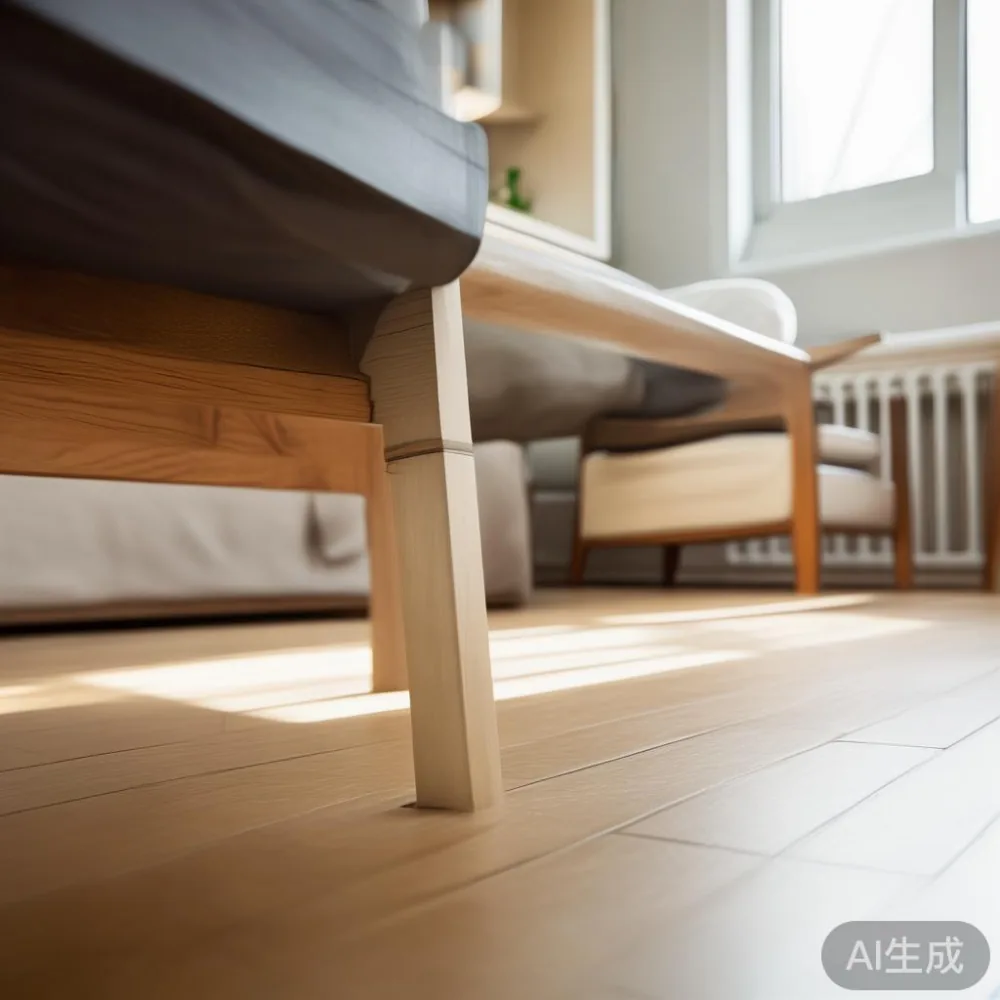
1. Visual weight, not footprint, is the real problem. A 200 cm three-seater sofa with a 95 cm back and rolled arms fills more of your field of vision than a 180 cm sofa with a 78 cm low back and slim 8 cm oak legs, even though the floor footprint differs by maybe 0.2 sq m. Choosing leg height between 12 cm and 18 cm for sofas, sideboards, and wardrobes exposes the floor and lets light travel under the piece. The eye reads the room as larger.
2. Finishes fight the room. Heavy dark walnut on every surface absorbs light in a flat that only gets side windows, which are typical of HDB layouts. A solid wood sofa or a solid wood bed frame in oak, ash, or beech keeps the room bright. Marble tables are light luxury staples, but a small HDB usually only needs one of them; pick the one your eye lands on first, and skip the rest.
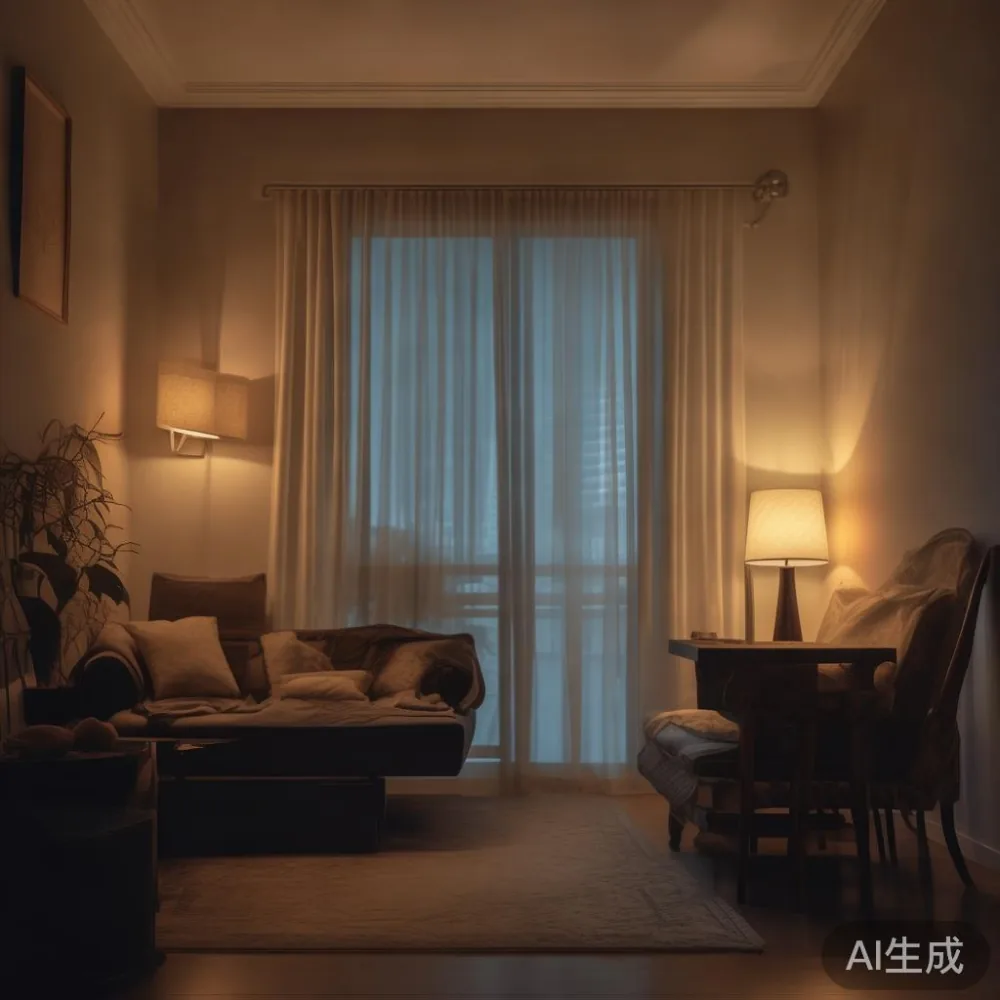
3. Categories multiply when they shouldn't. A typical compact flat needs about nine furniture pieces: a sofa, a coffee table or side table, a dining table, two to four dining chairs, a bed frame, a wardrobe, one or two nightstands, a TV unit, and shoes storage. Anything beyond that is decorative risk in a 65 sq m home.
What does "light luxury" actually mean for a first time buyer?
You'll see three styles in the market: Italian light luxury, French light luxury, and American light luxury, plus a more recent category called post-modern light luxury. They sound interchangeable, but the proportions and materials differ enough to matter in a small space.
Italian light luxury leans on slim metal frames, travertine or marble tabletops, and full-aniline leather in muted tones. A Italian light luxury sofa usually has a seat depth around 58 cm and a back height near 75 cm, which keeps the sightline across a small living room open. France light luxury uses warmer bouclé, brushed brass, and oak veneers with curved corners; a French sofa tends to look softer and lower. American light luxury tends toward larger cushions, warmer fabrics, and a few inches more depth; a light luxury sofa vs Italian light luxury sofa often comes down to whether you prefer soft, generous cushions (American) or a tailored, low profile (Italian). Japanese minimalism, sometimes blended with Scandinavian as Japandi, is the quiet reference for low-profile bed frames, and many buyers quietly ask whether is Japanese bed worth it given the lower silhouette; in practice, a 90 cm tall Japanese-style platform bed frame clears more of the wall than a 110 cm divan, which does help a 12 sq m second bedroom look bigger.
For dining, European light luxury for dining room settings usually pairs a sintered stone or marble table top (12 mm to 15 mm thick) with slim metal or solid ash legs. The visual weight sits in the top, but because the surface is bright and reflective, the table reflects ceiling light and reads lighter than a 60 mm solid wood top. For a HDB dining corner that is 2.4 m by 1.8 m, a 1.4 m table seats four without crowding the corridor.
Which sizes and prices fit a typical Singapore flat?
Numbers help first time buyers avoid two painful mistakes: buying pieces too big or paying freight on items that don't fit lifts and corridor widths. Corridors in most HDB blocks are about 1.2 m wide, lift doors around 0.9 m, and the turn into the lift lobby can pinch at 2.0 m. Measure the longest diagonal from your flat's front door to the placement wall. Anything under 195 cm long usually clears; anything over 220 cm often needs the cargo lift.
Here is a realistic starting set for a 65 sq m flat, with Singapore dollar pricing including 9% GST:
• Solid wood bed frame, queen, 160 cm × 200 cm, in white oak or ash, 88 cm to 95 cm tall. Around S$1,050 to S$1,950 for a light luxury post-modern design. Add a 20 cm to 25 cm latex or pocket-spring mattress from a local sleep shop at S$900 to S$1,600, and the sleep system lands at roughly S$2,000 to S$3,500.
• Two nightstands, 45 cm × 40 cm × 55 cm, oak veneer on solid birch, with one drawer each. Around S$220 to S$380 each.
• Wardrobe, 180 cm × 60 cm × 210 cm, with two sliding doors so the door swing doesn't eat your walking space. Light luxury post-modern designs run S$1,650 to S$3,200 for a 3-door slider in white oak or ash.
• Solid wood sofa, three-seater, 200 cm to 220 cm, with an oak frame and removable fabric covers. Around S$1,800 to S$3,500. A 180 cm two-seater lands around S$1,400 to S$2,400 and is usually a smarter pick for a 3-room flat.
• Dining table for four, 1.4 m × 0.8 m, sintered stone top on solid ash legs. Around S$1,050 to S$2,200. Extendable versions to 1.8 m add about S$200 to S$350 and earn their keep when family visits.
• Four dining chairs, beech or ash with a fabric or leather seat. Around S$120 to S$260 each.
• Marble or sintered-stone coffee table, 110 cm × 60 cm, with a 70 cm to 75 cm height so it sits 5 cm below the sofa seat. Around S$480 to S$1,100.
• TV unit, 160 cm × 35 cm × 45 cm, low and wall-hugging. Around S$550 to S$1,300.
• Shoes storage, 80 cm × 35 cm × 110 cm, with two or three flip compartments. Around S$380 to S$780.
For a bed frame, the choice between Italian-leaning silhouettes and Japanese platforms often comes down to headboard preference: an Italian light luxury bed usually carries a 110 cm to 125 cm upholstered headboard, while a Japanese platform is closer to 70 cm tall with no headboard or just a 12 cm padded panel. Buyers weighing is Italian light luxury bed worth it should measure the wall behind the bed; if it's under 2.5 m wide, the 110 cm headboard uses nearly half the wall and leaves the side tables nearly touching the corners, which feels tight in a master bedroom under 14 sq m.
Which light luxury "vs" question matters most for a small living room?
If you're choosing between a French sofa and a Japandi sofa, the practical answer is about arm height and depth, not aesthetics. French light luxury tends to use lower arms (around 55 cm to 60 cm) and deeper seats (around 60 cm to 65 cm) so you can lounge sideways. A Japandi sofa tends toward a tighter seat (around 52 cm), higher arms (around 65 cm), and a 78 cm back. In a 3.6 m by 3.0 m living room, the Japandi profile usually leaves a 90 cm walkway behind the coffee table; the French profile often leaves 70 cm, which crosses the comfortable-use threshold of 75 cm. So French sofa vs Japandi sofa is really about whether you want lounging depth or walking space. Both are valid; measure the gap between the sofa back and the wall first, and pick the one that leaves at least 75 cm.
The same logic applies to sofas more broadly. Compare a light luxury sofa vs Italian light luxury sofa side by side, and the difference usually shows up in three numbers: leg height (12 cm to 15 cm on an Italian, 8 cm to 12 cm on a generic light luxury piece), arm thickness (around 12 cm to 14 cm vs 15 cm to 18 cm), and back cushion fill (foam with a feather wrap vs full foam). Over five years, the taller legs and slimmer arms age better in a tropical climate because they allow more airflow underneath and dry faster after mopping.
How can a first time buyer plan delivery, warranty, and returns before paying?
Singapore furniture buying has three friction points that surprise people: lift access, warranty terms across borders, and GST on imported goods. Plan ahead and most of these become non-issues.
For delivery, a Foshan factory shipping to Singapore typically takes 28 to 45 sea days, plus 5 to 10 days for local trucking and installation. If you order from a local Singapore showroom, lead time drops to 14 to 30 days for stocked pieces and 35 to 70 days for custom orders. White-glove delivery, including carrying up to a HDB on a high floor without cargo lift access, usually adds S$120 to S$280 per trip. Always confirm lift sizes before ordering pieces longer than 200 cm.
For warranty, look for written coverage on the structural frame (the joinery, the load-bearing rails, the slats) for at least 10 years. Soft components like cushions, fabric, and finishes usually carry 1 to 3 years. This is one of the areas where working with an established Foshan maker can give a first time buyer peace of mind; MIDHILL has a 10-year structural warranty on its solid wood frames, which covers the items that would actually fail (cracked rails, loose joinery, warping beyond 5 mm). Lifetime refinishing on wood surfaces is offered, which matters in Singapore because humidity sits at 70% to 85% year-round, and wood surfaces benefit from a refresh every 6 to 8 years.
For returns, a 14-day return window is fair if the piece arrives damaged or with a manufacturing defect. Check whether the policy covers return shipping (it usually doesn't, except for clear defects). Free shipping above a threshold is common; MIDHILL offers free shipping over US$350 (around S$475), so a single nightstand will ship paid while a bedroom set ships free.
For a smaller, less-trafficked room such as a study or guest bedroom, the layout doesn't need an Italian-leaning bed, but the styling still benefits from light luxury cues. Many Mid-century modern for guest room layouts pair a low walnut-tone bed frame with a slim 90 cm side table and a single brass wall lamp; the tapered 18 cm legs expose the rug and keep the 9 sq m room calm for visitors.
What does a smart layout look like in a compact HDB?
Walk through a 4-room HDB living room in your head. The front door opens into a 3.0 m by 3.6 m living space with a 2.4 m long window wall. From the same entrance you usually pass a small dining corner that is 2.4 m by 1.8 m. Treat these as two distinct zones, and pick furniture that respects the centre line.
Place the sofa against the corridor wall (the longer wall without windows), not under the window. Windows in HDB flats are usually about 1.5 m wide and start at 80 cm above the floor; placing a low sofa at 78 cm of back height under them blocks light, while placing it on the side wall leaves the curtain run free. The coffee table sits 40 cm away from the sofa front, no further. The TV unit runs along the wall opposite the sofa, leaving at least 90 cm of walking space between the TV unit and the opposite wall. A 110 cm by 60 cm marble table works; a 120 cm by 70 cm table crowds the same room.
In the dining corner, choose an oval or rounded rectangular 1.3 m to 1.4 m table rather than a 1.6 m rectangle. Round edges soften the corner near the corridor and reduce the chance of hip collisions when three people pass at once. Tuck two chairs on the long side and one on each end; a fifth chair only fits when the table extends.
In the master bedroom, push the bed frame against the room's longest wall, centred on the window or the wall. A queen at 160 cm wide plus two 45 cm nightstands plus 60 cm walking space on each side needs a wall of at least 3.4 m. Most HDB master bedrooms measure 3.2 m to 3.6 m, so this usually works. A wardrobe fits on the opposite or side wall; sliding doors keep the swing path free.
What should a first time buyer order first, and what can wait?
Order in this sequence so the flat is functional within three weeks and complete within three months:
1. Week 1: bed frame, mattress, one nightstand (so you can sleep on night one).
2. Week 2: wardrobe (lead time is the longest at 35 to 70 days custom, but stock items ship in 14 days).
3. Week 3: sofa and coffee table, since the living room dictates how you entertain.
4. Month 2: dining table and chairs, once you've lived with the layout for a few weeks.
5. Month 3: TV unit, shoes storage, second nightstand, decor pieces.
Marble or sintered-stone tables and accent chairs fall under decor and can stretch into month four or five without stress.
What's the smartest way to spend the first S$5,000?
A practical starter set for one first time buyer covering bed, sleep, wardrobe, sofa, dining for four, and a coffee table lands around S$6,500 to S$9,500 with 9% GST. To stay closer to S$5,000, focus on the four pieces that you use every day: bed frame (around S$1,200 to S$1,500), mattress (around S$1,000), wardrobe (around S$1,500 to S$2,000), and a compact two-seater sofa (around S$1,200 to S$1,800). Skip the dining set for the first month and use a foldable 120 cm table at S$120 to S$200. A marble or sintered coffee table (S$480 to S$1,100) plus one nightstand (S$220 to S$380) rounds out the budget.
This is also where choosing a maker with a coherent light luxury range pays off: you can match finishes across the bed frame, wardrobe, nightstand, and dining table without buying four different product lines. MIDHILL's solid wood bedroom and dining sets share oak and ash finishes, so the room reads as one calm composition instead of a patchwork. Products specifications, lead times, and shipping thresholds for Singapore are listed at api.midhill.co, which is the easiest way to compare pieces side by side before paying.
What three mistakes should a first time buyer avoid in a small flat?
1. Buying a dining set before measuring the corridor into the dining corner. A 1.6 m table that just barely fits in the room will not turn the corner into the lift lobby in many HDB blocks. Most pieces need to come in under 1.5 m in any single dimension to clear the front door and corridor reliably.
2. Matching everything in the same finish. Matching the bed frame, wardrobe, nightstand, TV unit, and dining table in one wood tone makes a small room look like a furniture store display rather than a home. Vary one or two pieces in a contrasting tone (a darker walnut bed with a lighter ash wardrobe, for example) and the room gains depth.
3. Skipping rugs and lighting. A 200 cm by 280 cm rug under the sofa and coffee table anchors the living room and adds warmth. Two warm 3,000 K floor lamps at 130 cm tall on either side of the sofa replace overhead lighting and avoid ceiling glare, which is the single biggest visual trigger for a cramped feeling.
Compact Singapore homes reward restraint. Choose fewer pieces, keep leg height between 12 cm and 18 cm, prefer oak or ash over dark walnut, cap the sofa at 200 cm, and order the bed frame and wardrobe before the dining set. The room will feel about a third larger on day one, and the furniture will age well through five to ten years of humid tropical living. For a first time buyer, that combination of calm layout and durable construction is what makes a small HDB or condo feel like a long-term home rather than a starter apartment.