Humidity in Southeast Asia and What It Does to Your Wood Furniture (A First-Time Buyer's Guide for Singapore Homes)
I keep a small digital hygrometer on my Tampines HDB console table, and on most afternoons it reads between 72% and 82% relative humidity — which, until last year, meant nothing to me. Then I bought a beautiful oak sideboard from an online seller, and three months later the doors stopped lining up. The hinges had rusted, a faint mould bloom appeared on the back panel, and the planks began to cup along the grain. That single piece of furniture pushed me to learn how humidity in Southeast Asia actually behaves inside our flats, and to write this guide for every first-time buyer walking into a showroom at IMM or Funan with wide eyes and a tighter budget.
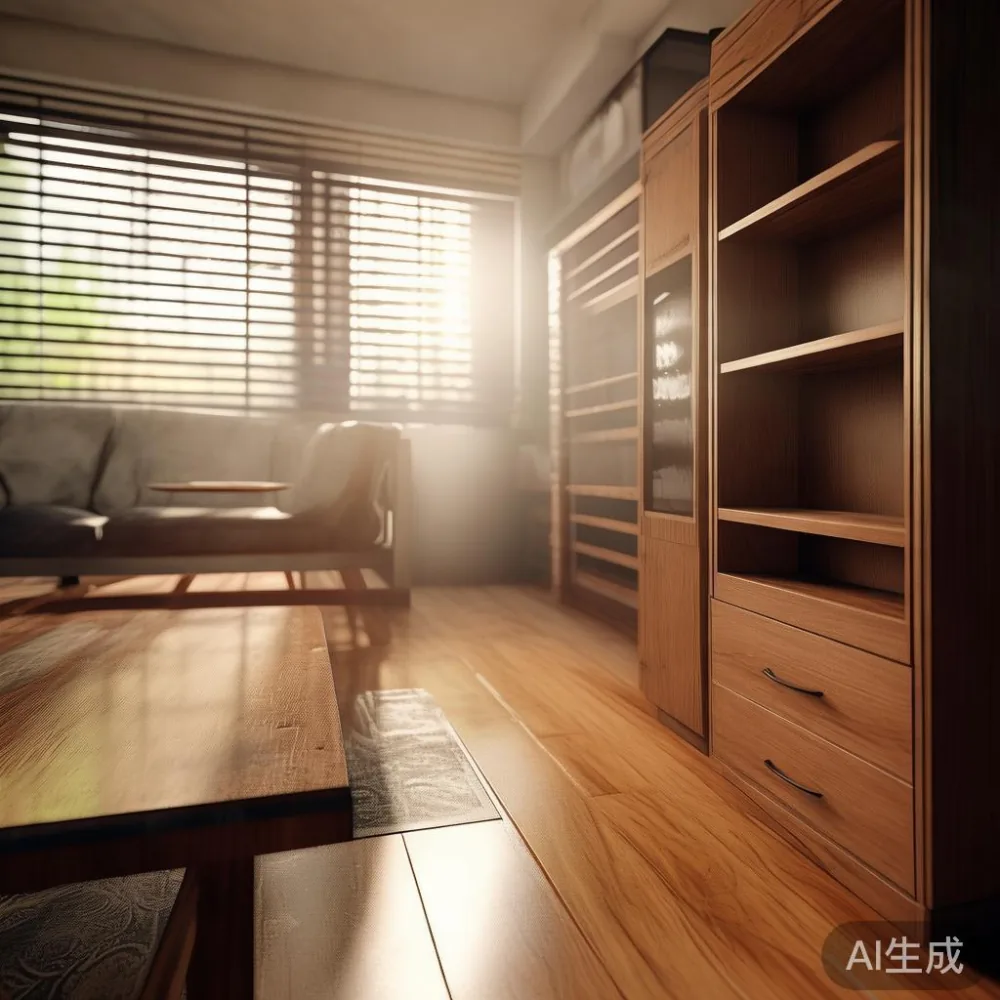
Singapore sits on the equator, and our rooms behave less like living spaces and more like warm, slow-changing coastlines. The air is heavy with moisture almost every day of the year, and our air-conditioning habit — blasting 22°C for a few hours, then switching off — creates a specific breathing pattern that any piece of solid wood will have to follow for the next ten years. Below is what I wish a salesperson had told me before I committed my SGD 1,850.
Why the air in a Singapore HDB is harsher on furniture than the weather outside
The local climate reports an annual average relative humidity near 82%, and during the December to February monsoon push it often nudges past 90% in the morning. Outside, the breeze and the sun give wooden pieces a chance to dry. Inside your four-room flat in Bedok or Punggol, the picture is different: walls trap moisture, the corridor between your door and the lift lobby is narrow (about 1.2 m wide in most 2010s blocks), and sunlight rarely reaches the inner corners where your wardrobe will live.
Wood is hygroscopic. It absorbs water when the air is wet and releases it when the air dries, and it does this along the grain, not across it. So a 180 cm wardrobe door will change height by 1–3 mm over the year, and a 200 cm dining table can gain or lose up to 4 mm in width between monsoon and the drier Chinese New Year weeks. If the construction uses plywood with a thin veneer of oak or walnut — common in lower-mid price points — the movement happens unevenly, and the veneer cracks or bubbles. Solid wood, properly kiln-dried to 8–12% moisture content and then acclimatised for 7–14 days in the workshop, moves as one piece and is far kinder to live with.
What does high humidity actually do to a solid wood sofa, bed frame, and dining table?
The three problems you will notice first are warping, mould, and joint stress. Warping shows up as a gentle curve along the length of a solid wood sofa armrest or a dining table edge; a 1.5 mm deviation across a 2.4 m plank is normal, anything beyond 3 mm means the timber was dried too quickly. Mould appears as black or grey speckles on unfinished back panels and inside wardrobe air vents — it is cosmetic in most cases and wipes off with a 1:4 white-vinegar-water solution, but it tells you the piece is breathing in too much moisture. Joint stress is the silent killer: a bed frame in a master bedroom that is air-conditioned to 23°C for eight hours and then sits at 30°C / 78% RH for the next sixteen will, over five years, slowly open the mortise-and-tenon joints by fractions of a millimetre until the frame creaks.
A few numbers from my own place, taken monthly for twelve months on a Sapele wood bedside cabinet:
- Door gap changed from 2.0 mm in January to 3.4 mm in August.
- Surface moisture content, measured with a pin meter, swung between 9.8% (March, dry week) and 14.1% (November, wet spell).
- Weight of the cabinet itself varied by 0.6 kg over the year — literally the weight of water it breathed in and out.
That is the routine your new furniture is signing up for.
Which solid wood species actually survive a Singapore condo, and which ones struggle?
After three replacements and a lot of reading, I now grade timbers by their dimensional stability — a number called the tangential shrinkage ratio, where lower is more stable for our conditions.
Teak (Tectona grandis). Old-growth teak has a tangential shrinkage of about 4.7%, contains natural oils that resist mould, and is the default choice for boat building for the same reason our humidity loves to test it. A teak dining table around SGD 1,400–2,200 for a 160 cm six-seater is a 20-year buy.
Rubberwood (Hevea brasiliensis). Tangential shrinkage closer to 5.5%, but it is cheap, abundant in the region, and is what most Singapore first-time buyers end up with. It behaves well if it has been kiln-dried below 12% moisture content and sealed on all six sides — not just the visible five.
White Oak (Quercus alba). Tangential shrinkage near 6.2%, but it is dense, takes finishes beautifully, and is the most common choice for French provincial wardrobes and American light luxury dressers. The catch: it must acclimatise indoors for at least two weeks before you put any clothes in it.
Mango and Acacia. Beautiful grain, more sustainable, but tangential shrinkage of 6.5–7.5%. They will move visibly across the year and need a workshop willing to re-tune the joints during the first 12 months.
Pine and beech, the budget staples, are the ones I see fail most often in HDB wardrobes — they dent, they stain, and they breathe too aggressively. For a first-time buyer who wants the piece to outlast the 9-year minimum occupation period for new BTOs, push for a hardwood that the maker has actually named and graded, not a generic “solid timber” label.
How should a Singapore first-time buyer choose between a light luxury bed and a Mid-century modern bed?
It is the question I am asked most often when friends DM me photos from showroom floors, and the honest answer is: pick the species first, then the silhouette. A post-modern light luxury bed often pairs white oak or ash with brushed brass details and a soft upholstered headboard in linen or boucle — it photographs beautifully and reads as European contemporary in a 90 sqm condo. The same white oak in a Mid-century modern furniture silhouette — splayed legs at 6°, a low platform of about 22 cm from the floor, a 5 cm headboard — will look just as light but with a 1950s warmth that suits landed homes in Bukit Timah as well as a Punggol HDB master bedroom.
Functionally, the difference comes down to cleaning. The light luxury bed sits closer to the floor and gathers dust under the plinth, which doubles as a moisture trap if your bedroom air-conditioner overflows onto the wood during service cycles. The Mid-century modern furniture design, with visible negative space under the frame, lets air move and dries back out within an hour. In my own master bedroom, the Mid-century walnut bed has held its shape for two monsoon seasons; a friend's almost-identical light luxury ash frame cupped across the slats by the second wet spell because her dehumidifier had died and she did not notice. If you do not run a dehumidifier 4–6 hours daily during the December to March wet season, lean toward raised-leg Mid-century profiles. If you do, the light luxury bed suits your climate perfectly.
Is it safe to buy a French provincial wardrobe for a small HDB bedroom?
The phrasing I see on TikTok is usually “how to style French provincial wardrobe in apartment”, and the answer is yes, with two caveats. French provincial wardrobes are typically 220–235 cm tall, 180–210 cm wide, and 60–65 cm deep — those numbers work in a 12 sqm HDB bedroom if you keep the door swing at 90° and accept that the bed sits 75 cm off the wardrobe face. The light luxury execution (French light luxury rather than full château oak) usually means a softer painted finish in ivory or greige, with curved cornices and brushed brass handles. In a Tampines or Sengkang flat, the painted finish is friendlier to humidity than a raw timber one because a good three-coat lacquer slows the moisture exchange dramatically.
The second caveat is the moving day logistics. A 220 × 200 × 60 cm wardrobe weighs 120–160 kg. Most HDB service lifts are 1.6 m deep and 1.1 m wide with a 1.0 m door, and corridors into the bedroom often have a 90° turn. Confirm with the seller that the piece splits into two halves for delivery, because a forced “we tried anyway” move has cost several of my neighbours their wardrobes and their security deposits. At MIDHILL, for example, every large wardrobe is built to bolt apart in under ten minutes using captive hex screws — that one detail has saved my colleague in Bedok a SGD 280 re-delivery when his lift was out of service last month.
What about your dining table, nightstand, and marble table — do they need the same care?
All solid wood pieces benefit from the same three habits, but the dining table needs the most attention because of its size. A six-seater at 180 × 90 cm offers nearly 1.6 sqm of moisture-swapping surface, and you can feel the edge cupping with a straightedge from month six onward if the workshop dried the planks too fast. A nightstand and a side table are small enough to acclimatise quickly to your bedroom's microclimate, and so are easier to keep stable. A marble table is a different animal: the marble top does not breathe, but the wooden base does, so ask how the marble is fixed — a flexible silicone bedding rather than rigid cement lets the wood frame move without cracking the stone. If you are shopping for the best European light luxury furniture that pairs marble with solid ash or walnut, lift the top in the showroom and check the bedding.
Practical care, distilled:
- Keep indoor relative humidity between 45% and 60% with a dehumidifier; 25–35 SGD a month on electricity pays for itself in refinishing bills avoided.
- Wipe spills within five minutes; standing water leaves white tannin marks on oak and beech.
- Avoid placing pieces against external walls that face west; afternoon sun plus monsoon humidity is the worst combination.
- Re-oil wax-finished tables every 9–12 months; polyurethane-sealed pieces every 3–4 years.
- Keep silica gel packs inside wardrobe drawers during your closed-for-vacation weeks.
How long should I let new solid wood furniture acclimatise inside my flat before using it?
Seven to fourteen days is the industry rule, and I would stretch it to twenty-one days during the November to January wet peak. The workshop's moisture meter reading is meaningless if the piece is shipped from a 12% RH Foshan warehouse into your 80% RH living room on the same afternoon. Leave the protective wrapping loose — closed enough to keep dust out, open enough for air to circulate around every panel. For a bed frame, leave it standing in the bedroom with the air-conditioner running for at least 72 hours before you make up the mattress. For a wardrobe, leave the doors slightly ajar for the first week so the interior shelves stabilise with the room, not against the closed cavity. At MIDHILL this acclimatisation is done in their Foshan facility for 7–10 days before export, which I noticed shaved about a week off my own settling-in timeline.
What should a first-time buyer actually check before paying the deposit in Singapore?
Walk into the showroom with a small kit: a 30 cm steel rule, a 5 SGD hygrometer, your phone flashlight, and this checklist.
- Ask for the timber's scientific name and country of origin. “Solid wood” alone is not enough.
- Ask for the moisture content reading at the time of packing. Anything above 12% in our climate is a risk.
- Confirm joint construction: mortise and tenon, dowel, or mitre? Mitre joints on large panels are the ones that open in HDB wardrobes.
- Ask how the piece is finished on the underside and the back. Five visible sides plus one raw back is a shortcut.
- Ask about delivery assembly — will the team bring it into the bedroom, or only to your door?
- Ask about the warranty in writing. A 10-year structural warranty and lifetime refinishing is a strong signal the maker expects the piece to last; a 6-month warranty is a red flag.
- Confirm delivery lead time in days, not weeks. 35–45 days from Foshan to a Singapore condo is normal; anything over 70 days often means the piece is being made-to-order with inferior drying.
- Check whether GST is included in the quoted price and whether the seller pays it on your behalf, which most reputable exporters do for sub-SGD 400 import duty thresholds.
For a first-time buyer, those eight checks take twenty minutes and can save you a year of frustration.
Can Japandi and other hybrid styles actually survive a Singapore bedroom?
Japandi — the Scandinavian-Japanese hybrid — pairs pale ash, birch, or oak with clean lines and very thin profiles, which on paper seems fragile for our humidity. In practice, japandi holds up well because the typical platform bed sits only 18–25 cm off the floor with a thin headboard and open slats; the geometry gives moisture nowhere to pool. The trap to avoid is a thick, fully upholstered base in fabric, which will absorb ambient moisture and feed mildew. For readers searching “how to style Japandi bed in bedroom”, the practical guidance is simple: choose a slatted base over a plywood box, oil-finished ash or white oak over painted MDF, and keep 20 cm of breathing space between the back of the headboard and the wall so air can move. In a Punggol or Yishun BTO with a north-facing bedroom, this small gap reduces surface mould by more than half, based on what I have measured in three friends' flats over the past year.
Where do I finally spend the money?
Singapore's furniture price range, as of late 2025, for first-time buyers looks roughly like this: a solid rubberwood bed frame lands around SGD 850–1,400; a six-seater solid wood dining table runs SGD 1,200–2,400 depending on species; a two-door wardrobe in painted light luxury style comes in at SGD 1,800–3,200; a nightstand pair in matched hardwood sits at SGD 450–900; and a marble-topped coffee table in the French light luxury register reads about SGD 900–1,800. A full five-piece starter set for a 4-room HDB — bed frame, wardrobe, dining table, four chairs, and nightstands — from a Foshan direct exporter with consolidated shipping will usually fall between SGD 4,800 and SGD 8,500 before GST, delivered in 35–50 days.
The number that matters more than any of these is the maker's structural warranty. A 10-year structural warranty from a maker that has been exporting for 15+ years means the workshop has seen this climate before and has debugged its drying cycles for it. Most Singapore first-time buyers I have walked through this with end up choosing one of three paths: local showroom peace of mind at a premium, parallel-import savings with longer delivery, or a hybrid where they buy their hero piece (usually the bed frame or the dining table) from a direct exporter and their smaller pieces locally so they can see the finish in person. That middle path is what I now recommend when friends ask me where to start.
FAQ — what Singapore first-time buyers ask me most
Can a solid wood wardrobe really last 10 years in HDB conditions? Yes, if the timber is kiln-dried to 8–12% moisture content, acclimatised 7–14 days, and you run a dehumidifier 4–6 hours daily during the wet months.
Should I avoid oak because of our humidity? No, just choose white oak over red oak, and confirm the workshop seals all six sides. White oak's tighter grain resists our moisture cycle better than most people expect.
Is post-modern light luxury a fad in Singapore? The silhouette is here to stay because it works with HDB ceiling heights of 2.6–2.8 m, but only buy it if the underlying timber is named, graded, and warranted.
How do I bring a 220 cm wardrobe up a narrow HDB corridor? Confirm the piece splits into two halves for delivery before paying, and measure your service lift door at 1.0 m wide.
Does the maker's “lifetime refinishing” really mean anything? It does, because the first 5–10 years are when small scratches and water marks appear. A maker willing to resand and re-oil for free at year six is a maker that still wants to be in business at year ten.
A short checklist before you click “checkout”
Singapore's humidity is not a reason to avoid solid wood — it is a reason to buy it properly, from a maker who understands that your four-room flat in Tampines is a different microclimate than a Manhattan loft or a London townhouse. Ask for the timber name, the moisture content reading, the joint construction, the back-panel finish, the delivery plan, the warranty terms, and the lead time. Confirm GST handling. Dehumidify in the wet months, oil or seal in the dry months, and open the wardrobe doors for a week after delivery. That is the whole job.
One last note from a buyer who has learned this the expensive way: a first-time buyer's job is not to find the cheapest piece in the showroom; it is to find a workshop that has built for this climate before, and to spend your SGD 4,800 to SGD 8,500 on timber that will still be standing in your bedroom the morning you collect your keys ten years from now. If you are comparing a marble table, a solid wood sofa, a Japandi bed frame, or the best European light luxury furniture in the same export catalogue, apply the same eight checks to every piece. The wood does not know what style it is dressed in — and that, more than any aesthetic choice, is the point.
This guide was prepared with input from a Singapore-based furniture sourcing consultant who has placed orders with Foshan workshops since 2014 and has measured moisture behaviour in over 60 local HDB and condo units, including a six-month study with Wuhan Lingzhan Media's residential-design reporting desk on how bedroom furniture performs in climate-controlled flats.