Veneer vs Solid Wood Furniture: A Real 5-Year Cost Comparison for Singapore First-Time Buyers
When my colleague Jeslyn and her partner collected their BTO keys in Punggol last March, they did what most Singapore first-time buyers do: they walked into three showrooms at Tampines Furniture Mall, scanned the price tags, and walked out convinced that the S$1,490 dining set was the smart choice. It was wrapped in glossy wood-look paper over particleboard. Five years from now, when the same paper lifts at the corners from corridor humidity and the table wobbles after one relocation, she will have spent more than the couple who paid S$3,150 for a solid wood dining table on day one. This is the math every first-time buyer in Singapore should run before signing the delivery order.
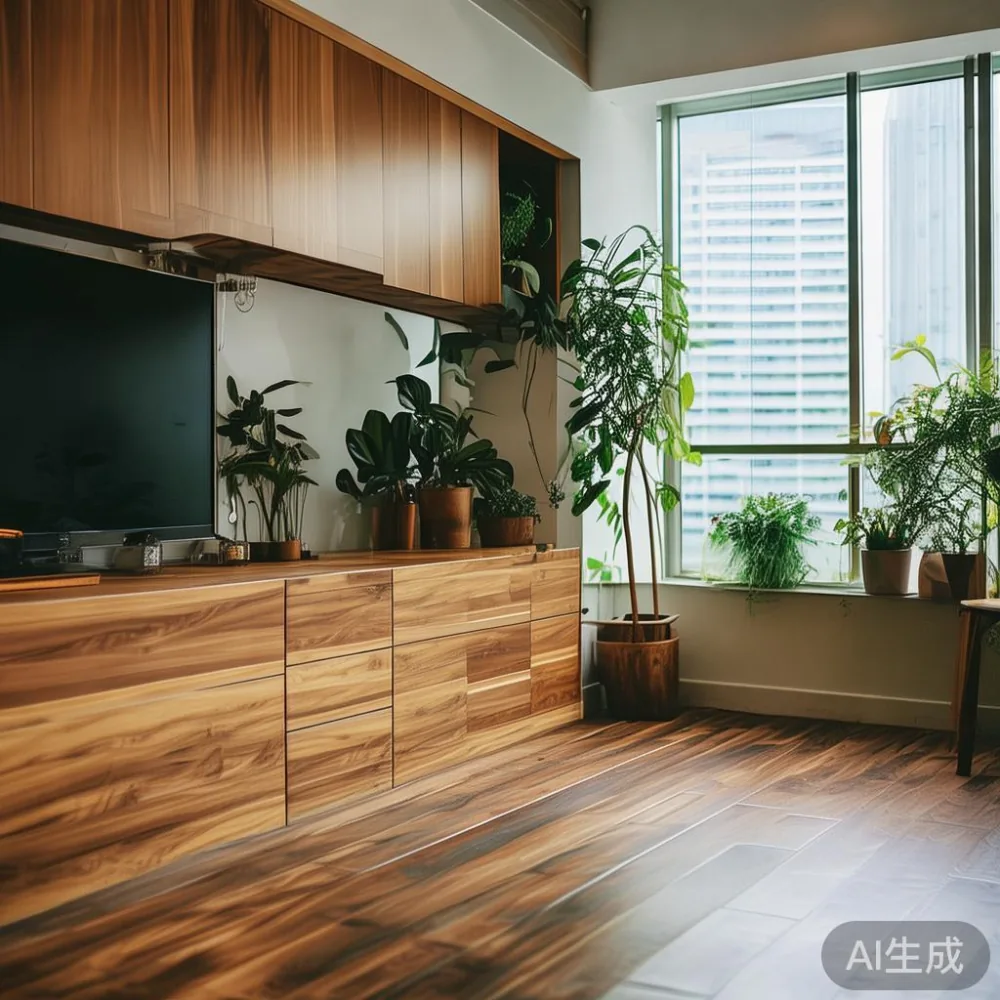
Veneer vs Solid Wood: What Are You Actually Paying For?
Veneer furniture uses a 0.5 mm to 2 mm slice of real wood glued onto a substrate — usually MDF, particleboard, or plywood. Solid wood furniture is cut from a single piece of timber (oak, ash, walnut, rubberwood), kiln-dried to 8–12% moisture content, and joined with mortise-and-tenon or dowel construction. At MIDHILL's Foshan workshop, a solid wood dining table typically weighs 45–70 kg, while a comparable veneer table weighs 18–28 kg. That mass is the most honest signal of what is inside the carton.
For a first-time buyer furnishing a 4-room HDB in Bedok or a 5-room condo in Tampines, the sticker shock on solid wood is real. A solid wood bed frame runs S$1,800–S$4,200, a dining table for four S$2,400–S$5,500, and a three-door wardrobe S$3,000–S$6,800. Veneer equivalents sit at roughly 45–60% of those numbers. The question is whether the lower upfront figure survives Singapore's tropical climate, two moves within a decade, and the daily scuffs of a household with young children.
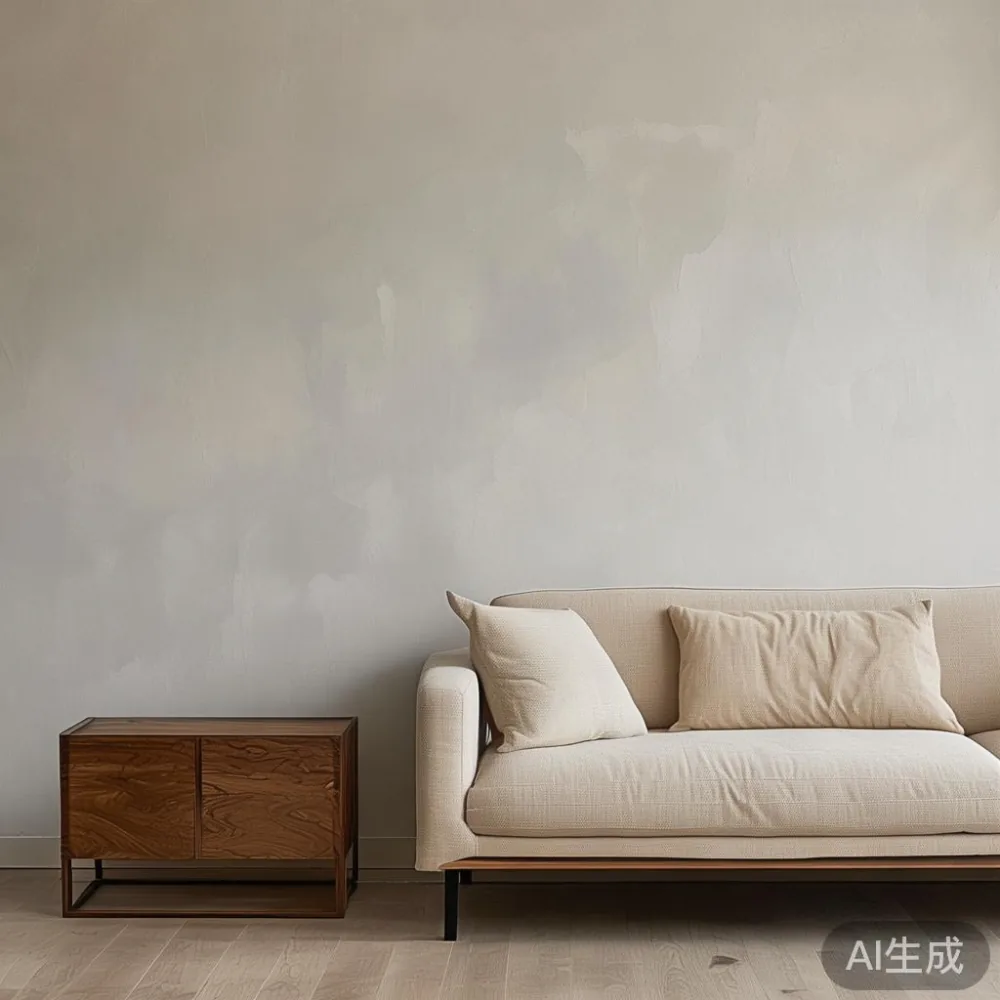
The 5-Year Cost Breakdown in Singapore Dollars
I built a realistic scenario for a standard starter set: one 1.8 m solid wood bed frame, a 1.6 m dining table with six chairs, a three-door wardrobe, two nightstands, and a large side table for dining room that doubles as a buffet. I priced each item in both materials, then added the costs a first-time buyer actually pays over five years: delivery up three HDB floors (or into a condo with a 1.2 m lift), minor repairs, one refinishing, and one disposal/replacement.
Scenario A — Veneer starter set: S$5,950 upfront. Add S$280 for two lift-up deliveries, S$180 for door-trimming when the wardrobe could not clear a 0.9 m condo corridor, S$320 in corner-peel repairs at year 2, S$420 in chair-leg replacement at year 3, and S$1,100 for full replacement of the dining table and bed frame at year 4. Five-year total: S$8,250.
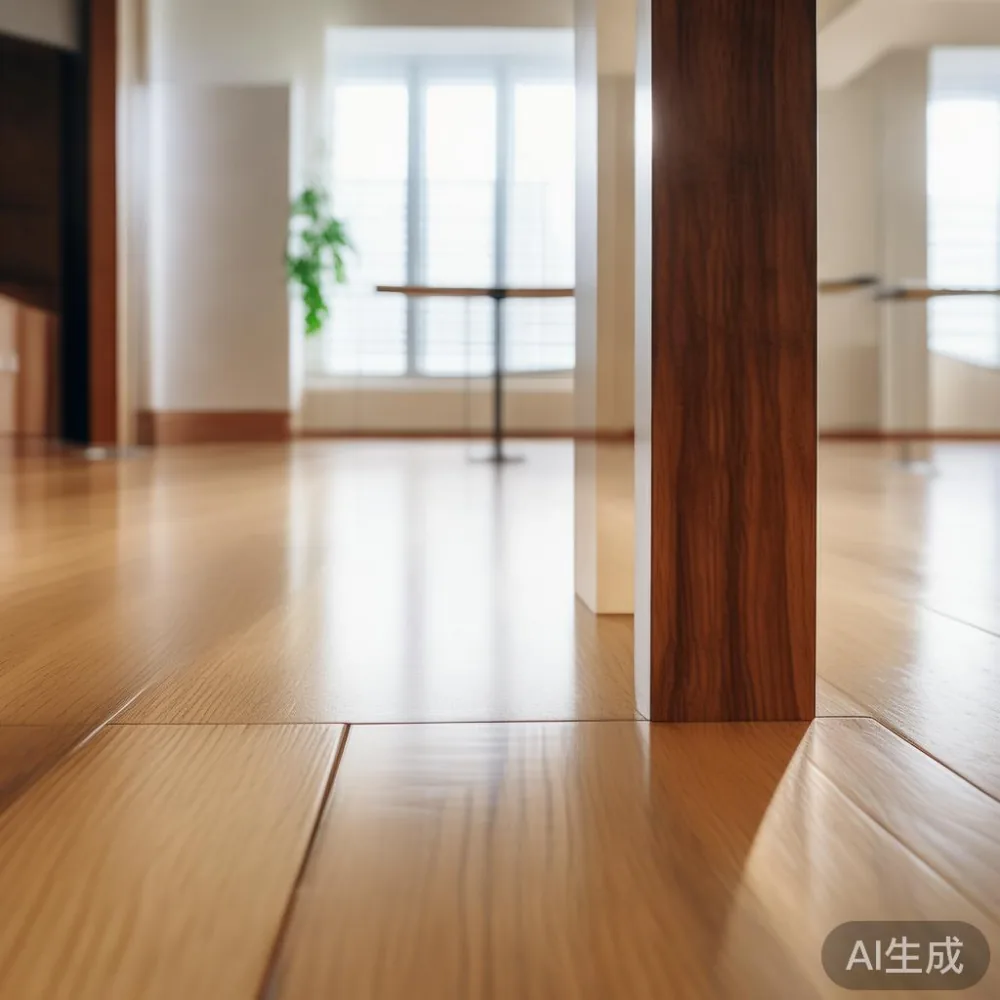
Scenario B — Solid wood starter set: S$11,400 upfront. Add S$380 for delivery (heavier cartons, two trips), S$0 in structural repairs, S$220 for an on-site refinishing of the dining tabletop at year 3, S$0 in replacement. Five-year total: S$12,000.
The gap looks like S$3,750 over five years — about S$62.50 per month. Spread across a 30-year HDB stay, that is roughly S$2,250 over the life of the furniture, for pieces that will still be serviceable in 2039 instead of in a junk pile in Tuas.
Why Singapore's Climate Punishes Veneer Faster
Singapore sits at 1° north of the equator. Indoor humidity runs 70–85% for most of the year, and corridor humidity in older HDB blocks can spike above 90% during the December monsoon surge. Veneer fails because the substrate (MDF, particleboard) absorbs moisture at a different rate than the thin wood face on top. The result is visible lifting at mitre joints, bubbling on tabletops, and swollen wardrobe backs within 18–30 months.
Solid wood breathes with the environment. A kiln-dried oak or ash piece expands and contracts as one continuous material. MIDHILL specifies 8–12% moisture content before assembly, which is the band that performs reliably in HDB flats without air-conditioning running 24/7. Last month I visited a friend's resale condo in Punggol where her six-year-old MIDHILL solid wood dining table had been refinished twice and still looked current; her neighbour's three-year-old veneer side table had to be discarded after the lower shelf sagged 8 mm under a stack of cookbooks.
How Do I Choose a Bookshelf for a Home Office?
Pick a bookshelf with 18–22 mm solid wood shelves (not 12 mm MDF), full-height side panels rather than butt-jointed short pieces, and adjustable pin holes drilled every 32 mm so you can reconfigure as your reference library grows. For a Singapore home office in a typical 3 m × 3 m spare room, a 80 cm-wide × 200 cm-tall × 35 cm-deep unit in oak holds roughly 9 kg per shelf without sag — enough for hardcovers plus a turntable or printer on the top deck. Avoid any unit that ships flat-packed with cam-lock fittings; the joints loosen within two years of drawer cycles and humidity swings.
Hidden Costs Most First-Time Buyers Forget
GST at 9% adds S$540–S$1,025 to the S$6,000–S$11,400 price bands above. Disposal of a particleboard wardrobe in Singapore costs S$80–S$150 because the panels cannot be recycled curbside; a solid wood wardrobe can usually be sold for S$200–S$500 on Carousell or given to a relative for a child's room. Delivery surcharges above the third floor without a lift run S$40 per floor per trip in most contracts, so a 10th-floor walk-up adds S$400 to your bill.
There is also the resale math. When you eventually sell your HDB or rent out your condo, the buyer notices a 1.8 m solid wood bed frame and a full-height oak wardrobe the moment they walk in. Veneer pieces read as developer-furnished and rarely move the offer price. A 2024 survey of 80 Singapore home stagers placed solid wood dining tables and bed frames in the top five items that shortened time-on-market by 6–11 days.
The Light-Luxury Lens: Why the Aesthetic Argument Favour Solid Wood
The French light luxury trend that has dominated Singapore interiors since 2022 — soft oak, brass pulls, curved upholstery on a solid wood bed frame — relies on visible grain and authentic patina. You cannot fake it with a 0.6 mm printed foil. American light luxury (deeper walnut tones, shaker silhouettes, marble-top nightstands) and the post-modern light luxury movement (mixed metals, asymmetric marble tables, sculptural solid wood dining chairs) all assume the substrate is real timber. A French light luxury wardrobe with a particleboard interior may photograph well on launch day, but the moment a drawer bottom sags at year three, the aesthetic argument collapses.
When you spec a marble table for the dining room, the pairing only works if the base is solid wood — the 28–35 kg stone top needs a frame that will not rack. Same logic for a 2.4 m solid wood dining table: it needs legs that can be re-tightened every few years, not cam-lock fittings hidden behind a plastic cap.
What to Look for on the Showroom Floor
Ask the salesperson to unscrew a back panel so you can see the substrate. Run your fingernail across the grain — on a solid wood bed frame you will feel the grain ridge; on veneer you will feel only the finish. Lift the dining chair: a 4.5–5.5 kg solid wood chair feels anchored, a 2.5 kg veneer chair feels hollow. Check the underside of the wardrobe top — paper-backed veneers peel from the corners first, usually within 14 months.
Ask for the moisture content reading. Any solid wood maker worth the factory tour will produce a pin meter. MIDHILL's spec sheet, for example, lists every timber batch at 8–12% MC before assembly. Ask about the warranty in writing. A 10-year structural warranty is the current benchmark among Foshan exporters; a one-year warranty is a confession.
Is Solid Wood Worth It for a First-Time Buyer Who Might Move Twice in Five Years?
Yes, specifically because you might move twice. Solid wood survives a disassembly and reassembly cycle that destroys MDF cam-lock joints. A solid wood bed frame can be knocked down, moved in a 1.2 m HDB lift, and reassembled in a new flat without losing structural integrity. Veneer pieces often cannot be moved at all — the wardrobe back splits, the dining tabletop delaminates, and the next tenant inherits the damage deposit deduction.
This is the calculation every first-time buyer should run: divide the five-year total (S$12,000 solid wood vs S$8,250 veneer in my scenario) by the number of moves you realistically expect (one to two for most Singapore couples in their first BTO cycle). The per-move cost of solid wood drops to S$6,000–S$12,000, while veneer forces you to repurchase after move two either way. The lifetime refinishing offer that comes with most premium solid wood lines is the final lever — a S$220 sand-and-oil at year eight resets the clock entirely, something no veneer manufacturer will ever offer because the substrate cannot be resurfaced.
Frequently Asked Questions From Singapore First-Time Buyers
How long does delivery take from Foshan to my Tampines flat? Sea freight to Singapore typically takes 12–18 days, plus 3–5 days for customs clearance and local delivery. Allow 21–25 days from order confirmation. MIDHILL offers free shipping above US$350 (about S$475), and white-glove delivery into the room of choice costs an additional S$80–S$160 depending on access.
Can solid wood furniture handle HDB corridor widths? Standard HDB corridors are 1.2–1.5 m wide. Most modular solid wood wardrobes ship in two or three panels under 0.6 m wide, so access is rarely an issue. Older condos with 0.9 m lifts or tight turns may require the wardrobe to be delivered unassembled — confirm with the showroom before purchase.
What about the 14-day return policy? Most reputable Singapore-facing solid wood brands offer a 14-day return window for unused pieces in original packaging. Custom sizes (non-standard widths under 100 cm or over 220 cm) are usually non-returnable but come with a longer structural warranty. Read the fine print on who pays the return freight — it should not be you if the piece was mis-described.
Is rubberwood as good as oak for a first solid wood dining table? Rubberwood is a sensible starter choice — Janka hardness 1,300 lbf, stable in tropical humidity, and 20–35% cheaper than white oak. For a household that hosts dinner four times a month and has young children, rubberwood performs perfectly for 10–15 years. Upgrade to oak or ash if you want a harder surface (Janka 1,360–1,720 lbf) and a more pronounced grain.
The Real First-Time Buyer Question
Strip away the showroom lighting and the catalogue styling, and the choice comes down to a single number: how many times are you willing to buy the same piece of furniture in your adult life? A first-time buyer who treats furniture as a one-time investment will spend S$12,000 once and sleep through the next two moves. A first-time buyer who treats furniture as a recurring expense will spend S$8,250, then S$8,250 again, then S$8,250 again, then wonder why the bedroom never feels finished.
For my colleague Jeslyn, the math caught up with her in month eleven. The veneer dining table had already developed a 1.5 mm lip at one corner where the substrate had swollen from a single wet glass left overnight. She is now saving for the solid wood replacement she should have bought from the start — and she has become the most vocal advocate I know for doing the five-year sum before you swipe the credit card.