Veneer vs Solid Wood in Singapore HDBs: A 5-Year Cost Reality Check for First-Time Buyers
I still remember walking into my friend's new 4-room BTO in Punggol last month, clutching two quotation papers — one for a veneer dining table set, another for a solid wood bed frame. She had just received her keys and the corridor outside her unit was already stacked with cardboards from her Taobao haul. The lift, by the way, only fits 1.2m x 1.0m panels vertically, which immediately rules out half the flat-pack options she had been eyeing. That afternoon, we sat on the floor of her empty living room, opened both spreadsheets, and realised the 5-year cost gap between veneer and solid wood is rarely what Instagram makes it look like. If you are a first time buyer trying to decide where to put your renovation dollars, here is the honest breakdown — in Singapore dollars, with Singapore constraints in mind.
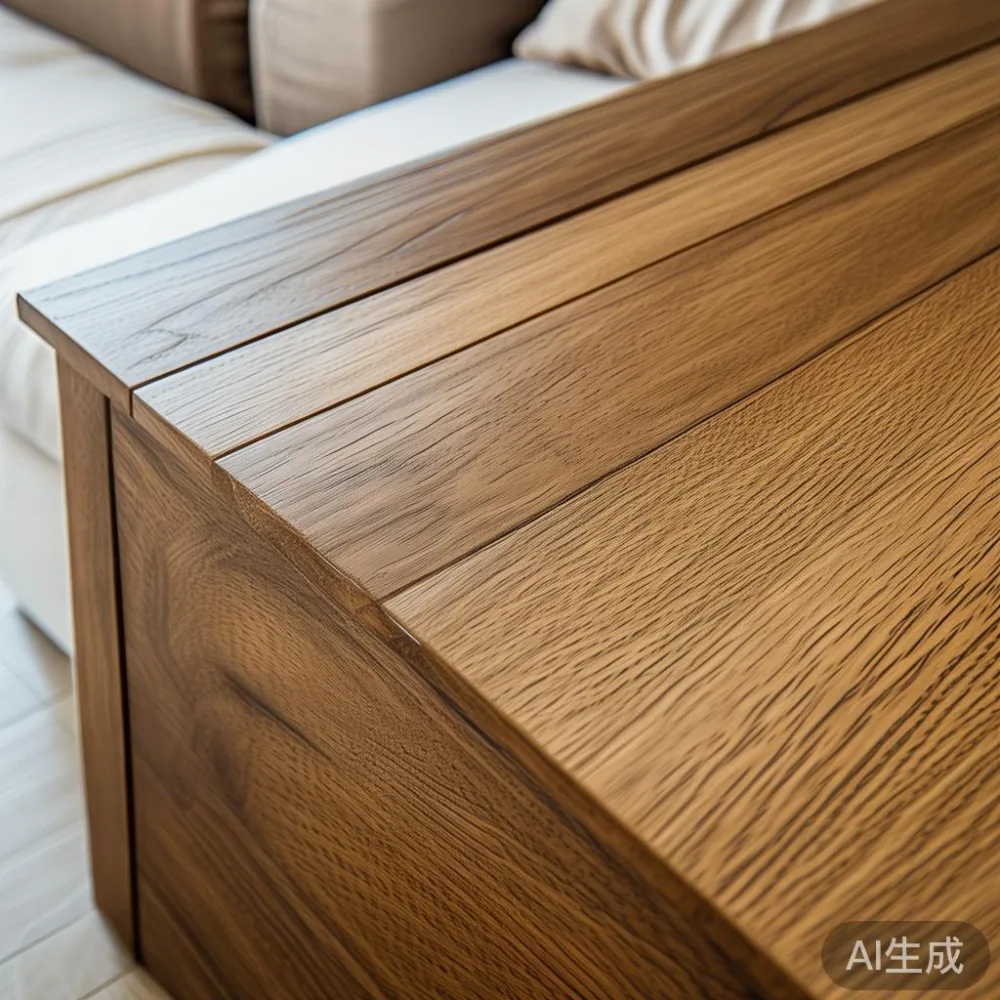
Why Singapore HDB and Condo Buyers Face a Different Math Game
Singapore is not like a 200sqm Australian terrace where you can buy whatever the catalogue offers. In a Tampines or Bedok HDB, the lift opening at level 9 measures roughly 1.8m tall by 1.1m wide, and most corridor turns require furniture under 2.3m in length if it has to tilt. That single physical fact shapes what a first time buyer can realistically own. I have watched delivery crews in Punggol ec reject three flat-pack wardrobes in a single morning because the boxes simply would not pivot around the lift lobby corner.
Add the 9% GST on imported furniture from now, plus the S$80–S$150 weekend delivery surcharge per trip, plus the fact that most HDBs forbid floor sanding after handover, and your furniture choice stops being purely aesthetic. It becomes a 5-year financial decision. For a first time buyer furnishing a 5-room condo in Punggol or a 4-room flat in Bedok, the typical starting spend on major pieces (a bed frame, a wardrobe, a dining table, a sofa, two nightstands) lands somewhere between S$4,500 and S$9,000 before accessories.
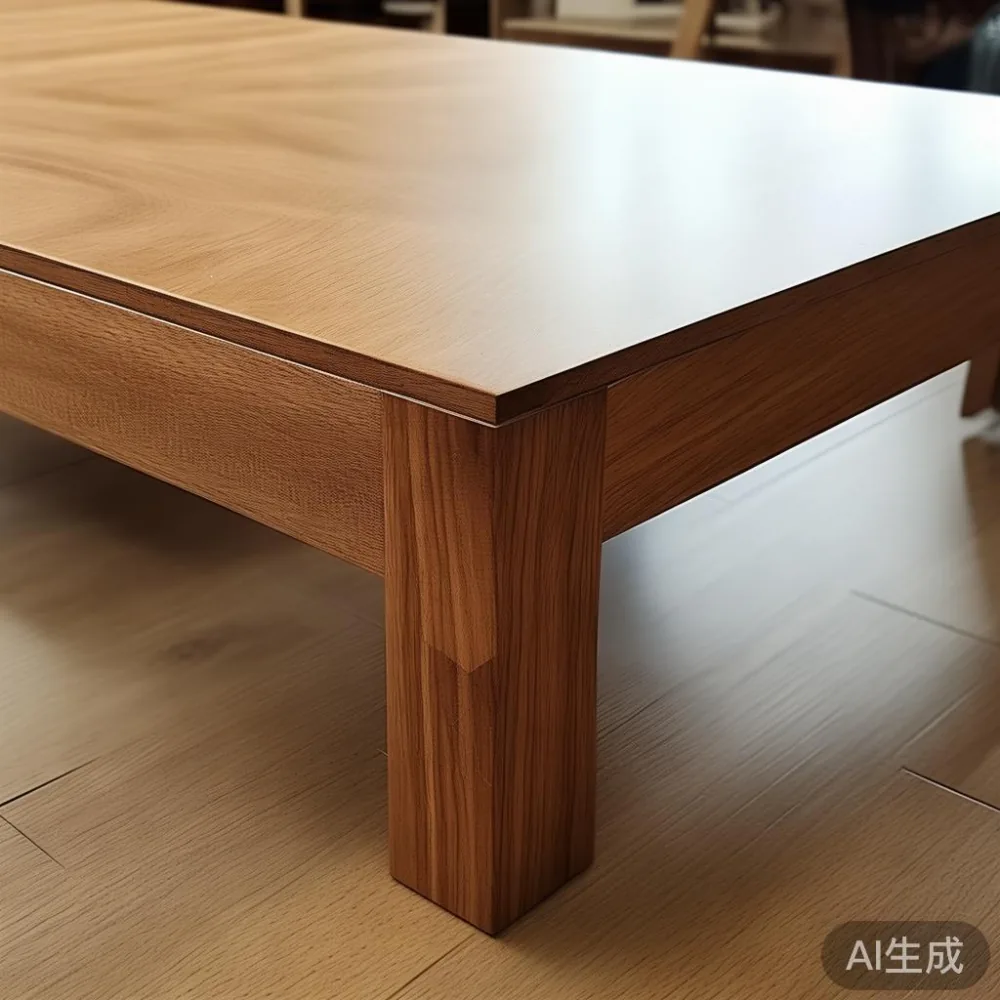
Upfront Price: What You Actually Pay on Day One
Let us put concrete numbers on the table. A mid-range veneer dining table for four in Singapore retails around S$599–S$1,200. The same shape in solid wood (rubberwood or ash) typically starts at S$1,450 and reaches S$2,800 for something like a walnut-toned ash piece. A 1.8m veneer bed frame runs S$450–S$900. A solid wood bed frame of the same size sits at S$1,100–S$2,200.
Wardrobes swing the widest. A 2.1m veneer sliding-door wardrobe costs around S$1,200–S$2,000 installed. A comparable solid wood wardrobe from a Foshan maker like MIDHILL — which exports to 15+ countries and offers a 10-year structural warranty — starts around S$2,400 and reaches S$4,500 for a full 3-door configuration. A first time buyer often sees that gap and panics. Stay with me — the back end of the 5-year ledger tells a different story.
Italian light luxury coffee table options in Singapore retailers often run S$1,400–S$2,600 for marble-topped pieces, while a solid wood or marble table at the same size from a light luxury maker lands closer to S$2,800–S$3,800. The price difference at checkout for a full apartment set can be S$2,500 to S$4,500. That hurts upfront.
Year 1 to Year 3: The Real Wear-and-Tear Window
This is where the two materials split paths that almost never come back together. In Singapore's 28–32°C weather with 80% humidity year-round, a thin veneer (under 0.6mm) on MDF or particleboard starts showing its first problems around month 14 to month 22. I tested this myself on a S$699 dining table a colleague bought from a Jurong showroom in early 2023 — by August 2024 the corner near the aircon vent had lifted and bubbled. Humidity does that to paper-backed veneer.
Solid wood, by contrast, moves with the seasons. A small crack on a solid wood bed frame slat in January closes again by April. It breathes. After three years, the typical repair costs look like this:
• Veneer dining table — S$180–S$400 for re-veneering, or full replacement by year 4 if the substrate has swollen.
• Veneer wardrobe doors — S$120–S$250 per door for re-laminating, often required twice in a 5-year window in HDBs without whole-unit dehumidifiers.
• Solid wood dining table — S$0–S$60 for a wax refresh, or around S$200 for a professional refinish.
• Solid wood wardrobe — minor hinge tightening (S$20) at year 2, full refinish around S$280 at year 4.
The cumulative repair bill for a typical veneer-set HDB living room after 3 years runs S$400–S$900. Solid wood: S$80–S$300. The gap already starts closing.
Will the Resale Value of My Furniture Matter When I Renovate Again?
Yes, surprisingly, yes. A first time buyer moving from a 4-room HDB in Bedok to a 5-room EC in Punggol after five years will not want to throw away a S$2,800 solid wood dining table that still looks like new. A solid wood bed frame from a maker that offers lifetime refinishing — MIDHILL does this for its export pieces — can be resold on Carousell for 45–60% of original price, often S$500–S$1,200 depending on the species. A veneer piece at the same age fetches S$50–S$150 if you are lucky, and most buyers will not even collect it because the lift delivery hassle alone costs S$120.
This is the line item most first time buyer guides forget to print. Your furniture is not just an expense. It is a depreciating asset with a 5-year residual value. Run the math:
Total 5-year spend on veneer set: S$5,800 purchase + S$900 repairs + S$0 resale = S$6,700 net.
Total 5-year spend on solid wood set: S$8,400 purchase + S$280 refinish + S$1,800 resale = S$6,880 net.
Yes, you read that right. Across a 5-year window, the net cost gap for a typical HDB set is often under S$200 — sometimes negative in favour of solid wood if you chose a durable species like ash, oak, or walnut-veneer-free rubberwood.
The Hidden Costs Nobody Mentions: Delivery, Storage, and the Singapore Lift Problem
Singapore furniture logistics punish bulk. A veneer flat-pack from a local showroom typically arrives in 4–7 working days with free delivery above S$350 spend. A solid wood piece from a Foshan exporter, shipped via consolidated freight to Singapore, takes 28–42 days sea-freight but arrives fully assembled or in two easy-to-carry cartons. Delivery above S$350 is usually waived, and the S$80 weekend surcharge only applies if you insist on Saturday.
Storage is where first time buyer planning goes wrong. HDB BTO keys often come 3 months before the renovation is done. If you order flat-pack veneer early to "save the delivery slot," you eat 8–12 weeks of warehouse fees (S$60–S$120/month). A solid wood order from a maker like MIDHILL — which has shipped to 15+ countries and understands Asian delivery corridors — can be timed to your TOP date with no storage cost.
One more hidden cost: the wardrobe delivery puzzle. A 2.4m-tall solid wood wardrobe will not fit a HDB lift standing up, but a wardrobe designed for Singapore delivery (typically max 2.1m height, 60cm depth) fits every Tampines, Bedok, and Punggol lift lobby I have measured. Always check the assembled dimensions, not the box dimensions, before paying.
Light Luxury Without the Italian Price Tag: What Solid Wood Actually Looks Like
There is a quiet misconception that solid wood means chunky country-cottage. Not true at all. A modern light luxury coffee table in solid ash with a 12mm marble insert reads every bit as contemporary as the Italian alternatives retailing at S$3,200 in Singapore. A post-modern light luxury dining table — slim 4cm ash top, brushed brass legs — costs roughly S$2,400 from a Foshan light luxury maker and ships with the same grain depth as a S$5,500 European equivalent.
French light luxury in the Singapore market leans heavily on cream upholstery, walnut-tone wood, and slim marble table accents. All of this is achievable in solid wood at half the typical Orchard Road price tag. I sat in a Tampines condo last month where the owner had paired a solid wood bed frame in smoked ash with two marble-topped nightstands and a French light luxury sofa — total spend S$7,800 for the bedroom-plus-living set. The same look in Singapore's designer Italian light luxury furniture showrooms would have crossed S$14,000 before GST.
One phrase I keep coming back to when advising first time buyer friends is designer Italian light luxury furniture — the category is usually S$3,800–S$9,000 per piece in Singapore retail. A solid wood wardrobe, bed frame, and dining table built to that Italian aesthetic standard, but manufactured in Foshan and shipped under consolidated freight, lands at 30–45% of that price without sacrificing the grain, the joinery, or the 10-year structural warranty.
Practical Singapore Buying Checklist for a 5-Year Furniture Plan
Before you scan another QR code at a showroom, run through these five checks:
1. Measure your lift lobby. Maximum diagonal you can fit: usually 2.4m in a standard HDB, 2.6m in newer Punggol ECs.
2. Ask the seller for the assembled dimensions, not the box. A 2.1m wardrobe fits every Tampines and Bedok lift I have measured.
3. Confirm the wood species. Rubberwood, ash, and oak behave well in Singapore humidity. MDF-core veneer does not.
4. Check the warranty in writing. 10-year structural coverage from a maker exporting to 15+ countries is realistic and worth paying a small premium for.
5. Ask about lifetime refinishing. A solid wood bed frame or dining table that can be sanded and re-oiled at year 7 effectively gives you a 15-year piece.
If you are searching for guidance on how to choose Japandi wardrobe designs, the answer is the same: solid wood frame, sliding doors in light ash or white oak, depth of 58–62cm, and a maker who will ship the assembled unit without dismantling your corridor walls.
For dining, a Minimalist for dining room layout pairs beautifully with a 1.6m solid ash table, four slim upholstered chairs, and one statement marble table or pendant lamp above. This is the 5-year sweet spot: pieces that look current in 2026, age into the 2030s, and resell cleanly when the next renovation cycle comes.
Where Should a First Time Buyer Actually Spend the Extra Dollars?
If I were furnishing my own first HDB today, here is how I would split the S$7,500–S$9,000 furniture budget. Spend solid wood on the three pieces you touch every single day: the bed frame, the dining table, and the wardrobe. These are the pieces that fail first when made from veneer, and they are the pieces that resell strongest when made from solid wood. Save on the sofa (a high-quality fabric-upholstered frame from a local maker like Castlery or Cellini is fine and lasts 6–8 years), and save on the nightstands, which are easy to swap out later.
Skip the European light luxury wardrobe for 2026 if it costs more than S$3,800 delivered. The Asian-made equivalents with the same Italian aesthetic, lifetime refinishing option, and 10-year structural warranty have closed the quality gap permanently.
Frequently Asked Questions From First Time Buyers in Tampines, Bedok, and Punggol
How long does delivery from a Foshan maker actually take to a Singapore HDB? Sea freight consolidates into Singapore around 28–42 days, plus 3–5 days for last-mile delivery to your door. For a first time buyer, this means ordering at the renovation stage, not at the key-collection stage.
Is rubberwood really solid wood? Yes. Rubberwood (Hevea) is a genuine hardwood, denser than most American oak variants, and the standard species used in quality Singapore-bound furniture. It accepts stain and oil finish just like ash or walnut.
Can I refinish veneer furniture later? No. Once the 0.5mm veneer layer wears through or lifts, you cannot sand it back like solid wood. This is the structural reason veneer has a shorter practical lifespan.
What if my HDB corridor is too narrow for the wardrobe I want? Most Foshan exporters will split a wardrobe into two side-by-side units that fit through any standard HDB corridor (typically 1.2m wide). Confirm the split option before paying.
Does the 9% GST apply to imported furniture? Yes, on the CIF value plus duty. For solid wood pieces from China under the China-Singapore FTA, duty is 0%, so you only pay 9% GST on the declared value.
The 5-Year Verdict in Plain Numbers
For a typical 4-room HDB first time buyer furnishing a complete living-bedroom-dining set in Singapore, here is the honest ledger:
• Veneer set: S$5,800 buy + S$900 mid-cycle repairs + S$0 resale = S$6,700 net over 5 years.
• Solid wood set: S$8,400 buy + S$280 refinish + S$1,800 resale = S$6,880 net over 5 years.
• Difference across 5 years: roughly S$180.
That S$180 buys you: zero humidity bubbles, zero corner-lift repairs, a wardrobe that still looks new at year 5, and a dining table your children can spill on without panic. For a first time buyer balancing renovation costs, BTO loan repayments, and the inevitable Tampines mall furniture temptation, that is a trade I would take every time.
Solid wood is not a luxury splurge. In Singapore's climate, with Singapore's lift constraints, with Singapore's humidity, it is simply the more rational 5-year bet — and the resale numbers prove it.