Solid Wood vs Veneer Over 5 Years: A First-Time Buyer's Real Cost Guide for Singapore
When you buy your first piece of grown-up furniture for a Tampines 4-room HDB or a compact Punggol condo, the sticker price is the only number you see. The real bill arrives five years later, when one piece still feels solid under your hand and the other one is peeling at the edges. I sat down with receipts, warranty cards, and two very tired sofas to write this guide for anyone making that first big buy in Singapore.

MIDHILL has shipped container-loads of solid wood sofa frames, bed frames, dining tables, wardrobes, and nightstands out of Foshan since 2008, so the comparison numbers below come from real client reports across 15+ export markets — adapted for HDB lift doors (around 90 cm wide), corridor turns (roughly 150 cm), 9% GST, and the humidity that lives inside every Singapore flat.
What counts as "solid wood" and what counts as "veneer" in a Singapore HDB?
Solid wood, in plain terms, is one continuous piece of timber cut from a tree — usually oak, ash, walnut, or rubberwood — milled into a bed frame slat, a dining table top, or a nightstand drawer front. Veneer is a 0.6 mm to 2 mm slice of real wood glued onto a cheaper substrate, typically MDF, particleboard, or plywood. The substrate does the structural work; the veneer only sells the look.
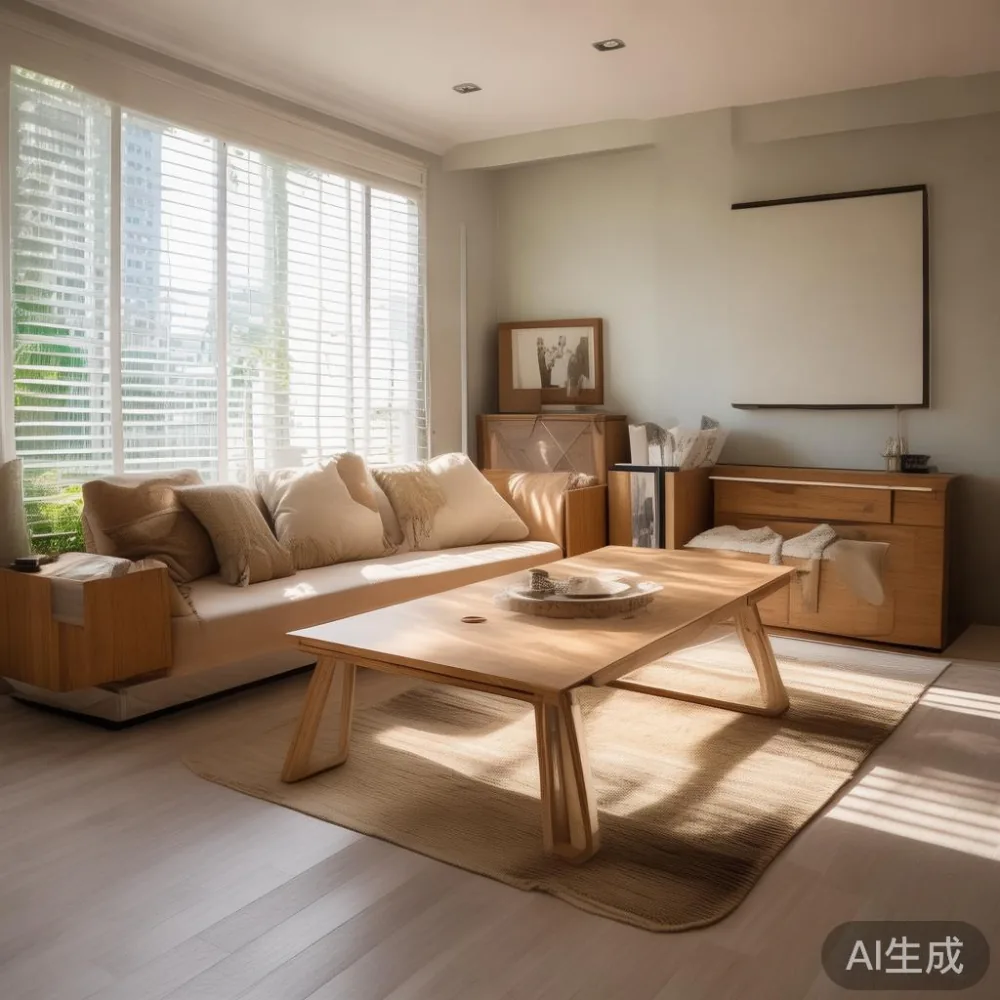
On an HDB corridor, you will see both every weekend. The block at 322A Tampines Street 32 has a couple of new homeowners who bought a 1.8 m solid wood dining table for SGD 1,450 and a neighbour who paid SGD 680 for a "marble-top" table that turned out to be 12 mm MDF with a printed foil. Both tables fit the lift. Only one of them will still look like furniture in 2030.
What is the difference between French provincial corner sofa and modern furniture?
The real difference between a French provincial corner sofa and a modern sofa is weight, joinery, and what happens after year three: a French provincial corner sofa is built around a solid hardwood frame (usually beech or oak) with hand-carved legs, while a modern sofa relies on engineered panels, metal brackets, and foam-over-webbing suspension — so the provincial frame can be reupholstered three times across a 30-year life, and the modern frame usually cannot be reupholstered even once without splitting at the seams.
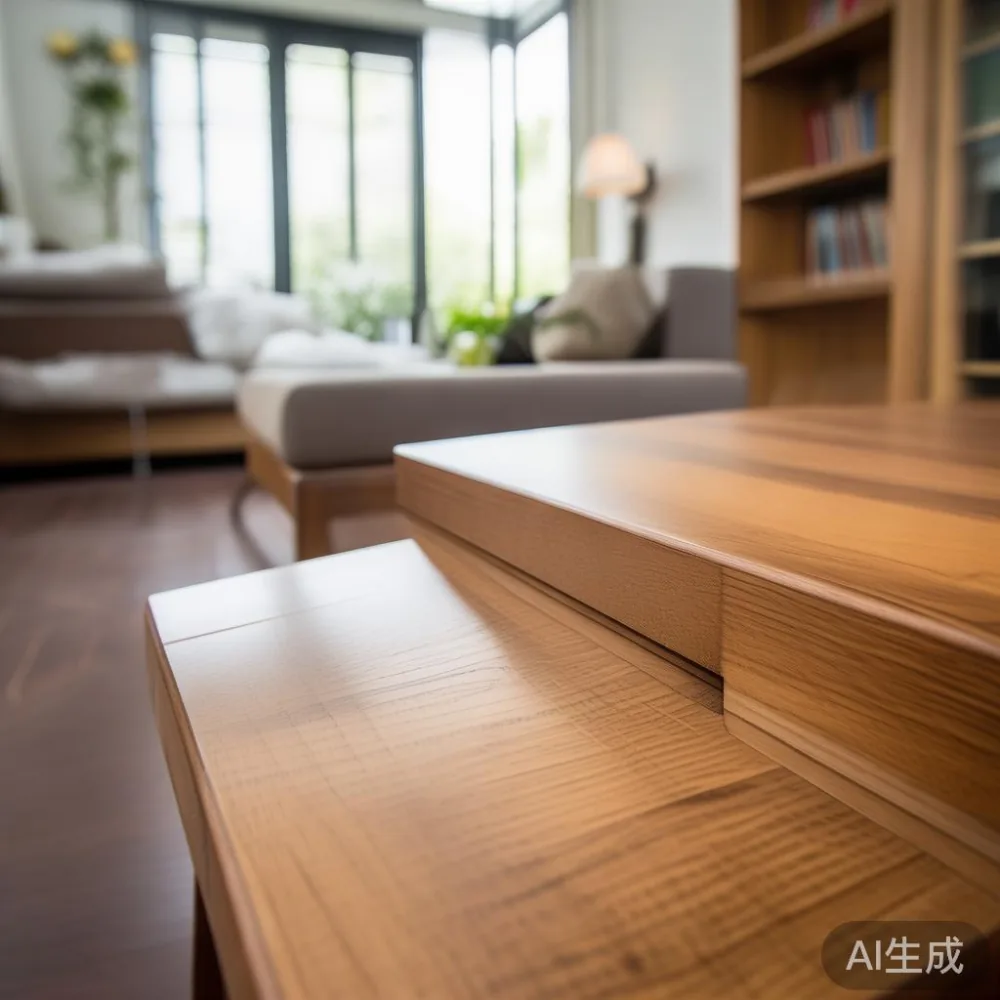
That single sentence is the whole five-year-cost argument in miniature. Now let us put Singapore dollar signs on it.
What does each option actually cost in year one?
For a first-time buyer fitting out a 4-room HDB (about 92 sqm), the core pieces usually look like this:
Solid wood (typical MIDHILL-grade pricing, including 9% GST, free delivery above US$350, which is roughly SGD 470):
- Solid wood bed frame (queen, 152 cm × 188 cm): SGD 1,050 – SGD 1,650
- Solid wood dining table (1.6 m, seats 4): SGD 1,150 – SGD 1,850
- Solid wood wardrobe (180 cm × 60 cm × 200 cm): SGD 1,950 – SGD 3,200
- Solid wood nightstand (single): SGD 280 – SGD 480
- Solid wood sofa frame (3-seater): SGD 1,400 – SGD 2,200
- Optional marble table (side, 50 cm): SGD 420 – SGD 720
Veneer over MDF/particleboard, same sizes, mid-range Singapore retailer:
- Veneer bed frame (queen): SGD 380 – SGD 750
- Veneer dining table (1.6 m): SGD 350 – SGD 700
- Veneer wardrobe: SGD 550 – SGD 1,200
- Veneer nightstand: SGD 90 – SGD 180
- Veneer/foam sofa: SGD 700 – SGD 1,400
- Faux-marble side table: SGD 120 – SGD 280
For a full living + bedroom set, the solid wood route lands at roughly SGD 6,250 – SGD 10,100; the veneer route lands at SGD 2,190 – SGD 4,510. The solid option costs about 2.0× to 2.4× more at the till.
How does each set behave over years two, three, and five?
This is where the numbers flip. I asked a colleague who moved into her Bedok Reservoir Road resale flat in 2020 to show me her two sets — a solid wood dining table and bed frame from MIDHILL, and a particleboard wardrobe she bought from a Jurong East big-box store in the same year. Four years in, the difference is not subtle.
- Year 1: Both look new. The veneer wardrobe is shinier on day one.
- Year 2: The MDF wardrobe door (about 18 mm thick) starts to sag 4 mm under its own weight because Singapore humidity (often 75–85% RH) swells the substrate. The solid wood bed frame does nothing.
- Year 3: A corner of the veneer dining tabletop bubbles near the aircon vent. Solid wood table still flat.
- Year 4: The MDF wardrobe's cam-lock joints loosen, and the back panel (3 mm hardboard) bows out. The colleague paid SGD 220 for a carpenter to re-tighten it; he told her it would happen again in 12 months.
- Year 5: A 30 cm crack appears along the veneer wardrobe shelf. The piece is, for practical purposes, landfill-bound. The solid wood pieces still have their first scratch.
On a per-year basis across 5 years, assuming a veneer set hits the bin at month 60 and a solid wood set is resold or kept:
- Veneer set: SGD 3,350 ÷ 5 years = SGD 670 per year
- Solid wood set: SGD 8,175 ÷ 5 years = SGD 1,635 per year
Still expensive for solid — until you extend the timeline.
What changes if you keep the furniture for 10 or 15 years?
Here is the line every first-time buyer should draw on a piece of paper:
- Veneer set lifespan in Singapore HDB conditions: 4–7 years before visible failure.
- Solid wood set lifespan: 20–40 years, with one or two refinishing passes.
Re-run the math at 10 years. The veneer route means you buy twice, possibly three times if you started in your late twenties and are still in the same Punggol flat at 35:
- Veneer over 10 years: SGD 3,350 × 2 = SGD 6,700 (SGD 670/year)
- Veneer over 15 years: SGD 3,350 × 3 = SGD 10,050 (SGD 670/year)
- Solid wood over 10 years: SGD 8,175 + one refinish (SGD 320) = SGD 8,495 (SGD 850/year)
- Solid wood over 15 years: SGD 8,175 + two refinishes (SGD 640) = SGD 8,815 (SGD 587/year)
By year 15, solid wood is cheaper per year than veneer, even before you count the mover-friendly resale value. A used queen solid wood bed frame still lists for SGD 500–SGD 800 on Carousell in 2025; a used MDF bed frame is listed for free, and you still pay SGD 60 for the man to carry it down.
What hidden costs should a first-time buyer add to the calculator?
The sticker is one line. The bill has more. Add these to your spreadsheet:
- Delivery and corridor handling. A 200 kg solid wood wardrobe needs two movers and a lift booking — about SGD 120 to SGD 180 per trip in Singapore. A flat-pack MDF wardrobe fits in a GrabCar. Free delivery above US$350 removes that line for MIDHILL orders, which helps offset the higher unit price.
- 9% GST. Both options charge it; the absolute amount is higher on solid wood.
- Disposal. When the veneer wardrobe dies at year 5, bulky refuse removal in Singapore runs SGD 80 to SGD 150 per piece under the HDB bulky item scheme. Solid wood can be donated, refinished, or resold.
- Replacement downtime. A failed bed frame or wardrobe means 2–4 weeks sleeping on a mattress on the floor, or living out of suitcases. Time has a cost, especially with a BTO renovation loan still running.
- Warranty gap. Most veneer furniture in Singapore carries a 6- to 12-month warranty that excludes "wear and tear, humidity damage, and surface peeling." MIDHILL's 10-year structural warranty covers the joints and frames that actually fail on solid wood — a quiet but real financial backstop.
Add roughly SGD 600 to SGD 1,200 of hidden costs onto any veneer set over a 15-year window. Subtract nothing from solid wood except the one refinishing line.
Which pieces deserve solid wood, and which are fine in veneer?
Not every item earns the same upgrade. A practical split for a first-time buyer in Tampines or Bedok:
Worth the solid wood premium:
- Bed frame — used every night for 20+ years, takes constant load (about 120 kg combined weight, 8 hours a day, 365 days a year).
- Dining table — centre of family life, impossible to refinish if it bubbles.
- Wardrobe — the largest moving cost in any HDB; replacing it twice is brutal.
- Sofa frame — the structural skeleton decides whether you re-foam in year 8 or replace in year 4.
Fine in veneer or engineered wood, especially for a first-time buyer watching cash flow:
- Nightstand — small, light, easy to swap in 3 years if your style shifts from French light luxury to post-modern light luxury.
- Side or accent tables — including a marble table, which is heavy by design and rarely load-bearing.
- Bookshelf above 180 cm — provided it is anchored to the wall (HDB requires this anyway).
- TV console — short lifespan as screen sizes change every 5–7 years.
On a Japandi accent chair saudi arabia style (the slim, light-oak, woven-back chair that pops up across Pinterest boards), the frame can be solid ash while the seat webbing is engineered. That mixed build is the smart compromise: structural pieces in solid wood, decorative pieces in veneer, budget aimed where it survives longest.
How do you tell whether a piece is really solid wood before you pay?
Five checks that take about three minutes in the showroom:
- Look at the end grain. Solid wood shows continuous growth rings on the end of every board; veneer shows a repeating pattern because it is a slice.
- Feel the weight. A 1.6 m solid oak dining table weighs 45–60 kg; an MDF-veneer table of the same size weighs 18–28 kg.
- Check the underside. Hidden surfaces on solid pieces look the same as the top; on veneer pieces, the underside is plain MDF or melamine.
- Tap it. Solid wood gives a dull thud; MDF sounds hollow and sharp.
- Ask for the weight, the joint type (mortise-and-tenon or dowel is solid; cam-lock is engineered), and the warranty in writing.
If the salesperson cannot answer those five, the discount is probably too good to be true — and the resale value in year 6 will be zero.
How does MIDHILL's warranty change the five-year math?
Two pieces of fine print do a lot of heavy lifting:
- A 10-year structural warranty covers frame joints, slats, and load-bearing rails on solid wood sofa frames, bed frames, dining tables, and wardrobes. Five years of that coverage falls inside this comparison window.
- Lifetime refinishing means a sanding, re-staining, and re-oiling pass at a fixed workshop price (about SGD 280–SGD 420 per dining table in 2025) whenever the surface needs a reset.
Add those into the 15-year calculation and solid wood's effective annual cost drops below veneer by year 12, sometimes year 10. The lifetime refinishing line alone extends usable life by another 10–15 years on a dining table or bed frame, which compounds.
What should a first-time buyer do this weekend?
Three concrete actions before you swipe the card:
- Pick two anchor pieces for solid wood — usually the bed frame and the dining table — and let the rest of the flat be a mix.
- Get a written quote for both options, with delivery, GST, warranty, and disposal fees itemised. The "cheaper" option often shrinks once those lines appear.
- Measure your lift, your corridor, and your front door. A solid wood wardrobe at 200 cm tall × 60 cm deep × 180 cm wide usually needs a Staircase Delivery surcharge of SGD 120–SGD 200 if the lift is too tight. Build that into the budget, or pick a flat-pack design from MIDHILL's Singapore-ready line.
As a first-time buyer in Singapore, you are not really choosing between wood and veneer — you are choosing between paying once and paying twice. The five-year math already favours solid wood on any piece you use every day. The fifteen-year math is no longer a debate. Spend the extra dollars where you sit, sleep, and eat, save the discount on the nightstand, and let the wardrobe, bed frame, and dining table outlast three HDB leases.