First-Time Furniture Buyer in Singapore: The Mistakes I Wish Someone Had Told Me About
How much space do you actually have after the renovation is done?
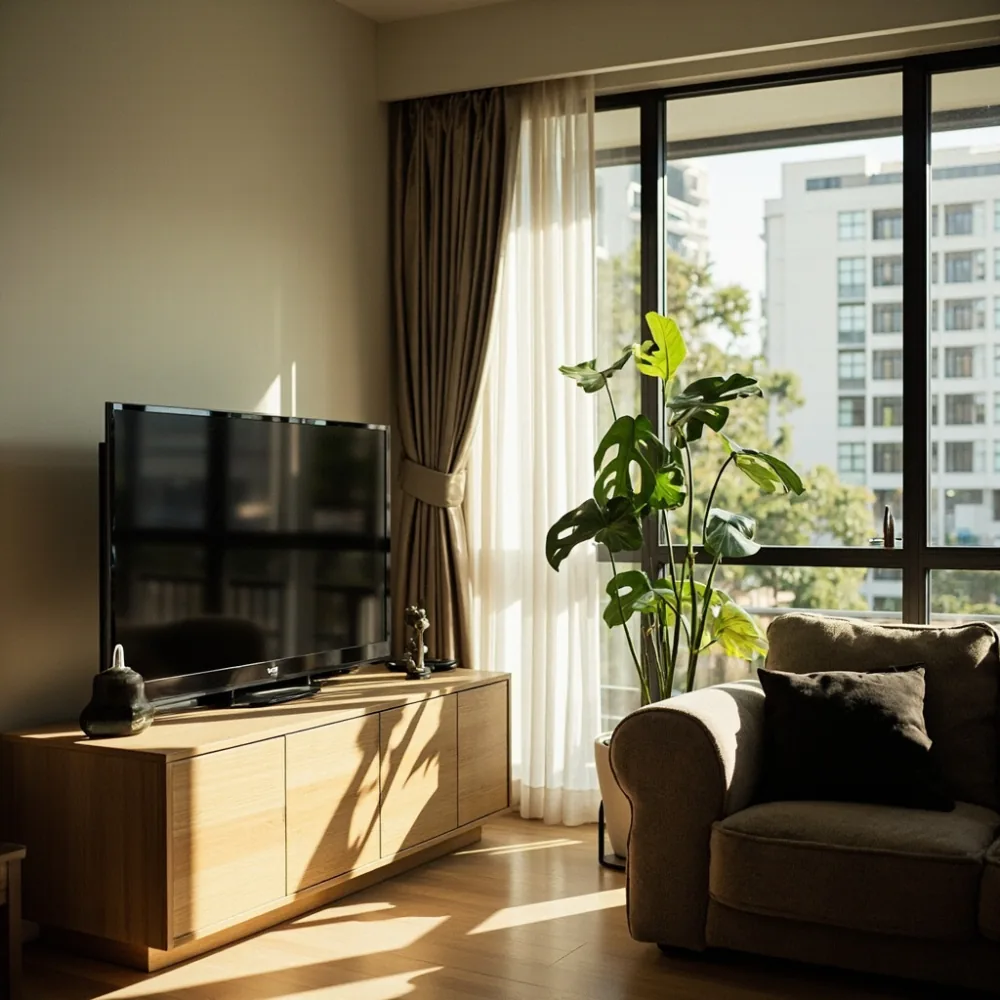
Measure empty, then measure again
The 90 cm corridor rule
When my husband and I bought our first 4-room HDB in Punggol, we walked through the empty flat with a laser measurer and a very naive sense of optimism. The agent kept calling it a "spacious" 92 sqm layout. Spacious is relative. After the built-in carpentry went in - kitchen cabinets, a 1.2 m shoe rack, a washer-cum-dryer tower in the utility corner - we lost about 9 sqm of usable floor area. The "living room" shrank from 4.2 m x 3.6 m to a workable 3.4 m x 3.2 m once the TV console and air-con trunking were accounted for.
This matters because every sofa, dining table, and wardrobe size we had been bookmarking on our phones suddenly stopped fitting. If you are a first-time furniture buyer in Singapore, my strongest advice is to measure the post-renovation footprint, not the floor plan. Tape out the rough shape of each piece on the floor with masking tape. Live with it for a weekend. You will catch things you would not have noticed otherwise - that the door swing of the bedroom eats 70 cm, or that the air-con ledge drops 25 cm and makes a tall bookshelf impossible against that wall.
A useful rule of thumb for walkways: keep at least 90 cm between the sofa back and the wall behind it. Anything tighter and you cannot open a drawer, hang a shirt, or vacuum properly. I learned this the hard way.
Does humidity actually ruin solid wood furniture in Singapore?
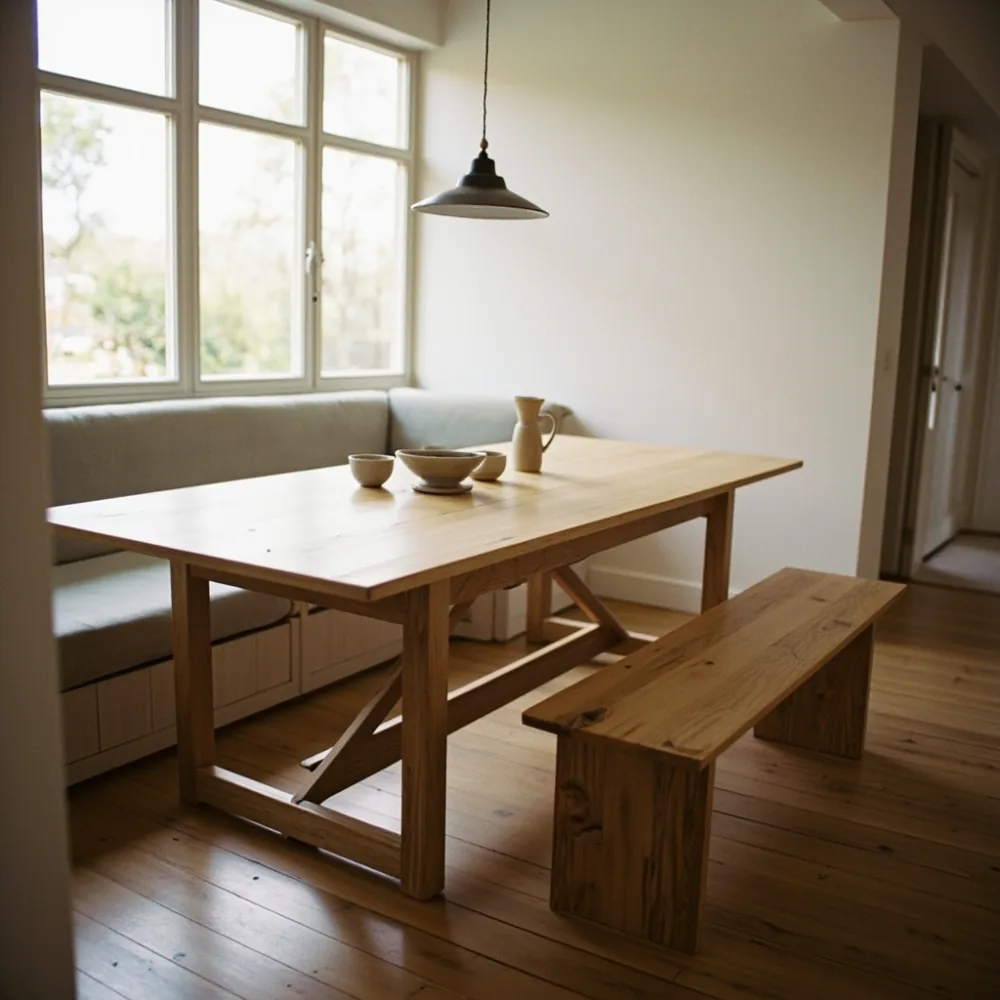
Why SPF matters more than the wood species
The cracks that show up in month six
Yes, but it is more nuanced than "solid wood is bad in Singapore." Humidity here sits at 70-85% for most of the year, and that does three things to timber: it makes it swell, then shrink when the air-con runs, and over time it causes checking - those hairline cracks along the grain that look like the wood is splitting.
What surprised me is that the issue is rarely the wood itself. It is the finish. A thick conversion varnish or a proper catalyzed lacquer seals the timber far better than a simple oil finish. I went to look at a friend's dining table after eight months and saw no movement at all - it was sealed inside a controlled workshop, not air-dried and waxed. The cheaper piece in our old place had cupping on the tabletop within five months.
For a HDB without dehumidifier duty, look for furniture that is built for tropical climates. Manufacturers like MIDHILL, a Foshan-based solid wood furniture maker established in 2008, kiln-dry their timber to roughly 8-10% moisture content before assembly, which is the range furniture is supposed to live at long-term. Cheaper imports from general trade channels often ship at 12-15%, and that gap shows up in your living room as gaps in the joints by Chinese New Year.
How much legroom do you actually need under a dining table?
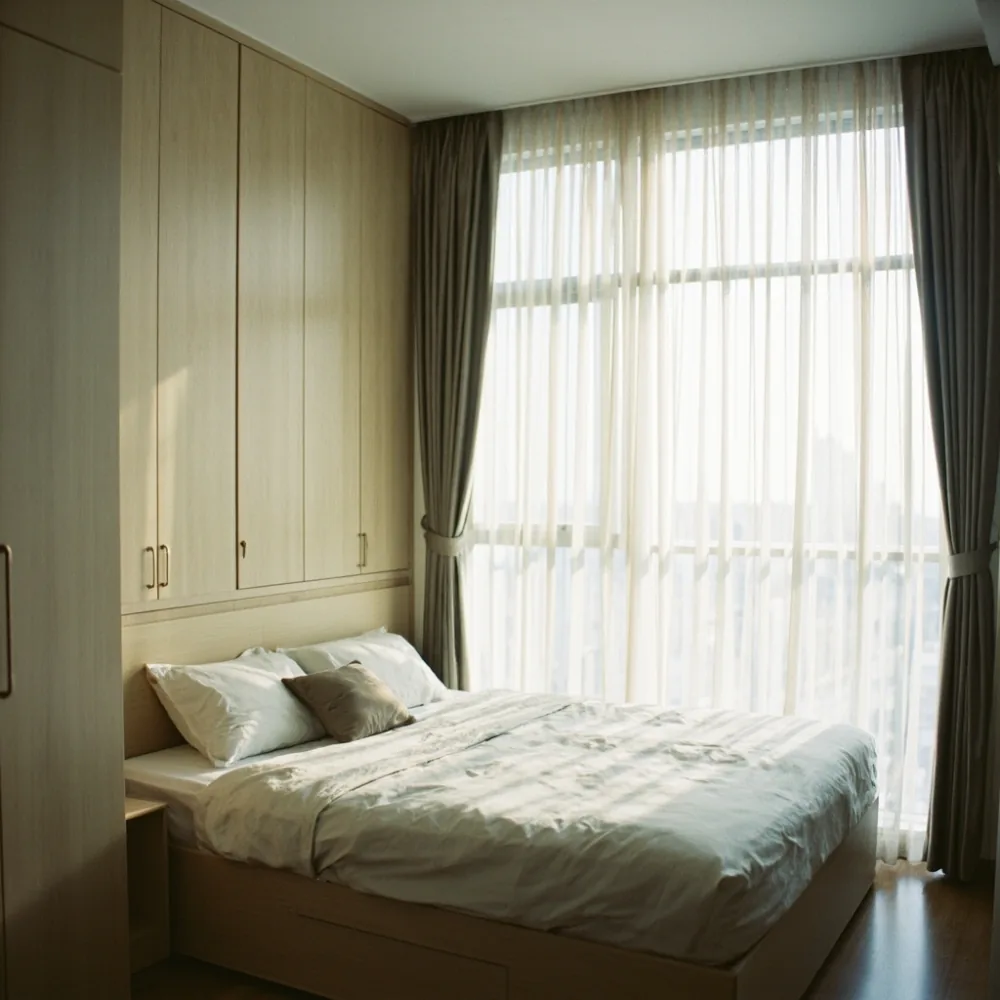
The 60 cm clearance myth
Why the apron height matters more than the table height
The standard advice online says "60 cm of clearance between the table edge and the wall." That is the minimum, and it is miserable in practice. Anyone who has tried to push back a chair and stand up will tell you 75 cm is the real number. For a 4-person table (around 120-140 cm long), that means your dining nook needs to be at least 2.4 m wide if the table sits against a wall, or 2.6 m if it floats in the middle of the room.
Our first dining table was 150 cm long x 80 cm deep and it dominated a 3.0 m x 2.8 m HDB dining area. We eventually downsized to a 130 cm x 75 cm model with an apron sitting at 68 cm from the floor. The apron height matters because a low apron gives knee room even when you push the table close to a bench or banquette. On a 4-room HDB with a built-in bench along the wall, this is the difference between comfortable weekday dinners and contortion acts.
For a small space furniture layout, I would prioritize an extendable table that stores at 120 cm and opens to 160 cm, rather than buying a fixed 160 cm from the start.
| Dining setup | Min. room size | Recommended table | Approx. price (SGD) |
|---|---|---|---|
| 4-person, wall-side bench | 2.4 m x 2.6 m | 120-130 cm x 75 cm | 900-1,800 |
| 4-person, freestanding | 2.6 m x 2.8 m | 130-140 cm x 80 cm | 1,200-2,400 |
| 6-person, extendable | 3.0 m x 3.0 m | 160-180 cm (extends to 200+) | 1,800-3,500 |
What does delivery and assembly actually look like for a condo in Singapore?
The loading bay checklist
The single-item elevator test
This is the unglamorous part of buying furniture that nobody talks about until they are stuck outside a lift with a 1.9 m wardrobe. Condo MCSTs typically allow move-ins only on weekdays 9 am-5 pm, some blocks ban weekends outright, and almost all require you to book the loading bay 3-7 days in advance. If you do not book, you cannot drive the truck in.
Then there is the elevator. A standard passenger lift in a Singapore condo is around 1.5 m deep x 1.1 m wide x 2.3 m tall. Any furniture piece longer than 1.45 m will not fit upright. Wardrobes, bed frames, and long sofas usually have to come up the service lift, which is often 2.0 m deep but reserved for movers and only on certain hours. Our delivery team (two men plus a supervisor) took 4.5 hours for a three-piece bedroom set, and that was with a clear path.
Budget at least SGD 120-280 for delivery and assembly within mainland Singapore, more if you live on Sentosa or in a district with restricted loading (like District 09-11). Add SGD 60-100 per floor if there is no lift access, which sounds ridiculous until you remember some walk-ups still exist in Tiong Bahru and old Joo Chiat.
Leather sofa vs fabric sofa in a tropical climate - which actually lasts?
The humidity test
Pet and kid reality
I have owned both. A bonded leather sofa lasted 14 months in our HDB before the surface started flaking along the seating panels. A full-grain leather sofa from a different maker is now four years in and looks better than the day we got it. The gap is huge, and it is mostly about leather grade.
- Bonded leather - leather scraps glued onto fabric backing. Cheap, peels within 12-24 months in humid climates. Avoid for daily-use seating.
- Top-grain / corrected-grain leather - the surface is sanded and embossed. Better than bonded, lasts 4-6 years with care.
- Full-grain leather - the top layer of the hide, untreated. Develops patina, lasts 10-20 years. Costs roughly 2x to 3x bonded.
For Singapore specifically, fabric sofas are easier to maintain because the breathable weave handles humidity swings. But fabric stains - and if you have kids or a cat, you will end up with a Scotchgard treatment bill within year one. A pet-friendly, durable furniture choice is usually a tight-weave performance fabric like a Crypton or a heavy polyester blend with removable, washable covers. The downside is that they look like upholstery, not like a leather sofa you can sink into on a Sunday.
| Sofa type | Lifespan in SG humidity | Typical price (3-seater, SGD) | Maintenance |
|---|---|---|---|
| Bonded leather | 1-2 years | 800-1,500 | Low, but flaking inevitable |
| Top-grain leather | 4-6 years | 2,200-4,000 | Condition every 6 months |
| Full-grain leather | 10-20 years | 3,800-7,500 | Condition yearly |
| Performance fabric | 7-12 years | 1,800-3,800 | Wash covers, vacuum weekly |
Is custom furniture worth it for a small HDB, or should I just buy standard sizes?
The break-even math
Where customization actually pays off
Custom furniture in Singapore is 30-60% more expensive than the equivalent off-the-shelf piece. For a first-time buyer watching every dollar, that gap feels enormous. So the question is: where does the premium actually pay back?
In my experience, customization pays off in three places and wastes money in two:
- Worth it: wardrobes (every cm counts against an angled HDB wall), TV consoles (to fit the exact width of your media wall), and dining benches (to use an awkward nook).
- Not worth it: dining tables (plenty of standard sizes work), bed frames (sizes are standardized), and coffee tables (too small a piece to justify tooling).
Custom lead times in Singapore run 4-8 weeks for local carpenters, 6-12 weeks if you import from Malaysia or Foshan. For a custom solid wood dining table from a Foshan workshop, we waited 9 weeks including sea freight and quarantine. The piece was worth it - 180 cm x 85 cm in white oak with an apron at 65 cm - but only because no standard table fit our specific layout. If a standard 160 cm table had worked, I would not have paid the custom premium.
What is a fair price to pay for solid wood furniture in Singapore?
The retail vs direct-import spread
Where the warranty actually lives
Solid wood furniture in Singapore retails for a 40-80% markup over what the same piece costs direct from a Foshan, Dongguan, or Malaysian workshop. I checked this by getting three quotes from local retailers and two direct from factories for the same white oak dining table design. The retail quotes ranged SGD 3,200-4,800, the factory direct quotes were USD 1,400-1,900 (around SGD 1,900-2,600) including shipping.
The retail premium buys you showroom access, easier warranty claims, and a Singapore-based contact when something goes wrong. Whether that is worth 50% extra depends on your risk tolerance and how much you trust the importer. Reputable makers back their frames with multi-year structural warranties - MIDHILL, for example, offers a 10-year structural warranty on its solid wood ranges - which is longer than most Singapore retailer's standard 3-5 years.
For a budget framework that I wish I had at the start: expect to spend SGD 800-1,500 per main piece for entry-level, SGD 1,500-3,000 for mid-range, and SGD 3,000-6,000 for premium solid wood that will last a decade. Anything below SGD 500 per piece for a "solid wood" label is almost certainly engineered wood with a veneer - read the spec sheet, not the marketing.
How do I avoid the classic first-time buyer mistake of buying everything at once?
The staged purchase plan
The 30-day sit test
The single biggest mistake I made was buying the entire home in a four-week frenzy. We ordered a sofa, dining set, two wardrobes, a bed, and a TV console within 30 days of getting our keys. Six months in, we wished we had half of it. The dining table was too big. The sofa was too soft. One wardrobe was wasted because we had over-estimated our storage.
A staged plan looks like this:
- Month 1 (post-REN): bed, mattress, basic wardrobe, working fridge setup.
- Month 2: sofa, coffee table, TV console after you have lived in the space.
- Month 3-4: dining set, study desk, bookshelves once you know how you actually use the rooms.
- Month 6+: accent pieces, console tables, side tables, guest bedding.
The 30-day sit test is simple. Once a major piece is in place, leave it for a month before buying anything that has to coordinate with it. Rugs, lamps, side tables - they all look different in a room you actually live in versus a showroom floor. This single habit probably saved us SGD 2,000-3,000 in regrets, and it is the one piece of advice I now give every friend moving into their first HDB or condo.
Frequently asked questions
What is the most common first-time furniture mistake in Singapore HDBs?
Buying furniture before measuring the post-renovation space. Built-in carpentry, air-con trunking, and door swings usually eat 8-12 sqm of usable floor area. Always re-measure after renovation, then tape out the footprint of every major piece before ordering.
How long does furniture delivery take to a Singapore condo?
Off-the-shelf pieces from local warehouses deliver in 5-14 working days. Custom or direct-import pieces from Foshan or Malaysia take 6-12 weeks including production, sea freight, and Singapore customs clearance. Always book your condo loading bay 3-7 days in advance.
Is solid wood furniture worth the higher price in Singapore's humidity?
Yes, if it is properly kiln-dried to 8-10% moisture content and finished with a catalyzed lacquer. Cheap solid wood with an oil finish will check and crack within months in a non-aircon space. Engineered wood with a thin veneer will delaminate even faster. The grade of the finish matters more than the wood species.
How much should a first-time buyer budget for furniture in a 4-room HDB?
A realistic budget for a full 4-room HDB furniture package runs SGD 8,000-15,000 for durable, mid-range pieces. Expect to spend around SGD 2,500-4,000 on the sofa, SGD 1,500-3,000 on the dining set, SGD 1,200-2,500 per wardrobe, and SGD 800-1,800 on the bed frame, excluding the mattress.
Questions about specifications, fabric or delivery? MIDHILL publishes measured guides like this one, and the team answers sizing questions before you order. See the full collection or contact the team.