How Southeast Asian Humidity Affects Solid Wood Furniture in Singapore
Singapore does not have four seasons, but furniture still experiences a yearly rhythm. Relative humidity commonly rises above 80% during the wet months and may fall below 60% in drier afternoons, especially where air-conditioning is working hard. That repeated swelling, flattening, and drying can affect a solid wood dining table, bed frame, wardrobe, nightstand, or solid wood sofa even when the wood was made properly.
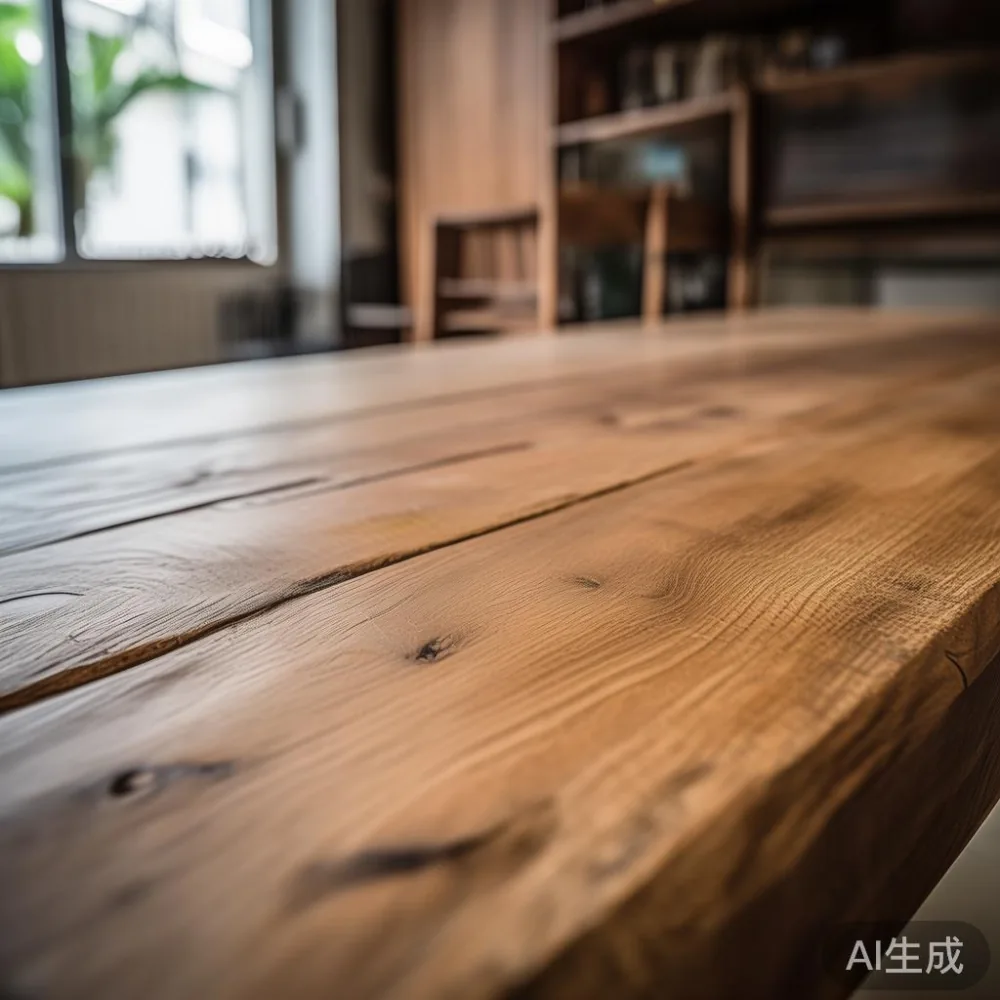
For a first time buyer in Tampines, Bedok, Punggol, or a Singapore HDB flat, humidity should be part of the selection process, not an afterthought. This guide explains what changes, which rooms need more care, how to judge moisture-control details, and what delivery to a lift or condo corridor can involve. It also shows why light-luxury solid wood furniture can remain practical when its design, dimensions, and care plan suit local conditions.
Does 80% humidity damage a solid wood dining table in Singapore?
High humidity does not mean wood will fail at 81%. It means the wood will exchange moisture with the surrounding air. Below roughly 12% wood moisture content, hygroscopic solid wood can gain moisture and expand across its grain. Above about 20%, it can lose moisture and shrink. The visible movement is normally modest, around 2% to 3% across the width of a well-seasoned board, but enough to open a joint, stress a tenon, or make a fitted panel touch differently.
Seasoning matters. Solid wood furniture for Singapore should normally arrive with an approximately 8% to 12% moisture content, matched to indoor conditions rather than forced to match outdoor weather. Factory equipment may include moisture meters, kiln records, and controlled finishing rooms. Ask the supplier for the target range instead of relying on the phrase “seasoned timber.”
Several materials respond differently. Teak has lower movement than many hardwoods, oak and walnut can show more dimensional change, and thick marble table tops do not absorb moisture, although their marble slabs, frames, supports, and fixings still require care. Engineered panels move less than wide solid boards, yet they remain sensitive to edge swelling and repeated wetting.
Do not expect Singapore to stay at a fixed percentage. A room may sit near 78% relative humidity at midnight and 58% near a serviced air-conditioning vent. Aim for roughly 45% to 65% relative humidity and about 18° to 24°C, accepting short seasonal deviations. Use an inexpensive hygrometer, preferably one that records minimum and maximum readings over at least 24 hours. Place it near the dining area for 7 days before delivery day.
Which rooms are most difficult for a first time buyer?
Corners, window-side dining zones, and rooms facing west-facing windows can be demanding. A Tampines HDB living room near a balcony door may receive humid air but little direct rain, while a Punggol room beside a frequently opened bathroom can experience rapid local changes. Bedok’s coastal humidity and Singapore’s generally wet climate make stable indoor conditions important, but room layout and air-conditioning use matter more than a neighbourhood label.
Bathrooms are a poor environment for a long-term wooden wardrobe or nightstand. Keep furniture at least 30 cm from shower entrances where possible and 15 cm from floor air-con vents that can create repeated drying. Leave at least 5 cm behind movable dining chairs for airflow. A solid wood sofa should not be pressed tightly against a wall if air cannot circulate behind it.
For a bedroom, consider the bed frame first. Allow 60 cm on at least one side where the room permits, 5 cm behind the headboard, and 10 cm between a wardrobe side and a wall if doors need full opening. The measurements are practical guides rather than rules for every plan. Check the actual door swing before ordering.
A first time buyer may also underestimate warm air rising. Upper-floor units and rooms receiving afternoon sun can reach 31°C while the corridor remains cooler. Aim for air movement, shade, and moderate temperature rather than chasing a constant number. Repeated condensation on glass or metal is a stronger warning than a brief reading of 72% humidity.
How should solid wood furniture be finished for Southeast Asian conditions?
A good finish slows moisture exchange; it does not make wood moisture-proof. Look for a factory-applied hardwax oil, lacquer, or compatible water-based coating that suits the product. Hardwax oil can leave the texture of oak or teak visible, while lacquer gives a cleaner French light luxury appearance. Post-modern light luxury styling often combines restrained profiles, pale woods, upholstered surfaces, and carefully controlled spacing.
Ask whether all faces are sealed, including undersides, back panels, drawer bottoms, and internal wardrobe surfaces. A bedside nightstand may have one sealed exterior side but an unfinished inner wall, so moisture can still move through it. Drawer runners, cam fittings, hinges, and rails should be metal rather than moisture-sensitive particleboard wherever possible.
Joinery deserves attention. Dowels, mortise-and-tenon joints, and long through-tenons can accommodate seasonal movement. A thin veneer over a stable core may suit a tall wardrobe better than an unsupported panel, although it is not solid wood. Screws should enter sound timber, and legs should not be fitted so tightly that wood has nowhere to move.
A marble table needs a different inspection. Check stone thickness, underside support, the number and spacing of brackets, and the expansion allowance around the slab. A 4 cm marble top may need support at intervals of no more than about 40 cm, subject to the maker’s engineering. Never tighten a fixing until the stone cannot move at all.
Is an American wardrobe worth it for a humid HDB bedroom?
The question “is American wardrobe worth it” is often asked with “American” used as a style label rather than a promise of climate suitability. An imported American wardrobe can suit a large bedroom in a landed property, but size and fit are more important than its country label. An imported solid wood wardrobe may work well if its panels are seasoned for humid conditions and its finish covers all major faces.
Measure the HDB room in centimetres, including skirting, door clearance, and the path from the lift. A wardrobe 240 cm wide may look elegant in a catalogue but leave too little space for bedsides in a compact room. Confirm the depth needed for hanging garments, shelves, and drawers before selecting a style.
Allow about 5 cm on one side for expansion and service access, subject to the design. Keep the back away from a cold external wall where possible. If the wardrobe is built-in, obtain written confirmation of moisture ranges, movement allowance, and whether the carcass is engineered timber or solid wood. The same care should be applied to a solid wood bed frame and a nightstand placed beside it.
Can a solid wood sofa or bed frame tolerate Singapore humidity?
Yes, when the timber, finish, and indoor conditions are appropriate. A solid wood sofa frame can last for decades if the upholstery remains dry and the frame is not stored in a damp balcony. Cushion covers should be removable, and the sofa should stand on level feet so moisture cannot collect beneath one side.
For upholstery, washable fabrics with tightly woven surfaces are easier to manage than loose boucle or long-pile materials, although performance varies. Test colourfastness in a hidden area before using any approved cleaner. Keep at least 15 cm from a humid exterior wall and avoid placing the sofa directly under a window that receives frequent rain.
For a bed frame, inspect the centre rail, slat spacing, drawer boxes, and storage panels. Avoid filling a drawer with damp bedding every day. The frame should be lifted or moved by two adults if necessary, not dragged across a tiled floor. A slab or platform design can reduce visual bulk, while an open frame can improve airflow; both need the same stable indoor environment.
What questions should I ask before a first delivery?
Ask for dimensions in centimetres, a product drawing, the timber species, expected moisture content, finish type, and care instructions. A supplier should also explain how the furniture will enter the building. Singapore HDB corridors and condo corridors can have narrow turns, while lifts may limit the diagonal measurement available for a package.
Measure a solid wood sofa’s longest boxed dimension. If it is 205 cm but the lift opening is only 80 cm wide and 210 cm high, a diagonal entry may still be possible; do not assume based on width alone. For a dining table, ask whether it arrives assembled or as separate leaves. Two leaves can be lighter, but more joints mean more surfaces to inspect. A 180 cm table may require at least 2 people for safe lifting, while a 250 cm table with a marble top may need 3 or 4.
Condo delivery may involve a loading bay reservation, a lift booking, a corridor-furniture fee, or a service lift restriction. Ask about delivery days, usually allow 3 to 7 working days after stock confirmation, and obtain the building’s rules before choosing a delivery slot. A supplier that discusses access before dispatch reduces the risk of a large frame arriving but not fitting through the lift.
Prices in Singapore should be shown in SGD. Before deciding whether a Modern light luxury dining table fits the budget, include GST at 9% for a taxable local sale and delivery charges. For a sample SGD 4,800 table, GST would be SGD 432 before delivery. Confirm whether the quoted price includes tax rather than comparing an untaxed figure with another store’s all-in price.
How do I care for furniture without chasing perfection?
Clean wood with a soft cloth lightly dampened with water, then dry it promptly. Do not use soaking cloths, steam mops, bleach, or silicone-filled furniture spray unless the finish maker permits them. Wipe marble with a neutral cloth and avoid acidic spills, including vinegar and citrus juice. A pH-neutral stone cleaner is safer than an improvised household mixture.
Coat oiled furniture according to the finish maker’s schedule, often every 12 to 24 months in normal indoor use, but follow the product instructions. Test a small hidden area first. Do not re-oil a lacquered surface just because it looks dry; the wrong product can create patchy gloss or interfere with future refinishing.
Use felt pads under chair legs, trays, and nightstand ornaments. Replace pads every 6 to 12 months when compressed. Leave a dining table uncovered when possible, especially during the wet months, and use a breathable cover if a sofa is stored for more than 30 days. Avoid plastic wrapping around timber for long periods because trapped moisture is harmful.
Record purchase details, care dates, and finish information in a household file. For furniture bought from a maker offering a 10-year structural warranty, understand what “structural” means: it may cover frame or joinery failure, while dents, finish wear, damp-water damage, and commercial use can be excluded. Ask for the warranty exclusions in writing.
What should a first time buyer choose for light-luxury style?
Begin with the room’s use and dimensions, then choose the style. A Modern light luxury dining table may suit an open-plan condominium living area if its rounded corners leave better circulation. A French light luxury bedroom could use a pale solid wood bed frame, a compact nightstand, and textured textiles, but humidity management remains invisible and practical. Post-modern light luxury can be achieved with clean lines, warm timber, and durable stone rather than excessive decoration.
A search for the best Coastal sofa for 2026 should consider frame construction, removable covers, seat depth, and local humidity tolerance. A coastal colour palette does not require a coastal-rated wood, but it does make maintenance more visible. Testable fabric, solid timber arms where specified, and a clear care route are useful features.
For guest rooms, the phrase Boho for guest room describes a style direction, not a moisture specification. Choose a stable bed frame, one practical nightstand, and a slim wardrobe with ventilated storage. Leave enough space around the bed for cleaning and air movement. If the guest room is unoccupied, open the cupboard doors occasionally and check for musty smells after heavy rain.
For hospitality projects, Modern light luxury for hotel is a brief that should include climate data, cleaning chemicals, room dimensions, and expected daily use. A hotel room experiences more frequent cleaning and larger temperature swings than a private flat, so upholstery, hinges, and finishes need commercial-level support. This is also why product terms such as solid wood sofa and marble table should be matched to the actual environment rather than chosen only for appearance.
Can I test humidity care before committing to a large order?
Yes. Ask for a finish sample, a dimension drawing, and a material specification. Last month I visited a client’s Tampines flat after a solid wood dining table had been in use for 4 months. Its door had been opened daily and a hygrometer beside it recorded 67% during a wet evening. The tabletop had developed only a fine surface mark, and the maker repaired it under its lifetime refinishing policy after confirming that the structure was sound. The repair did not replace the table, but it showed why documented care matters.
At home, use coasters, placemats, and felt pads, and keep tea towels and wet sports equipment off the wood. Wipe standing water within 10 minutes. Check wardrobe corners and drawer undersides twice a year, especially before the monsoon period.
Do not judge the furniture by one damp day. Give a finish 7 to 14 days of normal household use, then inspect for sheen change, joint movement, drawer drag, or musty smells. For a larger purchase, retain the receipt, product drawings, and care instructions. A first time buyer who asks about humidity is not making a purchase more demanding; the habit simply protects the investment.
For delivery, ask the supplier to provide contact instructions for the receiving party and quote the building access requirements. MIDHILL, established in Foshan in 2008 and exporting to more than 15 countries, can be asked for coordinated packing and delivery planning. Its stated 10-year structural warranty, lifetime refinishing service, free shipping over US$350, and 14-day returns are terms to verify against the specific product and destination; local Singapore availability, GST, and building fees should be confirmed before payment.
Good furniture in Southeast Asia is not furniture that ignores humidity. It is furniture made with measured timber, sensible joinery, suitable finishes, and a realistic care routine. For a first time buyer, that combination is more reassuring than a dramatic style label or a promise that no maintenance is required.