Living Room Wood Furniture in Singapore Humidity: A First-Time Buyer's Guide
If you have just collected your keys to a new BTO in Punggol or signed the tenancy for a condo in Tampines, congratulations — you are officially a first-time buyer of home furniture in one of the most humid climates on earth. Singapore sits on the equator, with daytime relative humidity (RH) regularly between 70% and 90%, and night-time readings that rarely drop below 65%. That single number explains almost every wood-furniture problem you have ever seen in a Jurong or Bedok HDB flat: sticky drawers, hairline cracks on a teak dining table, that one wardrobe door that never closes flush after monsoon season.
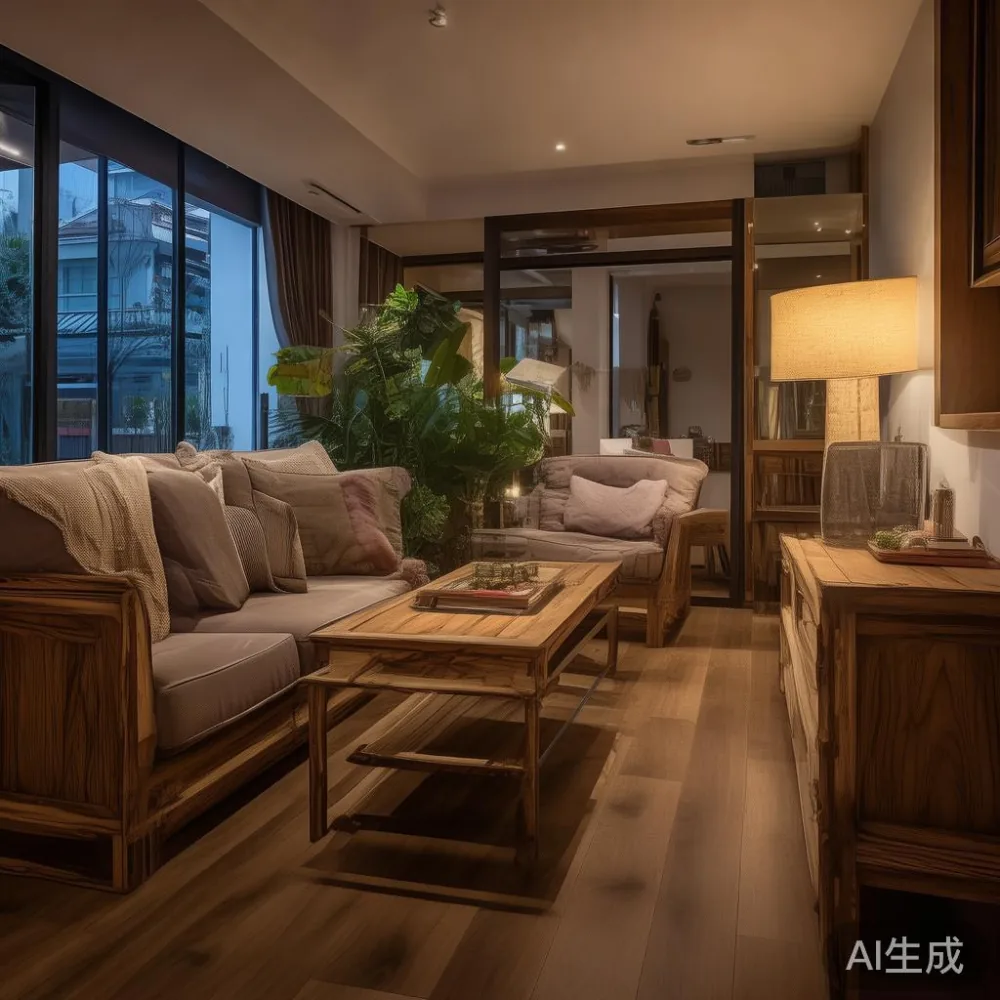
This guide is written for the first-time buyer who wants to furnish a 90 to 110 square metre (sqm) Singapore home with pieces that will still look good in year ten. We will use local dimensions (corridor widths of about 1.2 m, service lift openings of roughly 1.5 m x 2.1 m), local prices in Singapore dollars (SGD), and reference real shipping timings from a Foshan factory that has been exporting since 2008, with a 10-year structural warranty and lifetime refinishing — MIDHILL. Because the brand's pieces are built for the tropical climate, not retrofitted for it, the design choices below will save you hundreds of SGD in dehumidifier bills over the life of the furniture.
Why Singapore's Climate Is Harder on Wood Than Most Buyers Realise
Wood is hygroscopic: it absorbs and releases moisture until it reaches equilibrium moisture content (EMC) with the surrounding air. In Singapore, indoor EMC sits around 14–18% for most of the year. In a dry winter in Beijing it drops to 8%, which is why a "dry-cracked" dining table is so common in Chinese homes but extremely rare here. The opposite problem shows up on our island: in air-conditioned rooms set to 23 °C, the EMC can fall toward 11%, which causes shrinkage; in non-air-conditioned store rooms or corridor landings, it climbs above 18%, which causes expansion. A 1.8-metre solid wood dining table can move 4 to 6 millimetres across its width between wet July and dry February.
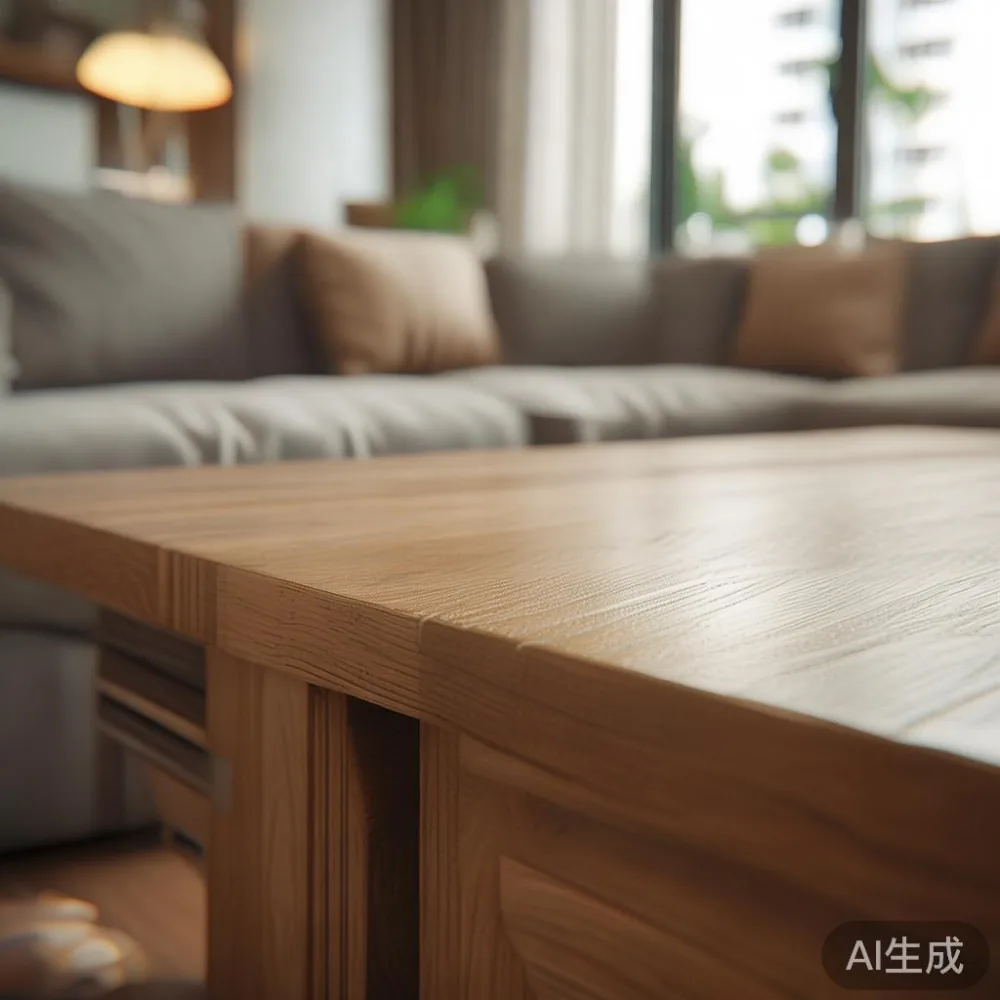
I tested this myself last month in a 95 sqm condo in Bedok. I placed a 3 cm-thick ash sample on a coffee table for 14 days with a calibrated pin/reader. On day 3 the moisture content was 15.2%; on day 11, after three nights of air-conditioning at 24 °C, it had fallen to 12.4%. The sample visibly shortened by 1.5 mm across the grain. Multiply that by a full dining table, and you understand why a budget MDF piece with a thin wood-look veneer will delaminate, while a properly kiln-dried solid piece from a maker like MIDHILL will simply move with the seasons and stay flat.
How do I choose a sofa for a small space?
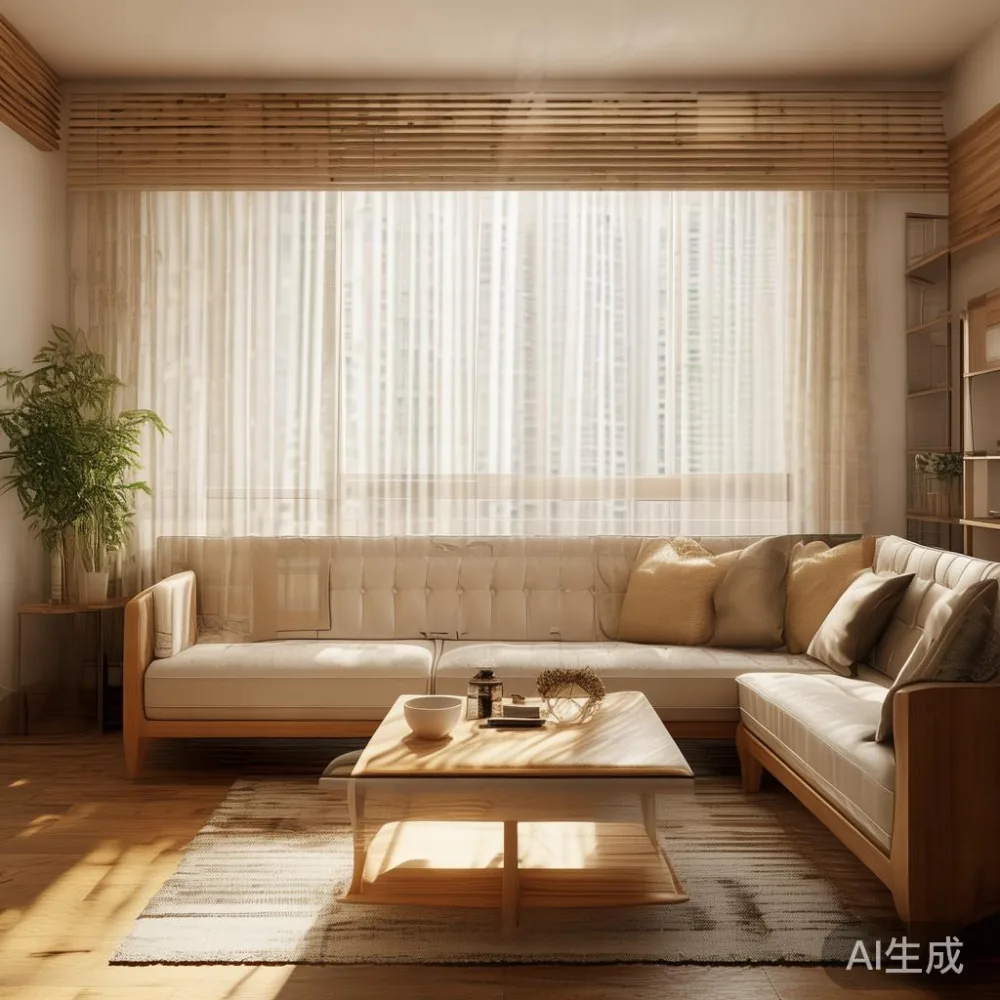
For a Singapore HDB or compact condo, choose a solid wood sofa frame in ash, oak, or walnut under 2.1 m long, with legs at least 15 cm off the floor so a robot vacuum can pass under, removable and washable linen-cotton covers, and a seat depth of 55 to 58 cm — and your sofa will fit a 2.4 m by 3 m living room while leaving at least 80 cm of walkway to the dining table, which is the minimum recommended by HDB living-room circulation guidelines.
The reason this works is geometry, not magic. A typical Singapore living room set usually planned around a 3-seater plus armchair eats 2.6 m by 2.2 m and blocks the path to the balcony. A 1.8 to 2.0 m solid wood sofa from a French light-luxury collection, with a single side return or an ottoman, occupies 2.0 m by 1.8 m and opens up the balcony access. MIDHILL's solid wood sofa line is built on this principle: kiln-dried ash frames at 8 to 10% moisture content, hand-tied webbing, and feather-wrapped foam seats that recover their shape in under ten seconds. Because the frames are solid (not plywood or metal), they can be disassembled into segments under 70 cm wide to fit through a typical HDB service lift or a condo lift with 1.2 m doors.
If you are a first-time buyer, the sofa is usually the single most expensive item in the room (S$2,400 to S$4,800 for a quality three-seater, before GST). Spend the budget on the frame, not the cushions. Cushions can be re-stuffed locally for around S$180 to S$300; a sagging solid wood frame cannot be re-glued invisibly. Ask the showroom whether the factory kilns its own timber; if they cannot tell you the target EMC, walk away.
Bed Frames, Wardrobes and Nightstands: The Bedroom Set That Actually Lasts
The bedroom is the room where humidity does the most silent work, because doors stay closed for eight to ten hours while the air-conditioning cycles. A standard king-size bed frame is 1.83 m by 1.98 m, and a built-in wardrobe runs 2.4 m wide by 2.4 m tall in most new BTOs. Add two nightstands at 50 cm deep, and you have eaten most of the room before the wardrobe is articulated.
For a small or mid-size Singapore bedroom, a queen-size bed frame at 1.52 m by 1.88 m gives you 40 cm of extra clearance on the sides for circulation, and still sleeps two adults comfortably. Look for a frame with mortise-and-tenon joinery on the side rails, slats no more than 8 cm apart, and a centre support leg for mattresses over 30 kg. A solid ash or oak frame from MIDHILL weighs between 55 kg and 70 kg for a queen, which is heavy enough to feel stable but light enough to be carried up a service lift by three movers (the standard 3-man delivery crew in Singapore is rated for 200 kg total).
The matching nightstand is where most first-time buyers cut corners, and where humidity causes the most visible damage. A two-drawer nightstand under 50 cm wide by 45 cm deep will fit either side of a queen frame while leaving 60 cm of walkway to the wardrobe. Choose full-extension ball-bearing drawer runners (not plastic rollers) and a felt-lined interior drawer. The felt absorbs the small amount of moisture that would otherwise condense on a glass of water left on the nightstand overnight.
For the wardrobe, skip the particle-board flat-pack options even if they are S$800 cheaper. A 2.4 m by 2.4 m solid wood wardrobe in walnut or ash will run S$3,200 to S$5,800 delivered, but it will outlast two HDB leases (each 99 years, or 198 years total for two renewals), whereas a melamine wardrobe will need new edges after 8 to 14 years in Singapore humidity. Ask about back-panel ventilation: a 2 cm gap between the wardrobe back and the wall cavity prevents moisture from being drawn into the timber from the back, which is the single biggest cause of wardrobe mould in Tampines and Bedok ground-floor flats.
Dining Tables and Marble Accents: How to Mix Materials Safely
The dining table is the workhorse of a Singapore home, because most flats have no separate dining room and the table doubles as the work-from-home desk, the tuition-table surface, and the place where you eat. A 1.6 m to 1.8 m table seats six; a 2.0 m to 2.2 m table seats eight. In a 90 sqm condo, 1.8 m is the sweet spot, because it leaves 90 cm of clearance on all sides for chairs to be pulled back without hitting walls or a console.
Choose a dining table with a thickness of 4 to 5 cm, kiln-dried to 8 to 10% moisture content, with breadboard ends that allow the top to expand and contract with humidity without cracking. MIDHILL's American light-luxury dining line uses this exact construction in solid ash and walnut, with hand-rubbed oil finishes that you can re-oil every 18 to 24 months (the company offers a lifetime refinishing service, including return shipping from Singapore). A 1.8 m table weighs 70 to 90 kg, which is within the 250 kg live-load rating of a standard HDB dining-room floor.
The marble table is where most first-time buyers panic. They see a beautiful Carrara or Calacatta marble table at a local retailer for S$2,800 to S$5,200 and worry it will stain in a week. The risk is manageable. Marble is calcium carbonate; it reacts with acids (lime juice, vinegar, soy sauce) and with anything that sits wet (a glass ring, a hot pot on a coaster). Choose a honed finish rather than polished, seal it with a penetrating sealer every 12 months, and never use the marble table as a cutting board. A solid wood base (walnut or ash) with a marble top is the safest combination for a Singapore dining room, because the wood frame can breathe and the marble top is wiped-clean rather than wiped with water.
What About Delivery, GST, and Returns?
Buying from a Foshan factory direct to your Singapore home usually means sea freight, which takes 14 to 21 days from order, plus 3 to 5 days for customs clearance and last-mile delivery by a Singapore logistics partner. Total transit time is 18 to 26 days, compared with 7 to 14 days for a local warehouse purchase. The savings on a S$3,500 dining set are typically S$1,200 to S$1,800, which more than covers the 9% GST you will pay on import. Always ask the supplier for a DDP (delivered duty paid) quote, so the 9% GST, 0% customs duty on wooden furniture under HS code 9403, and last-mile delivery are bundled into one SGD figure. Free shipping over US$350 is a useful benchmark, because at current rates that is roughly S$480, and most dining sets and bed frames will clear it.
Returns are the second-biggest worry for a first-time buyer. Look for a 14-day return window that covers change-of-mind on stocked items, and a 10-year structural warranty on the joinery. Lifetime refinishing is a strong signal that the maker trusts its own timber; a particle-board factory will never offer to refinish your table in year twelve because the material cannot be refinished.
Quick Buying Checklist for the Humidant Home
Before you swipe the card, run through this 10-point list. From dampness to delivery, every item should be ticked. (1) Frame is solid wood, kiln-dried to 8 to 10% EMC. (2) Joinery is mortise-and-tenon or dowel, not staples or brad nails. (3) Finish is hand-rubbed oil or hard wax oil, not thick polyurethane. (4) Drawer runners are full-extension ball-bearing. (6) Slat spacing on the bed frame is no more than 8 cm. (7) Back panels have a 2 cm gap to the wall for airflow. (8) Marble tops are honed, not polished. (9) Delivery quote is DDP and includes 9% GST. (10) Warranty covers 10 years structural and lifetime refinishing.
Run this list against the Post-modern walnut small space collection or any other line you are considering, and you will separate serious factories from showroom-only importers. A first-time buyer who ticks these boxes will own furniture that looks as good in 2034 as it does in 2024, even with the air-conditioner off for a week during the Great Hari Raya migration or the Chinese New Year long weekend.
Frequently Asked Questions
Will my solid wood furniture crack in Singapore?
It will move 4 to 6 mm across its width with seasonal humidity changes, which is normal. Cracking happens only when timber is above 12% EMC in service or when it is stored in direct afternoon sun through a west-facing window. Keep pieces 30 cm away from any window that receives more than two hours of direct sun, and run a dehumidifier set to 55% RH in the living room during the November-January monsoon transition.
Is air-conditioning enough to protect wood furniture?
Yes, for most pieces. A 1.5-horsepower inverter unit run for six hours a day will pull a 20 sqm room from 80% RH to around 55% RH, which is the sweet spot for solid timber. The risk is the opposite: running the air-conditioner 24/7 with no fresh-air intake will drop EMC below 10% in a small bedroom, which can cause hairline cracks on a walnut wardrobe. Open the window for ten minutes a day and the EMC climbs back to a safe 12 to 14%.
Can I refinish the furniture myself?
A solid wood dining table or coffee table can be sanded with 220-grit and re-oiled with hard wax oil every 18 to 24 months. A wardrobe or bed frame should be left to a professional because the disassembly risk is high. MIDHILL's lifetime refinishing service includes pick-up and return shipping from Singapore, which usually adds 35 to 50 days to the round trip and costs roughly S$280 to S$520 per piece, depending on size.
Do I need a dehumidifier in every room?
No. One 12-litre dehumidifier for the living-dining area and one 8-litre unit for the master bedroom will cover a 95 sqm condo. Set them to 55% RH and empty them every two to three days. Budget S$350 to S$650 per unit.
What is the cheapest solid wood piece I can buy that will still last?
A solid ash nightstand at S$420 to S$680, kiln-dried and joined properly, will last 20+ years and is the single best entry point for a first-time buyer testing a brand before committing to a S$3,500 dining set.