What Actually Drives the Price of Solid Wood Furniture
I still remember the afternoon a first-time buyer walked into our Tampines showroom carrying a folded piece of paper. On it were three scribbled columns: MDF particle board at S$899, "solid wood" at S$1,499 from a Jurong warehouse clearance, and a third quote for S$3,200 from a small atelier in Tiong Bahru. She looked at me and said, "They all look almost the same in the photos. What am I actually paying for?" She is not alone. In the HDB flats and 4-room condos around Bedok, Punggol, and the new Sengkang builds, almost every young couple and first-time buyer I meet asks the same question in different words. The honest answer is that solid wood furniture has a real, traceable cost structure, and once you understand it, the price stops looking random.

Why does the same "solid wood" label cost three different prices?
Because "solid wood" in Singapore usually means three different things, and they sit at very different price points. The cheapest tier is rubberwood, commonly pulled from replanted Malaysian plantations, kiln-dried, and used in many entry-level pieces. Rubberwood a nightstand from a regional factory might weigh 8 to 12 kg and be priced around S$180 to S$280. Step up to walnut, ash, or white oak, and the same nightstand can weigh 18 to 25 kg and sit closer to S$450 to S$700. Top-grade ash bed frames from Foshan workshops, hand-finished and shipped flat-packed, routinely land in the S$1,800 to S$2,600 range for a queen. A solid wood sofa built on a kiln-dried ash hardwood frame with eight-way hand-tied springs will cost visibly more than a pine frame with webbing and foam because the bones of the piece are different species. If a brand cannot tell you the exact species and moisture content of the timber, the price you are reading is partly guesswork.
Modern light luxury furniture sits in a specific corner of this market. The phrase usually describes pieces with restrained profiles, light or warm-toned American walnut or European ash, brushed brass or blackened steel accents, and lightly book-matched veneer panels used only on visible faces. The internal structure is still solid hardwood, the visible surfaces are upgraded. This is why two wardrobes that both say "American light luxury" can have a S$900 spread: one uses 12 mm solid panels on the doors with engineered backs, the other uses 18 to 22 mm solid panels throughout and softer-close hinges rated for 80,000 cycles.

How much of the price is actually the wood?
Less than people think, and more than the cheapest ads admit. For a typical solid wood dining table in the S$1,400 to S$2,200 range sold through Singapore, roughly 30 to 38 percent of the landed cost is the raw timber and the kiln-drying process, which usually takes 4 to 8 weeks to bring the moisture content down to 8 to 12 percent for tropical storage. Another 18 to 22 percent is joinery and structural reinforcement, the dowels, mortise-and-tenon joints, corner blocks, and bed frame slats that are the difference between a piece lasting 6 years or 25. Finishing (sanding, sealing, stains, a five-coat matte lacquer cured under UV light) is typically 8 to 12 percent. Upholstery on a seat or sofa back adds another 15 to 25 percent. The remaining 10 to 15 percent covers hardware, packaging, sea freight to Shenzhen or Guangzhou, customs, GST of 9 percent at the Singapore checkpoint, and last-mile delivery up your HDB corridor.
Last month I visited a 4-room HDB in Punggol with a 1.1 m wide corridor and a lift cabin measuring roughly 1.3 m deep by 1.5 m wide. A queen-size solid wood bed frame needed to be disassembled into two boxes of under 30 kg each and carried vertically through three doorways. The cost of that last-minute repacking, the extra trolleys, and the Sunday surcharge were rolled into the final invoice. These operational costs are real, and they are why a single dining table costing S$1,800 retail might have S$180 to S$240 in hidden logistics built in.
What role does wood species, moisture, and joinery really play?
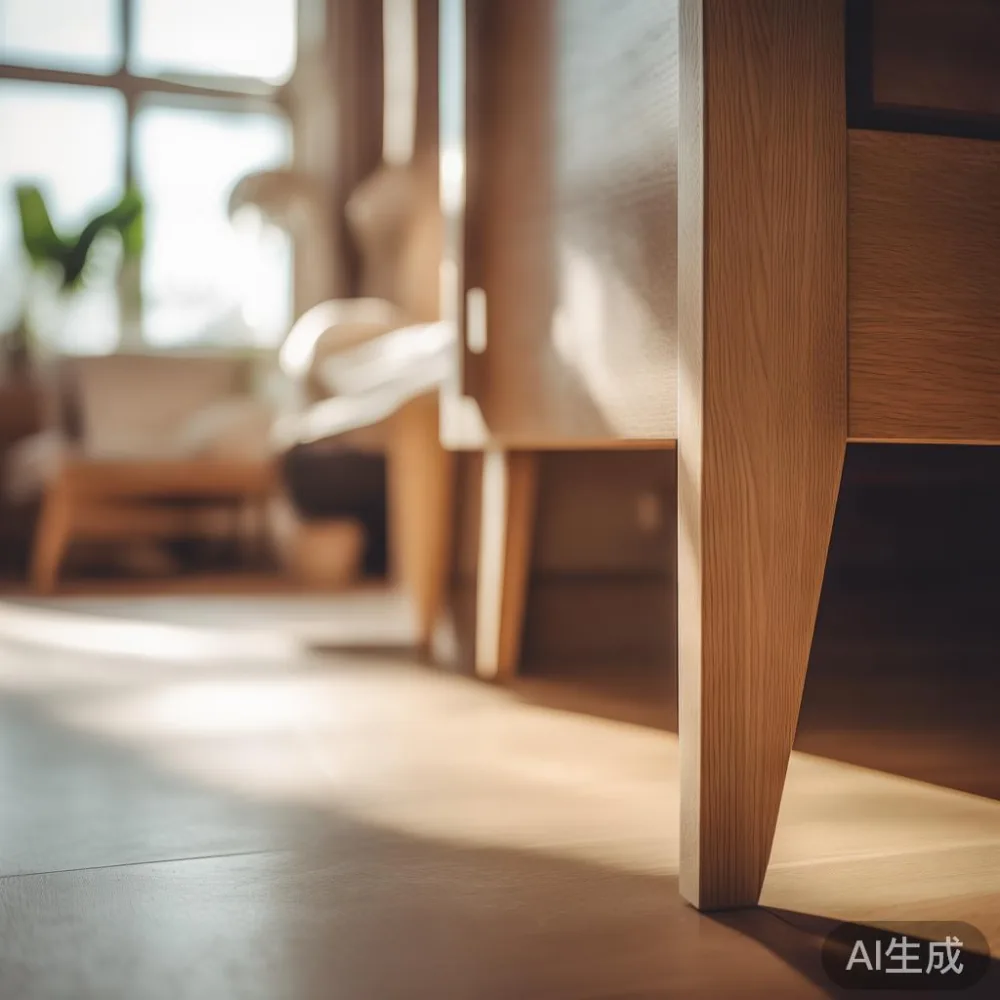
A huge one, and it is where a careful first-time buyer quietly protects their wallet. Kiln-dried white oak at 8 to 10 percent moisture is dimensionally stable in Singapore's 26 to 32°C, 75 to 90 percent humidity range, which is why it costs more than rubberwood at 12 to 15 percent moisture. Mortise-and-tenon joints, dovetail drawer boxes, and corner-blocked sofa frames are slower to build than dowel-and-glue shortcuts, but they survive 10,000 plus open-close cycles on a drawer nightstand and decades of body weight on a bed frame. Steel corner braces on a wardrobe top add roughly S$18 to S$28 per piece and are worth every dollar in a Punggol flat where the back wall of the closet gets afternoon sun through a west-facing window.
This is also where a bed frame and a dining table diverge sharply. A 1.8 m queen bed frame in solid ash needs five thick slats and a central support rail to prevent mid-sag over a 5 to 7 year period. A dining table needs the legs joined to the apron with floating tenons that allow the top to expand and contract 3 to 5 mm across seasons, and a properly designed base with a stretcher that stops lateral wobble. Reputable Foshan makers such as MIDHILL publish their structural warranty terms (commonly 10 years on frames and joints), and they back it with lifetime refinishing on wear surfaces. The price on the ticket partly buys that promise.
How do finishing, hardware, and upholstery shift the number?
Daylight, hand, and small parts change the figure more than the headline price suggests. A five-coat matte lacquer cured under UV is more durable than a single-coat nitrocellulose finish, and you feel the difference in a dining table that survives 6 to 8 accidental curry splashes per month in a Bedok kitchen. Soft-close Blum or Hettich hinges rated for 80,000 to 100,000 cycles cost roughly S$12 to S$22 per pair versus S$2 to S$4 for unbranded alternatives; spread across a 6-door wardrobe, that is a S$100 to S$130 difference for a part you will use 30 to 50 times a day. Full-grain Italian-tanned leather on a solid wood sofa adds S$600 to S$1,400 over bonded or split leather, and the breathability in our climate is noticeable in year two, not year one.
If you are considering a marble table with a Carrara or Guangxi white marble top, expect the stone to add roughly S$400 to S$900 to the figure for a 1.4 m piece, plus a steel or hardwood subframe that resists the 50 to 70 kg load. Stone-topped tables behave differently in our humidity: the slab must be sealed on all six sides, otherwise fine surface hairline cracks can appear within 12 to 18 months. A maker that handles marble in-house will price it accurately; one that outsources will quietly mark it up.
Are there any hidden costs a new owner keeps forgetting?
Yes, and they are easy to forecast. Plan for these line items in your budget before checkout:
1. GST and duty. Furniture imported into Singapore carries 9 percent GST, calculated on the CIF (cost, insurance, freight) value. On a S$2,200 dining table, that is around S$198 in tax, usually built into the listed price by the seller.
2. Delivery beyond the ground floor. Most quotes assume a lift-accessible unit. A walk-up on the fourth floor of a pre-1990 HDB block without a lift typically adds S$40 to S$90 per trip. A corridor turn wider than 90 degrees or a staircase with tight 1.05 m turns may require sectional delivery, adding S$60 to S$160.
3. Assembly and removal of packaging. A bed frame or wardrobe with 4 to 6 cartons, 60 to 90 kg total, can take 90 to 180 minutes to assemble on site. Many Singapore sellers include this in the price; budget S$80 to S$200 if it is not.
4. Floor protection. Vinyl HDB flooring can dent under a 1.8 m solid ash wardrobe if felt pads or a 3 mm EVA mat are not used. Felt pad sets cost S$6 to S$12 and save S$300 to S$600 in floor repairs.
5. Aftercare. A lifetime refinishing promise from the maker is in effect an insurance policy. Confirm it covers normal wear, transport to and from the workshop, and a turnaround time (typically 14 to 28 days). If you are shopping under 2000 Italian light luxury furniture within a tight budget, this kind of aftercare is one of the strongest signals that the price is fair.
How should a first-time buyer in Singapore actually compare two quotes?
This is the question that matters most. Put the two quotes side by side and check seven things in order. (1) The species and origin of the wood, written on the invoice, not just "solid wood". (2) The moisture content at the time of build (8 to 12 percent is the safe band). (3) The joinery method on load-bearing parts, especially the bed frame rails, wardrobe sides, and dining table leg-to-apron connection. (4) The hardware brand and cycle rating on drawers and hinges. (5) The finish type and number of coats. (6) The structural warranty length in writing, and what it excludes. (7) The logistics scope, including lift access, assembly, and packaging removal. A higher price that ticks six of seven is a better deal than a lower price that ticks three.
A simple example I use with my colleagues: a MIDHILL light luxury sofa in American walnut, 2.4 m wide, with a kiln-dried hardwood frame and top-grain leather, retails around S$3,400 to S$4,200 delivered in Singapore. A similar-looking sofa at S$1,900 from a Bedok warehouse often uses rubberwood, webbing suspension, and bonded leather. After 30 to 36 months of daily use the foam on the cheaper sofa will have softened by 15 to 20 percent, the bonded leather will start peeling at the seat creases, and the legs will work loose because the corner blocks are stapled rather than screwed and glued. Spending the extra S$1,300 to S$2,000 up front is not a luxury decision; it is the difference between replacing a sofa every 4 years and keeping one for 12 to 15.
Which design style fits which Singapore home, and what does it cost?
Three light luxury styles dominate the local market, and each rewards a different kind of first-time buyer. American light luxury leans into generous proportions, slightly oversized arms, and warm walnut or white oak tones. It is forgiving of a HDB living room that doubles as a guest room, and it plays well with common 3-seater layouts between 2.2 m and 2.6 m. If you have ever typed how to choose American sofa into a search bar at midnight, focus on frame depth (95 to 105 cm is the comfort sweet spot), seat height (45 to 48 cm matches most Singaporean adults), and cushion fill density above 32 kg per cubic metre.
French light luxury, sometimes called post-modern light luxury, uses slim profiles, slim tapered legs in blackened steel or brushed brass, lightly book-matched veneer, and softer curves. A solid wood bed frame in this style, 1.8 m queen, with a 105 cm tall headboard upholstered in linen-look fabric, typically lands in the S$2,400 to S$3,600 range. If you are wondering how to style European bed in bedroom, the trick is to keep the wall colour warm white or oat, drop in two slim line-art prints at 60 cm above the headboard, and let one or two matte brass bedside lamps carry the warm metal note.
French wardrobes for the bedroom usually run 1.8 to 2.4 m tall with mirrored or cane-panel doors, brass T-bar pulls, and adjustable interior shelving. A 2.0 m three-door wardrobe in light luxury form sits in the S$2,200 to S$3,400 band if you understand how to style French wardrobe in bedroom: leave 8 to 12 cm of breathing room above for a recessed ceiling downlight to wash the top, and centre a 60 to 80 cm tall plant or framed artwork on the opposite wall so the wardrobe does not feel like a wall.
What should a careful first-time buyer do before checking out?
Three concrete steps. First, ask the seller for the species, the moisture reading at production, the hardware brands, the number of lacquer coats, and the structural warranty in one message. A reliable maker will answer in a day; a reseller will need a week. Second, measure your lift, your corridor, every doorway, and the final position of the piece in millimetres, then send those numbers to the seller so they can confirm carton dimensions. Third, request a written quote that itemises the furniture, the delivery scope, the assembly, the GST line, and the warranty. If the seller cannot break the price down that clearly, the price itself is harder to defend.
For questions about specific configurations, lead times (Foshan-to-Singapore is usually 28 to 45 days by sea), or custom sizes, you can reach the MIDHILL studio at +86 188 2788 2512 during China business hours, or message through the local Singapore channels listed on the site. Ask for samples of the wood finish against swatches you keep at home, and request photos of the joinery on a piece in production, not just the showroom hero shot. The right solid wood piece, chosen carefully, will outlast two or three leases and probably your first mortgage, which is precisely why the price is what it is.