Styling a Small Singapore Apartment Without Crowding It: A First-Time Buyer's Guide
Last month I visited my colleague Priya in her new 4-room HDB flat in Punggol. She had spent three weekends moving things around, and the living room still felt cramped. Her solid wood sofa sat too close to the TV console, the dining table ate half the walkway, and the corridor outside her unit (only 1.2 m wide, standard for most HDB blocks built after 2015) made every delivery feel like a logistics puzzle. Watching her stress over a 280 cm sideboard that would not fit through the lift door convinced me that small-space styling is really a measurement problem dressed up as a taste problem. Below is what I told her, and what I wish someone had told me when I bought my first Tampines condo unit.
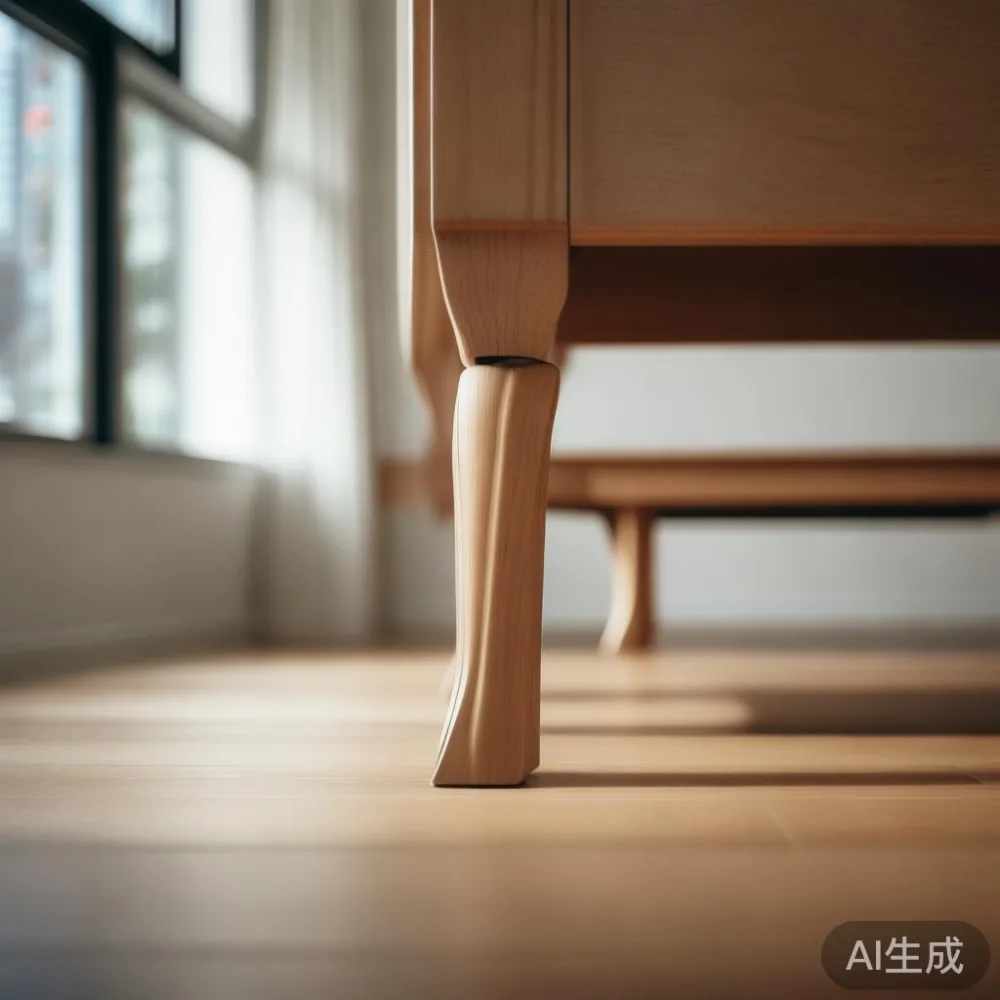
What does "small" actually mean in Singapore, and why do the numbers matter?
In Singapore, the median new HDB flat is about 93 sqm, and most resale three-bedders hover between 65 and 80 sqm. A typical 2-bedroom condo unit sits around 60 sqm. The lift door on most HDB blocks is roughly 80 cm wide, and the corridor that leads to your unit is between 1.1 m and 1.5 m. These measurements are the first thing a first time buyer should write down, because they decide whether your dream solid wood bed frame will physically reach your bedroom. I keep a small tape measure taped inside my kitchen cabinet for this exact reason.
Budget is the second number. With GST at 9% and a typical 4-room flat renovation running S$30,000 to S$45,000, the furniture line item often shrinks to around S$8,000 to S$15,000. That is not a small sum, and it explains why a first time buyer is so often tempted by cheap particle-board sets that warp within two humid seasons. A solid wood sofa, a solid wood bed frame, and one well-made dining table will outlast three rounds of cheap replacements and still look correct in ten years.
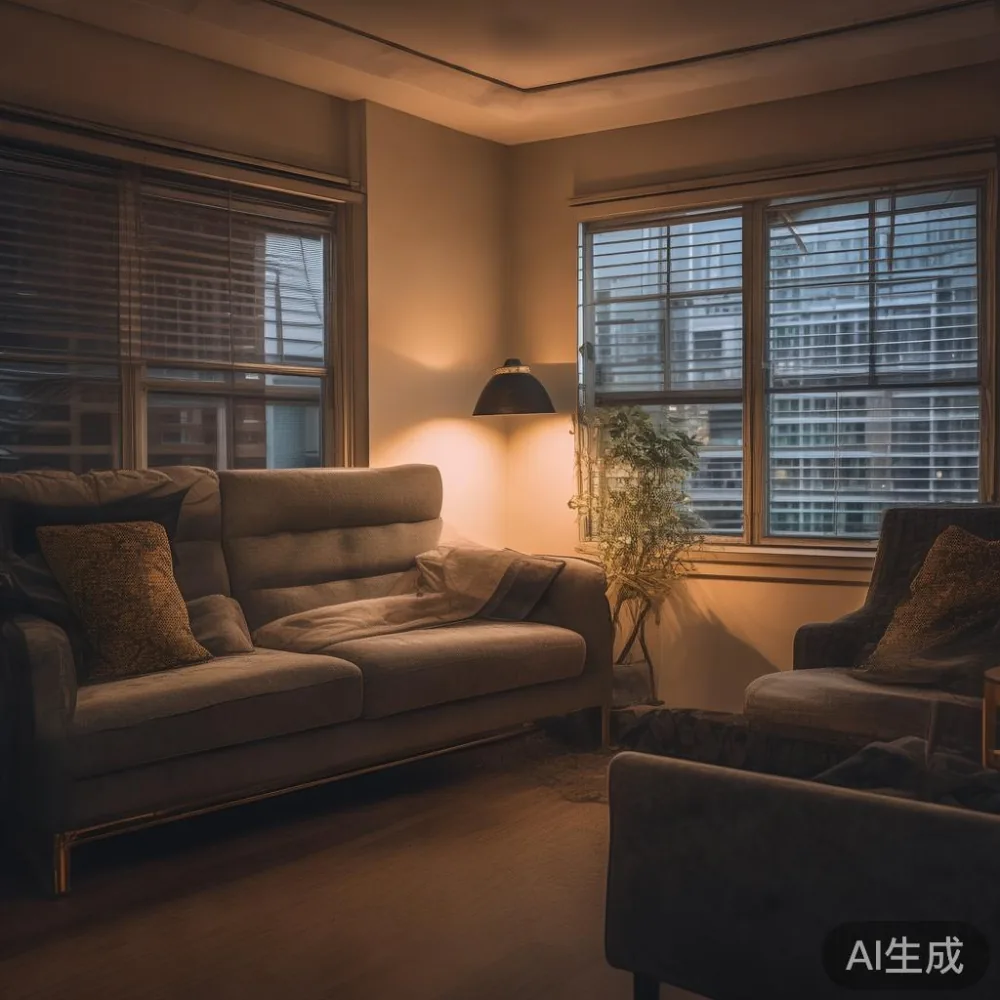
How do I choose a rattan furniture for a small apartment?
For a small apartment, choose a rattan piece that is light in visual weight, narrow in profile (under 55 cm deep for a chair, under 80 cm wide for a stool), and made with a solid wood inner frame so it survives Singapore's 80% average humidity without the weave loosening. That one sentence is the rule I would tattoo on every first-time buyer's shopping list, because rattan reads as airy and tropical but fails fast if the core frame is MDF or hollow plywood. Look for kiln-dried teak or ash inside, hand-woven peel over a curved silhouette, and feet no wider than 4 cm so the piece visually "disappears" against tile flooring.
Rattan works in a small flat because it is one of the few materials that adds texture without adding volume. A single rattan armchair in a reading corner does the job of a bulky accent chair and a side table combined if you pick one with a small cantilevered shelf. Pair it with a slim solid wood nightstand in the bedroom and a low-profile marble table in the entryway, and the eye keeps moving instead of stopping on a heavy block of furniture. The French light luxury trend, which favours natural fibres, curved lines, and pale oak tones, leans heavily on rattan for exactly this reason. If you want the look but worry about upkeep, keep rattan out of the bathroom and at least 1.5 m away from any open window during the monsoon months, when humidity can spike above 90%.
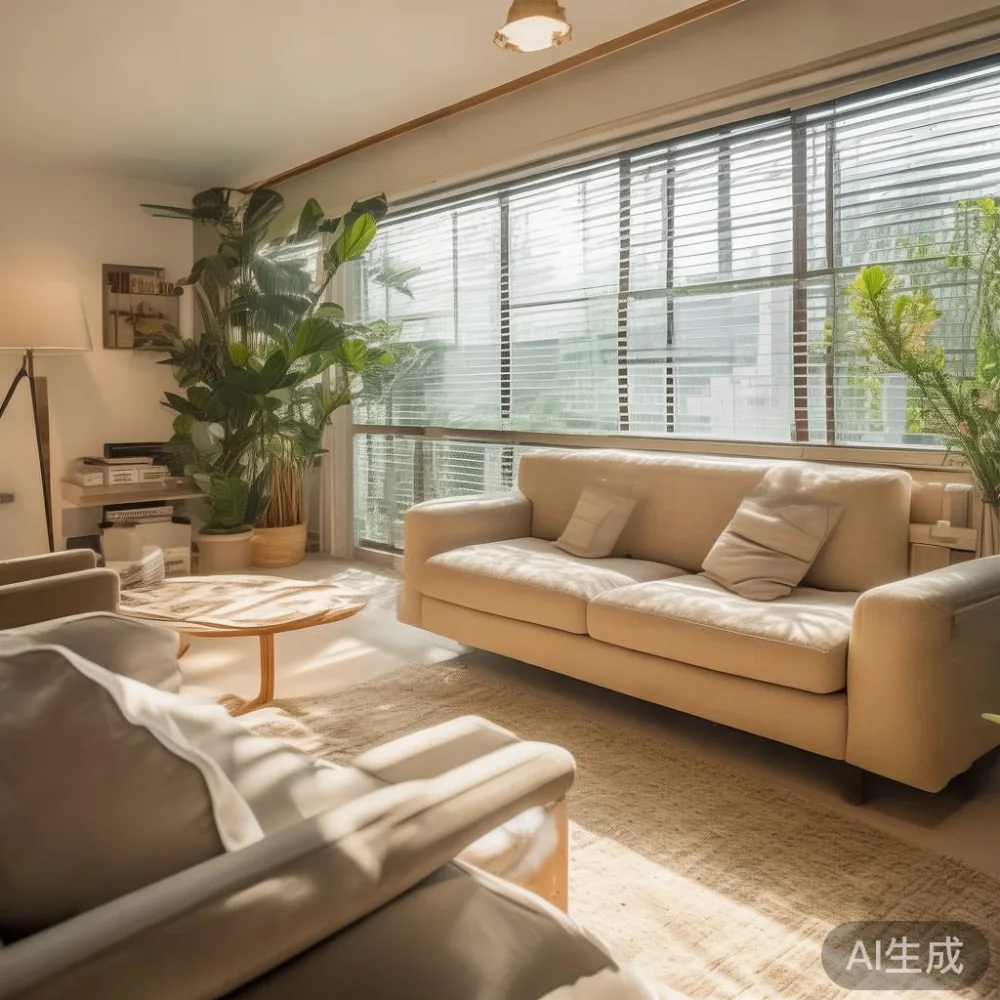
What is the smartest furniture layout for a 4-room HDB or 60 sqm condo?
The smartest layout is one that keeps a 90 cm walking lane between any two pieces of furniture and pushes the heaviest items against the only structural wall you cannot rearrange. In most HDB flats that is the wall shared with the service yard or the bathroom. Anchor the solid wood bed frame against that wall in the master bedroom, the wardrobe against the same wall in the second bedroom (leave a 60 cm gap on at least one side for access), and the dining table parallel to the kitchen counter, not perpendicular. I learned this after watching Priya rotate her dining table 90 degrees and instantly reclaim 1.4 sqm of floor space, enough to fit a small console.
A useful rule of thumb: the largest single piece in any room should cover no more than 22% of the floor area. In a 15 sqm living room that means your solid wood sofa can be up to 220 cm long, but no deeper than 95 cm if you want a comfortable 90 cm walking path behind it. For dining, a 120 cm to 140 cm table seats four comfortably and still leaves room for two people to pass each other if the room is at least 2.4 m wide. Anything bigger and you start eating with the wall behind your chair, which is fine for a year and then becomes annoying.
Where should a first time buyer in Singapore actually shop, and how do you judge quality before the carton arrives?
A first time buyer in Singapore should compare at least three sources: a local solid wood specialist with a showroom you can visit, a regional e-commerce platform with physical warehouses in Jurong or Tampines, and a direct-from-factory brand like MIDHILL, whose Foshan factory has been making solid wood pieces since 2008 and ships container-load quality to buyers in 15+ countries. The reason I put a factory-direct brand on the list is simple: it usually sits between the two extremes of cheap flat-pack and overpriced local boutique, and the structural warranty tends to be longer because the maker controls the wood drying, the joinery, and the finishing. Always ask what the warranty covers (frame, joints, and finish are the three buckets), whether refinishing is offered (a 10-year structural warranty plus lifetime refinishing is a strong signal), and what the return policy looks like in SGD with GST included.
Before you click buy, measure the lift door, the corridor turn, and the room doorway. A solid wood bed frame in king size is typically 182 cm x 192 cm and will arrive in two cartons, each around 35 kg. The marble table on my own wish list is a 90 cm round, packed in a single wooden crate roughly 110 cm tall. If the crate cannot rotate inside your lift, no discount in the world makes the purchase work. Ask the seller for the packed dimensions in centimetres and the gross weight in kilograms before paying the deposit, and confirm whether assembly is included, what tools are provided, and the realistic assembly difficulty where to buy questions every first-time buyer eventually asks. Most flat-pack pieces from a serious workshop take 45 to 90 minutes with two people, but a hinged wardrobe with mirror doors can take four hours and a second pair of hands.
How much should you budget, and what is a realistic timeline for furnishing a small flat from scratch?
For a 4-room HDB or a 60 sqm condo, a realistic furniture-only budget in Singapore is S$6,500 to S$14,000 after GST, depending on whether you buy one statement piece or build the whole flat at once. A typical split looks like this: S$2,200 to S$3,800 for a solid wood sofa in three-seater configuration, S$1,400 to S$2,600 for a queen-size solid wood bed frame with two nightstands, S$900 to S$1,800 for a four-seater dining table in solid oak or ash, S$1,200 to S$2,400 for a two-door wardrobe, and S$600 to S$1,400 for accent pieces including a marble table, a rattan chair, and a console. Free shipping usually kicks in above US$350 (around S$470), and most direct-from-factory orders ship within 14 to 21 days plus 5 to 9 days for sea freight to Singapore, so plan your furniture to arrive at least one week before your renovation hand-over.
On timeline, a sensible sequence is: order the bed and wardrobe first (longest lead time, biggest cartons), then the dining table, then the sofa, then the accents. Priya did the opposite and lived for two weeks with a beautiful marble table and nowhere to sleep. She now keeps a shared spreadsheet with each piece's packed dimensions, delivery ETA, and a checkbox for lift access, which is the kind of unglamorous detail that saves a S$120 redelivery fee when the lorry shows up at her block. Another small detail: many HDB blocks require a booking for the loading bay, and most carriers will not wait more than 30 minutes, so coordinate with your neighbours a day in advance.
Which styles actually work in a small Singapore flat, and which ones are traps?
Three styles work, and one is a trap. The three winners are French light luxury (pale oak, curved edges, slim brass handles, soft linen upholstery), American light luxury (deeper walnut tones, oversized proportions softened by rounded arms on the sofa), and post-modern light luxury (mixed materials, geometric marble tables, sculptural nightstands). All three share the same trick: they use one statement material and let everything else recede. The trap is the heavy traditional look, dark mahogany bulk, ornate carving, and thick skirts on the sofa. In a 60 sqm unit these pieces eat light, eat floor space, and make the air-con work harder, which on a SP Group bill can add S$40 to S$70 a month over a lighter aesthetic.
A practical material note: solid wood in Singapore needs to be acclimatised for at least 7 days before finishing, and a good maker will kiln-dry the timber to 8% to 12% moisture content so it does not crack in our 26°C to 32°C indoor range. Ask about this in writing. Ask about the joinery too. Mortise and tenon, dowel, and corner blocks will outlast cam locks and staples by a factor of three or four. A solid wood sofa from a careful workshop will weigh between 55 kg and 85 kg depending on the frame; if the listing says 25 kg, the "solid wood" is probably a veneer over plywood, and that is a different product at a different price. As a first time buyer, your goal is not to buy the most expensive piece in the showroom. Your goal is to buy the fewest pieces, in the right sizes, from a maker whose warranty, refinishing service, and return policy you have read in full. Done well, a small Singapore flat can feel generous, calm, and quietly expensive, even at a budget that respects the GST on your monthly pay cheque.